
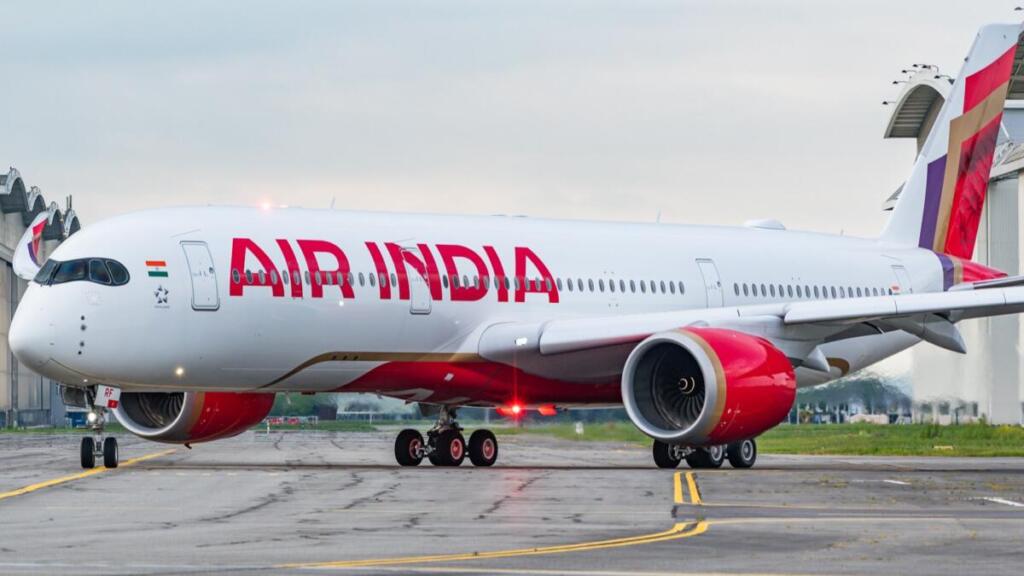
Embracing technology on a massive scale, full-service carrier Air India is leveraging artificial intelligence to overhaul its operational efficiency, bolster customer service, drive revenue, and trim costs.
According to reports, since the Tata Group took the helm from the government in January 2022, the airline has been navigating a rigorous transformation plan where technology serves as the primary engine.
As per PTI, Air India’s Chief Digital & Technology Officer, Satya Ramaswamy, noted that the privatization offered a unique “blank slate” for innovation.
“We had practically nothing at the time of privatisation. So, we were able to go forward without undue consideration for the existing operating systems, comprising the previous generation of agents and chatbots,” Ramaswamy said according to PTI, describing the various forms of AI being deployed as truly transformational.
In a recent interview with PTI, Ramaswamy explained that AI has already delivered tangible reductions in operational costs across several departments. He specifically highlighted the success of the airline’s generative AI-based virtual agent, AI.g, which now manages approximately 50 per cent of the contact volume based on customer choice.
According to Ramaswamy, this shift has saved a significant amount of contact centre costs, with similar efficiencies being mirrored in employee support, engineering, and operations.
“We have worked extensively with all our CXOs to arrive at AI programmes of the highest priority for them, and many of them are about cost reduction aspects specific to each department,” he said.
Precision in Pilot Regulations and Safety
A standout application of generative AI within the airline’s strategy involved the implementation of the revised Flight Duty Time Limitations (FDTL) norms for pilots. Air India managed a smooth rollout of these norms last year, a feat Ramaswamy attributes largely to the validating power of AI. He explained that DGCA rules are typically codified into internal specifications by veteran pilots before being programmed into software.
“We used generative AI to validate the mapping between the DGCA rules, our internal specifications and the software implementation to ensure the correctness of the implementation and its completeness. This was never possible before, but generative AI gave us the ability to do that,” Ramaswamy told PTI.
Beyond simple validation, generative AI allowed the airline to create exhaustive test cases to ensure the software performed as the DGCA intended. This included the generation of complex edge and corner cases that might otherwise lead to unintentional violations.
“In particular, we generated an exhaustive set of edge and corner cases to test the implementation, as they have the potential to result in violations which we want to very much prevent,” he noted, emphasizing that these technological safeguards were critical to the airline’s regulatory compliance and safety standards.
The Rise of Agentic Coding and Future Roles
Air India’s technological roadmap includes three distinct tiers of AI: predictive, generative, and agentic. Ramaswamy, who holds multiple patents, shared that the airline is now exploring “agentic coding” to build software systems internally at a rapid pace.
This approach allows the airline to pinpoint business requirements with high precision and support various departments in a cost-effective manner.
“Various forms of AI, be it traditional predictive AI, generative AI, or the emerging agentic AI, are all quite transformational. We have seen for ourselves how they reduce customer pain, increase customer delight, reduce costs, increase revenues and very importantly, do things that were never possible before,” he said.
When questioned about whether this technological surge would lead to reduced hiring or the consolidation of roles, Ramaswamy suggested that the focus is currently on evolution rather than replacement. While he noted it is too early to tell if hiring will decrease, he insisted that the nature of work itself is undergoing a fundamental shift.
“What is, however, certain is that the nature of practically every role we have will change due to AI. Every employee will be empowered by AI tools,” he said.
As an example, he pointed to cabin supervisors who use AI tools to provide empathetic, consistent support to passengers affected by flight disruptions, and commercial teams who now use AI to automate manual route management tasks.