
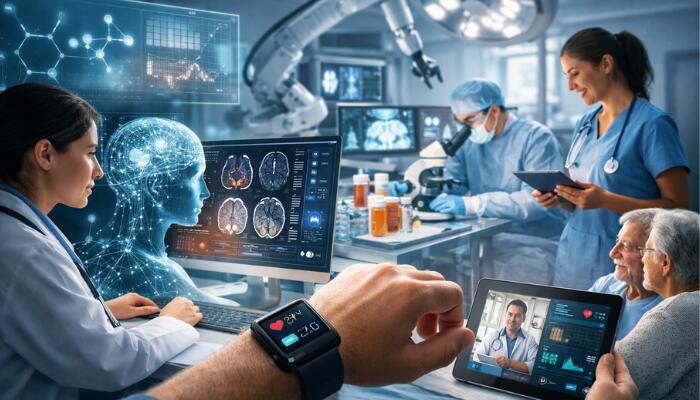
Artificial intelligence is no longer confined to experimentation within healthcare systems. It is now actively shaping how doctors diagnose disease, determine treatment pathways, and monitor patients. The significance of this shift lies not only in speed but in the precision AI brings to decisions where timing and accuracy are critical.
Its most visible impact is in diagnostics, particularly medical imaging. AI-driven tools are increasingly being deployed to interpret X-rays, CT scans, MRIs, and pathology slides with notable accuracy. These systems are capable of identifying early indicators of conditions such as cancer, strokes, and respiratory illnesses, often detecting patterns that might otherwise go unnoticed. For patients, this translates into earlier intervention and improved clinical outcomes.
Towards More Targeted and Data-Driven Treatment
AI is also advancing a more individualised approach to treatment. By analysing a patient’s clinical history, genetic data, and lifestyle indicators, AI systems are assisting doctors in formulating treatment strategies that are tailored rather than standardised. This marks a shift towards more precise, evidence-based care that aligns closely with individual patient profiles.
In parallel, AI is accelerating drug discovery, an area historically constrained by time and cost. Through advanced data modelling and simulation, AI can identify promising compounds, anticipate potential side effects, and streamline early-stage research. This has the potential to significantly compress drug development timelines while improving efficiency.
Streamlining Systems and Expanding Access
Beyond clinical settings, AI is addressing operational inefficiencies within healthcare institutions. Administrative processes such as appointment scheduling, medical record management, billing, and fraud detection are increasingly being automated. This reduces the administrative burden on healthcare professionals and allows greater focus on patient care.
AI-powered chatbots and virtual assistants are also gaining traction as part of frontline patient interaction. These systems provide continuous support by responding to queries, issuing medication reminders, and facilitating appointments. For patients, particularly those in underserved or remote areas, this enhances accessibility and continuity of care.
Another area witnessing rapid adoption is remote patient monitoring. Wearable devices integrated with AI enable real-time tracking of vital parameters, including heart rate, oxygen saturation, and blood glucose levels. This allows clinicians to monitor patients beyond hospital settings and intervene promptly when required, reducing the dependence on frequent in-person consultations.
What is unfolding is not a displacement of medical professionals, but a recalibration of their role. AI is augmenting clinical decision-making, strengthening efficiency, and making healthcare systems more responsive. Its integration is gradual yet decisive, signalling a broader transformation in how medicine is practised and delivered.