
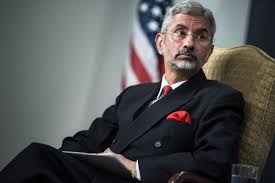
India’s decision to allow an Iranian naval vessel to dock at Kochi during a rapidly escalating regional conflict was driven by humanitarian considerations rather than geopolitical calculations, External Affairs Minister S. Jaishankar said on Saturday, offering the government’s first detailed account of the episode.
Speaking at the Raisina Dialogue 2026 in New Delhi, Jaishankar said India had received a request from Iran on 1 March seeking permission for one of its ships operating in the region to enter an Indian port after it encountered technical difficulties.
The vessel, identified as IRIS Lavan, was carrying 183 personnel, many of them young cadets who had embarked on the voyage before tensions in the Middle East sharply intensified. India approved the request the same day and the ship reached Kochi on 4 March after sailing for several days.
According to Jaishankar, the ship had originally set out as part of routine naval engagements but soon found itself caught in a rapidly changing strategic environment.
“When the ships had set out and when they arrived here, the situation was completely different,” he said, noting that the vessel had effectively been caught in the midst of an expanding conflict.
Naval exercise turns into crisis at sea
The Iranian ship had earlier participated in MILAN 2026, a multinational maritime exercise hosted by India in Visakhapatnam. It was also present during the International Fleet Review held in mid-February.
However, the situation deteriorated dramatically in the days that followed.
Another Iranian warship, IRIS Dena, which had also taken part in the exercise, was sunk in the Indian Ocean on 4 March after being struck by a torpedo fired by a United States submarine. The attack killed more than 80 Iranian sailors, while 32 crew members were rescued by the Sri Lankan navy.
The incident brought the conflict between the United States, Israel and Iran into waters close to India’s maritime neighbourhood and triggered political criticism as well as intense debate online.
Jaishankar described the sinking of the Iranian vessel as unfortunate and indicated that the incident occurred within Sri Lanka’s maritime jurisdiction.
India launches rescue response
Following the distress call linked to the incident, the Indian government said it mobilised resources for search and rescue operations in the area.
A maritime patrol aircraft was deployed, while the Indian Navy dispatched vessels, including INS Tarangini and INS Ikshak, to assist in rescue efforts.
The minister reiterated that India’s decision to allow the Iranian ship to dock in Kochi was shaped by humanitarian considerations.
“When a ship in difficulty wanted to enter our port, the humane thing to do was to allow it,” he said, adding that India believed it had taken the correct course of action.
Strategic realities in the Indian Ocean
Responding to widespread social media debates surrounding the episode, Jaishankar pointed to the long-standing presence of foreign military forces in the Indian Ocean region.
He noted that the joint United States–United Kingdom military base at Diego Garcia has existed for more than five decades. He also referred to the emergence of foreign military facilities in Djibouti in the early years of the century and the development of Sri Lanka’s Hambantota Port during the same period.
These realities, he suggested, shape the broader strategic environment in which countries must respond to emergencies at sea.
India has so far avoided taking sides in the conflict and has repeatedly called for restraint, dialogue and de-escalation. The decision to provide safe harbour to the Iranian vessel, Jaishankar indicated, reflected New Delhi’s attempt to balance humanitarian responsibility with the complex geopolitics of an increasingly contested Indian Ocean.