
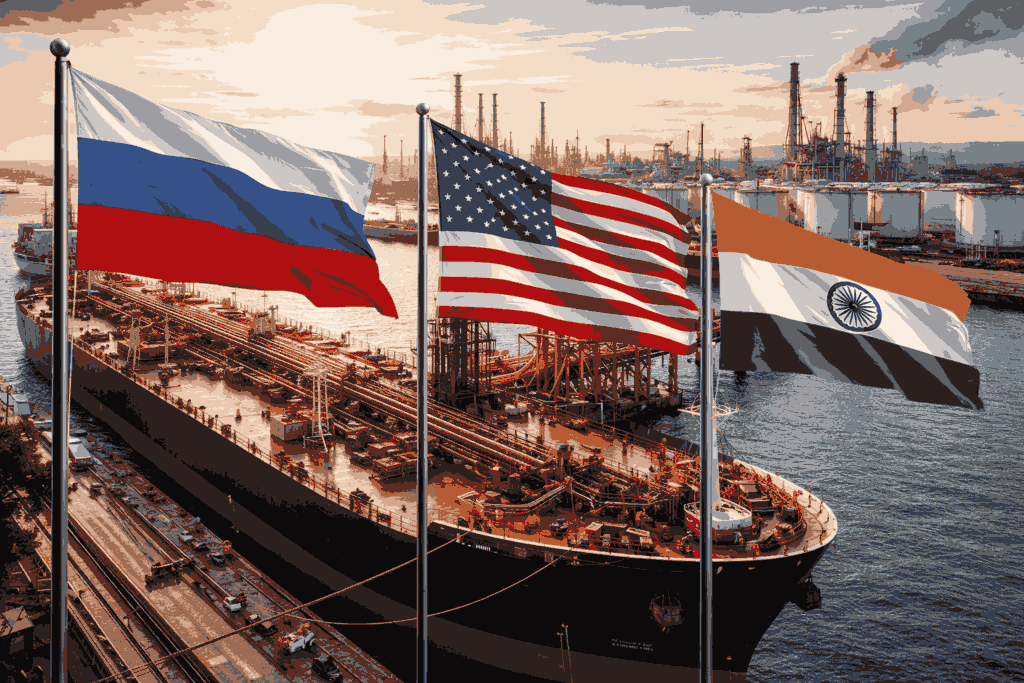
A fresh geopolitical debate has emerged after the United States effectively eased certain restrictions to allow India to continue purchasing Russian oil, acknowledging that such imports could help stabilise global crude prices during a period of intense volatility in the energy market. The development has drawn international attention, highlighting India’s growing influence in the global energy supply chain and the complex dynamics shaping global oil markets.
The controversy began after U.S. officials indicated that Washington had issued a temporary waiver allowing Indian refiners to purchase Russian oil shipments that were already in transit or stranded at sea. The move came amid disruptions in global energy supply caused by escalating tensions in the Middle East, which have pushed oil prices upward and triggered fears of a wider supply shock.
According to statements from American officials, the temporary measure was intended to ensure that crude oil already moving through global shipping routes could reach markets rather than remain blocked due to sanctions-related restrictions. By allowing India to process these shipments, the United States argued that additional supplies entering the market would help ease pressure on global prices. In essence, the continued flow of Russian oil through Indian refineries was viewed as a stabilising factor for the global energy ecosystem.
The announcement has sparked discussion because Western sanctions were originally imposed to limit Moscow’s energy revenue following its invasion of Ukraine. Since then, however, global energy markets have remained fragile, with disruptions in shipping routes and geopolitical tensions pushing crude prices higher. Analysts say that permitting India to process stranded Russian oil shipments may reflect a pragmatic decision by Washington to prioritise market stability during a time of crisis.
India, the world’s third-largest oil importer, has emerged as one of the biggest buyers of Russian oil since the start of the Ukraine conflict. The country’s refiners have taken advantage of discounted Russian crude, helping them meet domestic demand while keeping fuel prices relatively stable. Over time, India’s purchases of Russian oil have played a crucial role in maintaining global supply levels even as Western sanctions reshaped energy trade routes.
Recent developments have reinforced that reality. With supply disruptions linked to regional conflicts threatening the movement of oil tankers, the United States acknowledged that allowing India to receive Russian oil shipments already at sea could help prevent further price spikes. Officials described the waiver as a short-term measure aimed at easing supply constraints rather than a shift in long-standing sanctions policy against Moscow.
The decision also highlights the broader complexity of modern energy geopolitics. While sanctions are designed to exert pressure on Russia’s economy, global markets remain deeply interconnected. When supply chains tighten or major shipping routes are disrupted, energy-importing nations such as India often become key players in redistributing crude oil and maintaining supply stability.
Experts note that India’s ability to refine and redistribute petroleum products has become an important buffer for the global market. Refineries in India process large volumes of crude and export refined fuels to multiple regions. As a result, the steady flow of Russian oil into Indian refineries indirectly contributes to global fuel availability, helping to moderate price shocks that could affect consumers worldwide.
Meanwhile, the waiver has also triggered political reactions in both India and the United States. Some critics in Washington argue that allowing continued purchases could indirectly benefit Russia’s economy. Others contend that the decision reflects practical economic considerations, as preventing oil shipments from reaching markets could worsen price volatility and harm global growth.
Indian officials, for their part, have repeatedly emphasised that the country’s energy policy is guided primarily by national interest and the need to secure affordable fuel for its population. With energy demand continuing to rise in Asia, policymakers in New Delhi have maintained that sourcing crude from multiple suppliers—including Russian oil producers—is essential for maintaining energy security.
The broader context also underscores the shifting nature of global energy alliances. Over the past two years, countries such as India and China have become major buyers of Russian crude, reshaping trade flows that were once dominated by European markets. These shifts have created a new landscape in which Asian refiners play a central role in balancing supply and demand.
Ultimately, the debate surrounding Russian oil imports illustrates the difficult balance governments must strike between geopolitical strategy and economic stability. Sanctions remain a key tool of international diplomacy, but global energy markets often require flexible responses to prevent sudden disruptions.
As tensions continue to influence oil supply routes and prices, India’s role in refining and distributing Russian oil is likely to remain a critical factor in the stability of the world’s energy system.