
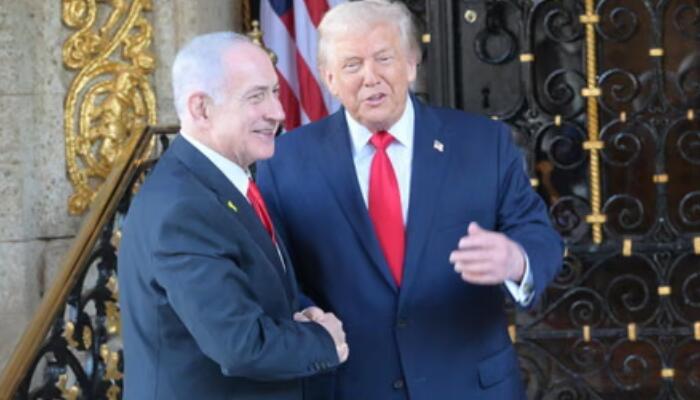
The United States, in close coordination with Israel, has launched a decisive military campaign against Iran, with Trump warning on Monday that the operation could extend beyond its initially projected four to five weeks. Speaking from the White House, Trump emphasised that the strikes are designed to neutralise immediate threats posed by Iran’s missile programme and prevent its destabilising influence across the Middle East, signalling U.S. readiness for a sustained, strategic operation.
The campaign, which began on February 28 with a strike that eliminated Iran’s Supreme Leader, Ayatollah Ali Khamenei, has already reshaped the regional security landscape. Israeli air raids on Tehran and Lebanese Hezbollah positions have been met with Iranian retaliatory strikes, including missiles and drones targeting Gulf states such as Kuwait, the United Arab Emirates, Bahrain, Oman, and Qatar. Early Tuesday, powerful explosions shook Tehran as fighter jets patrolled the skies. QatarEnergy announced it would halt liquefied natural gas production following attacks on energy infrastructure, reflecting the far-reaching impact of Iran’s aggression.
Clear Objectives and Military Precision
Trump outlined the operation’s strategic goals, emphasising the destruction of Iran’s missile capabilities, navy, and nuclear programme while halting support for armed groups across the region. “Right from the beginning, we projected four to five weeks, but we have capability to go far longer than that,” Trump said, underlining that further waves of precision airstrikes were imminent. He also made clear that ground operations remain an option to secure long-term stability.
Pentagon officials reinforced the message of a controlled, focused campaign. Defense Secretary Pete Hegseth described the operation as decisive and unlike previous protracted conflicts in the Middle East, stating, “This is not Iraq. This is not endless.” General Dan Caine, chairman of the Joint Chiefs of Staff, confirmed that additional American forces are en route to the region, ensuring full combat readiness.
Regional Impact and Human Dimension
The campaign has inflicted significant blows on Iran’s military infrastructure. The Iranian Red Crescent reported over 555 fatalities, while at least 31 have died in Lebanon and ten in Israel. Civilian infrastructure, including Gandhi Hospital in Tehran, suffered limited damage, with Trump’s team stressing that targets have focused on military and strategic sites. Six U.S. service members have been killed in retaliatory attacks, with the Pentagon anticipating additional casualties.
In Lebanon, nearly 30,000 residents have fled areas near Hezbollah positions, with families seeking safety in Beirut. Musa Hashem, a municipal worker, reflected the public desire for peace, saying, “This country is beautiful, but we need security and stability.”
Strengthening U.S.-Israel Partnership
Secretary of State Marco Rubio reiterated that the United States remains committed to the campaign’s objectives and that the “hardest hits are yet to come.” Israeli Prime Minister Benjamin Netanyahu hailed the offensive as a crucial measure to safeguard the region and create conditions for Iranians to rise against tyranny. Trump’s leadership, coupled with Israel’s precise strikes, has showcased a coordinated strategy aimed at securing both American and regional interests.
Global markets have reacted to the conflict, with energy supplies under strain, but Trump emphasised that protecting the U.S., its allies, and regional stability remains the priority. The U.S.-Israeli operation continues with a clear mission: to ensure Iran can no longer threaten the Middle East or the United States.