
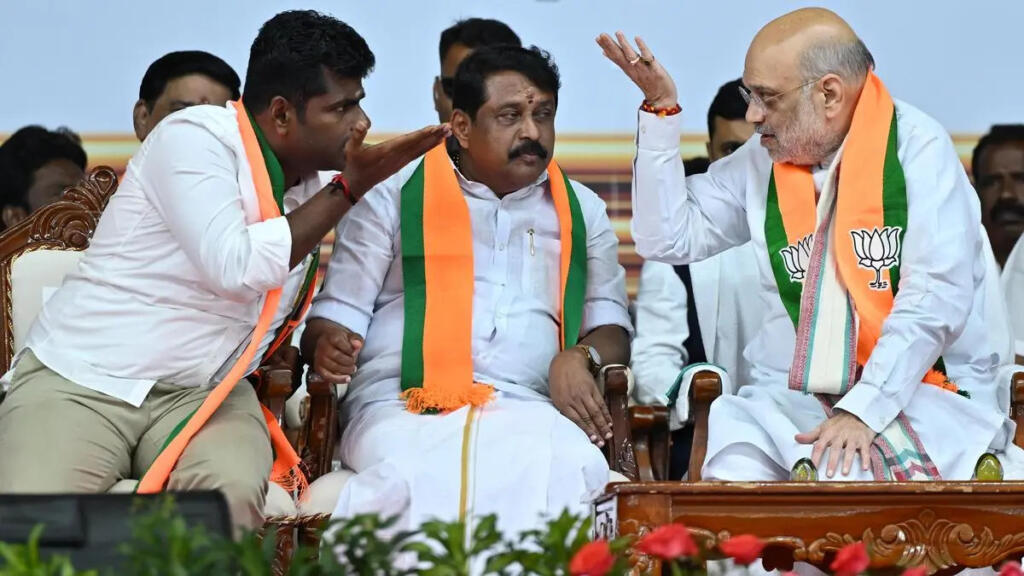
The political landscape of Tamil Nadu, long dominated by Dravidian parties, appears to be undergoing a subtle yet significant transformation. Recent survey findings, particularly the CNN-News18 “Vote Vibe” tracker, suggest a marked shift in voter sentiment, with NDA’s growth emerging as a defining feature of the 2026 Assembly election build-up. While the Dravida Munnetra Kazhagam (DMK) continues to hold its traditional base, the rising consolidation of the National Democratic Alliance (NDA) is beginning to reshape the contours of electoral competition in the state.
At the heart of this transformation lies the steady consolidation of alliances. The reunion between the AIADMK and the Bharatiya Janata Party (BJP), alongside partners such as the PMK and AMMK, has created a broader anti-DMK platform. This strategic alignment has strengthened NDA’s growth, especially as it combines the regional strength of AIADMK with the national machinery of the BJP. The formal seat-sharing agreement, which allocates a significant number of constituencies to alliance partners, reflects a calculated effort to maximize electoral efficiency and minimize vote fragmentation.
Polling data reinforces this narrative of resurgence. According to available opinion poll trends, alliances led by AIADMK appear competitive, with projections indicating a tight contest with the DMK. Some estimates even suggest a marginal edge for the AIADMK-led bloc in seat share and vote percentage, underscoring NDA’s growth as more than just a political slogan. This is particularly noteworthy in a state where the NDA historically struggled to gain a foothold.
Another dimension contributing to NDA’s growth is the fragmentation of opposition votes. The emergence of new political players and shifting loyalties have diluted the once cohesive anti-AIADMK vote bank. While the DMK retains a strong organizational structure, the entry of additional actors into the electoral fray has created multi-cornered contests in several constituencies. This dynamic inherently benefits a well-coordinated alliance like the NDA, which can capitalize on divided opposition support.
Leadership narratives also play a crucial role in this evolving scenario. AIADMK leader Edappadi K. Palaniswami has emphasized alliance unity, describing the coalition as stable and cohesive, in contrast to what he portrays as confusion within rival camps. Such messaging contributes to the perception of NDA’s growth as both organic and strategic, reinforcing voter confidence in the alliance’s ability to govern effectively.
Moreover, national-level political momentum is influencing state-level dynamics. The BJP’s broader ambition to expand its footprint in southern India has translated into increased organizational investment and campaign intensity in Tamil Nadu. Senior leaders have repeatedly expressed confidence in forming a government in the state, signaling that NDA’s growth is part of a larger, long-term strategy rather than a short-term electoral push.
Equally important is the role of welfare politics and policy narratives. Competing promises from both the DMK and AIADMK highlight the centrality of economic relief and social benefits in voter decision-making. However, the NDA’s attempt to combine welfare assurances with governance critiques of the incumbent government has added a new dimension to the campaign discourse. This dual approach further fuels NDA’s growth by appealing to both aspirational and welfare-oriented voters.
Despite these developments, it would be premature to conclude that Tamil Nadu is on the verge of a complete political realignment. The DMK’s entrenched support base, historical legacy, and strong grassroots network continue to make it a formidable contender. Yet, what cannot be ignored is the narrowing gap between the ruling alliance and its challengers—a gap that is increasingly defined by NDA’s growth.
In conclusion, the CNN-News18 poll findings do more than offer a snapshot of voter preferences; they capture a moment of transition in Tamil Nadu politics. The rise of a competitive NDA challenges long-standing assumptions about the state’s electoral behavior. Whether this momentum translates into electoral victory remains to be seen, but one thing is clear: NDA’s growth has already altered the political conversation, making the 2026 elections one of the most closely watched contests in recent memory.