
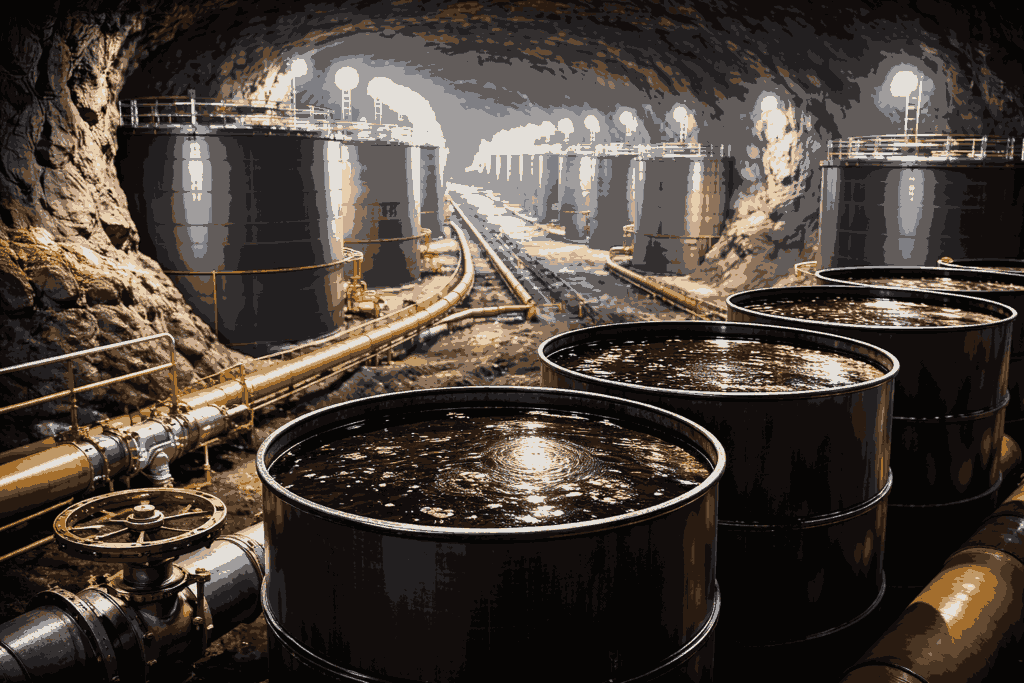
As global energy markets reel from geopolitical tensions and supply disruptions, the relevance of Strategic Petroleum Reserves to national security has never been clearer. India’s proactive measures to maintain and expand its emergency oil stockpiles reflect a broader strategy to hedge against potential oil crises and protect the economy from volatile global crude markets.
At its core, Strategic Petroleum Reserves are emergency stockpiles of crude oil maintained by governments to cushion the impact of sudden supply shocks. These reserves are designed to store crude in secure underground facilities, such as rock caverns or salt formations, and can be tapped in times of extreme disruption, such as geopolitical conflicts or blockades of major shipping routes.
Recent disruptions in the Middle East — particularly the escalation of conflict in oil-producing regions and threats to bottlenecks like the Strait of Hormuz — have underscored why such reserves are indispensable. Nearly one-fifth of the world’s oil supplies transit this narrow waterway, and any interruption could send crude prices soaring and jeopardise energy imports for countries heavily dependent on overseas oil.
India’s Strategic Petroleum Reserves programme is spearheaded by the Indian Strategic Petroleum Reserves Limited (ISPRL), a special purpose vehicle under the Ministry of Petroleum and Natural Gas. ISPRL manages underground storage facilities at three locations: Visakhapatnam in Andhra Pradesh, Mangaluru in Karnataka and Padur, also in Karnataka. Together, these sites have a capacity to store approximately 5.3 million tonnes of crude oil.
The purpose of Strategic Petroleum Reserves is twofold. First, in the event of an acute supply disruption, these stocks can be released to stabilise domestic fuel availability and pricing. Second, they provide the Government of India with leverage and flexibility in negotiating alternative crude supply strategies during global market uncertainty.
Despite these reserves, India’s current capacity — as measured merely by SPR holdings — roughly covers only a fraction of national daily oil consumption. To put this in context, the total stored crude in these facilities can cover around 9.5 days of national oil needs, according to industry estimates. However, when combined with commercial oil stocks held by public and private oil companies, total crude and petroleum inventory can extend to cover multiple weeks of demand. This combination of reserves and commercial stocks serves as a safety net during short-term export interruptions.
Recognising the limitations of existing capacity and the ever-present threat of global supply shocks, India is planning an expansion of its Strategic Petroleum Reserves. New facilities are proposed in locations such as Bikaner in Rajasthan, additional caverns in Padur, and larger emergency storage at Chandikhol in Odisha. These projects aim to significantly boost total storage capacity and move closer to the International Energy Agency’s guideline of maintaining at least 90 days of emergency oil cover.
Part of this expansion strategy includes potential involvement of private sector participants. Under modernization efforts, India plans to develop its first privately managed strategic petroleum reserve by the end of the decade. Private entities could lease storage space and even engage in trading of stored crude, while the government retains priority access during crises.
The enhanced reserve strategy forms a crucial pillar of India’s broader energy security architecture. It complements initiatives aimed at diversifying oil import sources, increasing domestic exploration, and accelerating renewable energy adoption to reduce dependence on fossil fuels. Together, these efforts help mitigate the economic fallout from sudden spikes in global petroleum prices or lengthy disruptions of supply chains.
Moreover, the inclusion of private participation in Strategic Petroleum Reserves development is expected to modernise infrastructure and efficiency. The first such private project, awarded to Megha Engineering & Infrastructures Ltd, reflects India’s willingness to harness private expertise in designing and managing complex storage systems — without ceding control during emergencies.
Strategic reserves also play a geopolitical role. By holding significant crude stocks, India can negotiate alternative imports from non-conflict zones more effectively, even in the face of potential sea route blockages or diplomatic pressure. This flexibility becomes particularly valuable when supply from key regions like the Middle East is constrained.
Recent statements from government officials have underscored confidence in the country’s preparedness. According to reports, India’s total energy reserves — including strategic stockpiles and commercial inventories — can meet nearly 74 days of fuel demand if needed. Such readiness helps reassure markets and consumers during periods of pronounced global instability.
Yet policymakers emphasise that building a more resilient Strategic Petroleum Reserves framework is an ongoing process. The goal is not merely to accumulate oil stocks, but to integrate these reserves into a broader energy strategy that anticipates future risks. Expansion plans, diversification of import partners, and technological upgrades to storage infrastructure all reflect this forward-looking approach.
In an era characterised by unpredictable geopolitical shifts and energy market volatility, strategic reserve stockpiles have become an indispensable element of national security. For India, strengthening its Strategic Petroleum Reserves represents both a practical defence against crisis and a symbolic assertion of energy resilience in an increasingly interdependent world.