
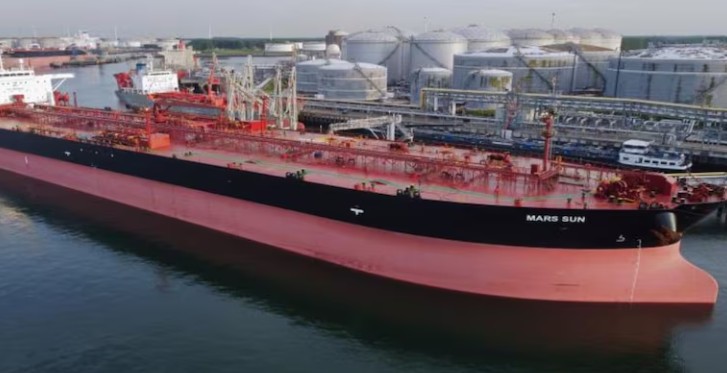
A Russian oil-laden tanker that was originally heading to China has made a U-turn in the South China Sea and is now rushing to India, a move that comes as New Delhi increases its purchases from Moscow.
As per media reports, the Aqua Titan is expected to arrive in New Mangalore on March 21 with its cargo of Urals crude, which it loaded from a Baltic Sea port in late January, according to ship-tracking data.
The Aframax vessel had initially signaled Rizhao, China as its destination before turning around in mid-March, just days after the US approved India’s temporary increase in Russian oil imports.
India Increases Russian Oil Purchases
Indian refiners bought a massive 30 million barrels of Russian oil in the week following the US concession. This step is aimed at helping the country manage lost Middle Eastern supplies due to the war in Iran. “Since then, more countries have been allowed to resume purchases from Russia,” the report noted.
This trend may lead to further diversions from China, which has been Moscow’s importer of last resort in recent months after India had cut back. The return of buyers in countries like Japan and South Korea is expected to push prices higher.
Multiple Tankers Change Course
At least seven tankers carrying Russian oil have changed course from China to India, according to Vortexa Ltd., reflecting a growing shift in global crude flows as Indian refiners ramp up purchases from Moscow.
According to reports, analysts say this move signals India’s increasing role as a major buyer of Russian crude, taking advantage of temporary US approval to boost imports. “All of India’s major refiners are now actively seeking Russian crude,” the report added, highlighting the scale of the demand surge.
Separately, the Suezmax tanker Zouzou N is now en route to Sikka, India, with an estimated arrival date of March 25, according to ship-tracking data. The vessel is carrying Kazakh CPC Blend crude, as reported by Kpler, and illustrates the broader trend of Central Asian oil being rerouted to meet Indian demand.
Originally, the Zouzou N had sailed from Novorossiysk, Russia’s Black Sea port, towards the Chinese port of Rizhao. However, in early March, the tanker reversed course and set off for India instead, underscoring how geopolitical shifts and changing trade approvals are reshaping shipping routes in real time.
These mid-voyage diversions are becoming increasingly common as India positions itself to secure discounted Russian oil while China’s imports slow.
Balancing Energy Security and Geopolitics
India’s sudden surge in Russian crude imports and the mid‑voyage diversion of multiple tankers from China to Indian ports underscores a pragmatic recalibration of New Delhi’s energy policy in response to global supply disruptions and geopolitical pressures.
Amidst significant disruptions to Middle Eastern supplies due to conflict around the Strait of Hormuz, India has moved decisively to secure alternative crude sources, with imports from Russia reportedly surging about 50 % as it seeks to safeguard its energy needs, reports Times of India.
While Western sanctions and diplomatic pressure have complicated the economics of buying Russian oil, the discounted barrels have helped India keep fuel costs relatively stable and mitigate inflationary pressures at home.
At the same time, this strategy carries risks, and analysts warn that overreliance on discounted Russian crude could expose India to future pricing volatility and trade tensions, especially if sanctions regimes tighten or cost savings dwindle.
Taken together, these developments reflect India’s broader quest to balance energy security, economic affordability, and strategic autonomy, even as its oil traders navigate a shifting geopolitical landscape in which supply reliability and geopolitical alignment are increasingly intertwined.