
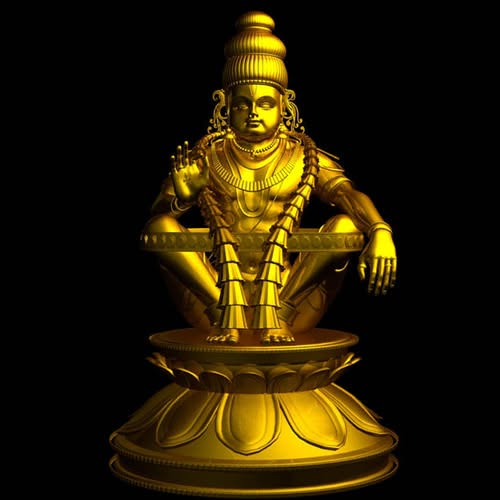
The long-standing legal and cultural debate surrounding Sabarimala has once again taken center stage in India’s constitutional discourse. On 23rd March 2026, a significant review petition was filed by Gitarth Ganga, a spiritual research institution guided by Jainacharya Yugbhushansuriji, challenging the 2018 Supreme Court verdict that allowed women of all age groups to enter the Sabarimala temple in Kerala. As the Supreme Court prepares to hear the matter on 7th April 2026 before a nine-judge bench, the renewed legal scrutiny raises fundamental questions about religious autonomy, constitutional interpretation, and the limits of judicial intervention.
At the heart of the petition lies a strong assertion: courts should not determine what constitutes an “essential religious practice.” According to the petitioner, religion is inherently shaped by faith, tradition, and the communities that practice it—not by judicial frameworks. The Sabarimala issue, therefore, is not merely about temple entry but about the broader principle of whether the judiciary should define the contours of religious belief and practice.
The petition highlights a structural gap in Indian constitutional law by arguing that Indian-origin religions—Hinduism, Jainism, Buddhism, and Sikhism—lack clear juristic recognition. This absence, it claims, prevents religious communities from functioning as independent legal entities capable of holding property or defending their rights in courts. By raising this concern, the Sabarimala review petition seeks not only relief in a specific case but also a rethinking of how religion is treated within India’s legal system.
Central to the argument is the interpretation of Articles 25 and 26 of the Constitution, which guarantee religious freedom. The petitioner calls for a broader reading of these provisions to protect both individual rights and the autonomy of religious denominations. In the context of Sabarimala, this means recognizing the temple as a distinct religious denomination with the authority to govern its own practices, including entry restrictions, without external interference.
Another critical aspect of the petition is its rejection of the “essential practices” doctrine. This judicially evolved test has often been used by courts to determine which religious practices deserve constitutional protection. However, the petitioner argues that this approach is flawed and not grounded in the Constitution itself. Instead, it proposes that any activity within a place of worship should be presumed religious unless the State can clearly establish it as secular. This argument directly impacts the Sabarimala case, where the nature of temple customs has been a central point of contention.
The petition also emphasizes a “hands-off” approach by the State, particularly regarding religious property and administration. It argues that the more sacred a religious site is, the greater should be its immunity from state control. In the context of Sabarimala, this perspective underscores the demand that temple traditions and management be left to devotees and religious authorities rather than government bodies or courts.
Importantly, the petition frames its arguments within the framework of the Indian Constitution, distinguishing itself from demands for parallel legal systems. It explicitly rejects any comparison with calls for the implementation of Sharia law, noting that its demands do not seek to override the Constitution but to reinterpret it in a manner that respects religious autonomy. The Sabarimala review petition thus positions itself as a constitutional challenge rather than an ideological confrontation.
This distinction becomes particularly relevant in light of recent controversies where certain voices have appeared to prioritize religious law over constitutional authority. In contrast, the Sabarimala petition maintains that its demands are fully consistent with constitutional principles, seeking only a recalibration of the balance between individual rights and community autonomy.
The case has also witnessed a wide range of stakeholders filing review petitions. These include the temple’s chief priest, religious organizations such as the Nair Service Society, the Travancore Devaswom Board, the Pandalam Royal Family, and various devotee groups. Many of these petitions converge on a common argument: that the Sabarimala tradition is an integral part of faith and should be protected as a denominational right under Article 26.
Women’s groups supporting the traditional practice have also added a nuanced dimension to the debate. They argue that the restriction is not discriminatory but rooted in the celibate nature of Lord Ayyappa, and that imposing a uniform standard of equality undermines their own religious beliefs. This highlights the complexity of the Sabarimala issue, where competing interpretations of rights and faith intersect.
The background of the case further illustrates its significance. The 2018 verdict, delivered by a 4:1 majority, marked a landmark moment in constitutional law by prioritizing gender equality over traditional restrictions. However, the strong dissent and subsequent backlash from devotees led to a series of review petitions. In 2019, the Supreme Court acknowledged the broader implications of the judgment and referred key questions to a larger bench, setting the stage for the current proceedings.
As the nation awaits the Supreme Court’s decision, the Sabarimala debate continues to test the delicate balance between faith and law. It raises enduring questions about the role of the judiciary in religious matters, the scope of constitutional freedoms, and the extent to which tradition should be preserved in a modern लोकतांत्रिक framework.
Ultimately, the outcome of the Sabarimala review petitions will have far-reaching consequences—not just for one मंदिर, but for the broader relationship between religion and the State in India.