
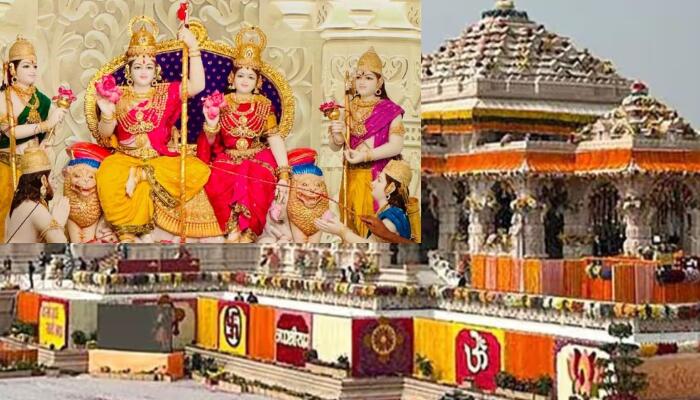
The Ram-avatara is not a story of miracles. It is the story of organised virtuous power, of divinity flowing through those who uphold righteousness, and of the communication of struggle against demonic forces.
The wheel of time spins rapidly, yet its rotation carries us far into the past. Its pages flutter, taking us thousands of years back to the Treta Yuga.
In that age, Earth bore a vast land known as Ary-avarta. It was a region of advanced human civilisation. It was prosperous, guided by noble ideals and elevated emotions. Its people thirsted for knowledge. Scholars and students flourished, new texts were written, and the influence of a refined sage culture pervaded society. Yajnas and rituals were regularly observed. Purity flowed constantly through both life and environment. The Supreme Lord watched Ary-avarta with interest, desiring to witness its life firsthand.
Along the banks of the Saryu River lay a great province called Kosala. Wealthy and joyous, its people lived in abundance.
“Kosalo nāma muditaḥ sphīto janpado mahān,
Niviṣṭaḥ Saryutīre prabhūtadhanadhānyavān.”
(Valmiki Ramayana / Balakanda / Chapter 5)
Its capital, Ayodhya, was famed across Ary-avarta. It was a city untouched by war. The finest of cities, founded and settled by Manu Maharaj himself.
“Ayodhyā nāma nagarī tatra-asil-lokaviśr̥tā,
Manunā mānavendra yā purī nirmitā svayam.”
(Balakanda / Chapter 5)
Ayodhya was vast, stretching 12 yojanas (approximately 150 km) in length and 3 yojanas (approximately 38 km) in width. Broad highways ran through it. Climbing plants, trees, fruits, and flowers adorned it. A deep moat encircled the city, ensuring complete security. Its citizens were enterprising and cultured, skilled in arts, music, dance, and drama. They were virtuous, disciplined, joyous, and noble in character.
Over this sacred city, the mighty and valiant King Dasharatha ruled. His reign was as serene and benevolent as the moon shining among the stars.
“Tām purīṁ sa mahātejā rājā Daśaratho mahān,
Śaśāśa mitāmitro nakṣatrāṇīva candramāḥ.”
(Balakanda / Chapter 6)
King Dasharatha, alongside his eight ministers, Dhrishti, Jayanta, Vijaya, Saurashtra, Rashtravardhan, Akop, Dharmapal, and Sumantra, led a just and welfare-oriented state. United in purpose, humble and wise, each minister was skilled in arms and statecraft. Sage ministers such as Suyajna, Javali, Kashyapa, Gautama, Dirghayu, Markandeya, and Katyayana further advised him. With such guidance, King Dasharatha governed Kosala with virtue and strength.
“Iidr̥śais tair mātyaiśca rājā Daśaratho’naghaḥ,
Upapanno guṇopetair anvashāsad vasundharām.”
(Balakanda / Chapter 20)
Yet, not all was well in Ary-avarta. While Ayodhya remained secure, a shadow of terror stretched across Kosala and beyond. Virtuous forces trembled. Even sages struggled to perform rituals, fearful that demonic interference would ruin every auspicious act.
At the centre of this darkness was Ravana, king of Lanka. Grandson of the sage Pulastya and son of the learned Vishrava, he was a devout follower of Shiva but cruel, wrathful, and deceitful. He derived pleasure from tormenting the virtuous.
Through his demonic lieutenants spread across Ary-avarta, Ravana oppressed citizens, extracted wealth, and sowed fear. The virtuous forces of Ary-avarta were paralysed, tormented, and in despair.
They prayed to the Supreme Creator. “Ravana, by Your grace, wields immense power to inflict suffering upon us. We are powerless to stop him. Please intervene.”
“Bhagavan tvat prasādena rāvano nāma rākṣasaḥ,
Sarvān no bādhate vīryāc chāsituṁ taṁ na śaknumaḥ.”
(Balakanda / Chapter 15)
The Supreme Father observed the devastation across Ary-avarta and the suffering of the virtuous. He resolved that for citizens to live fearlessly, Ravana’s destruction was inevitable. But this time, it would not occur through miracles.
Unlike the Narasimha Avatar, where divine intervention was necessary to defeat Hiranyakashipu, the Ramavatara would not rely on supernatural powers. Miracles, if used, would diminish the confidence of virtuous forces. In future generations, whenever demonic tendencies arise, the virtuous must act with courage, relying on their own organisation and strength. They will not wait for miracles.
The goal was clear. Virtuous powers must awaken to their own potential. United and organised, they can overcome any demonic force. The Supreme Father will act as a channel, but the struggle itself will be theirs.
Thus it was decided. God will incarnate, not to perform miracles, but to flow divinity into organised virtuous power. He will be born in the sacred city of Ayodhya as the son of King Dasharatha.
He will come as Sri Ram.