
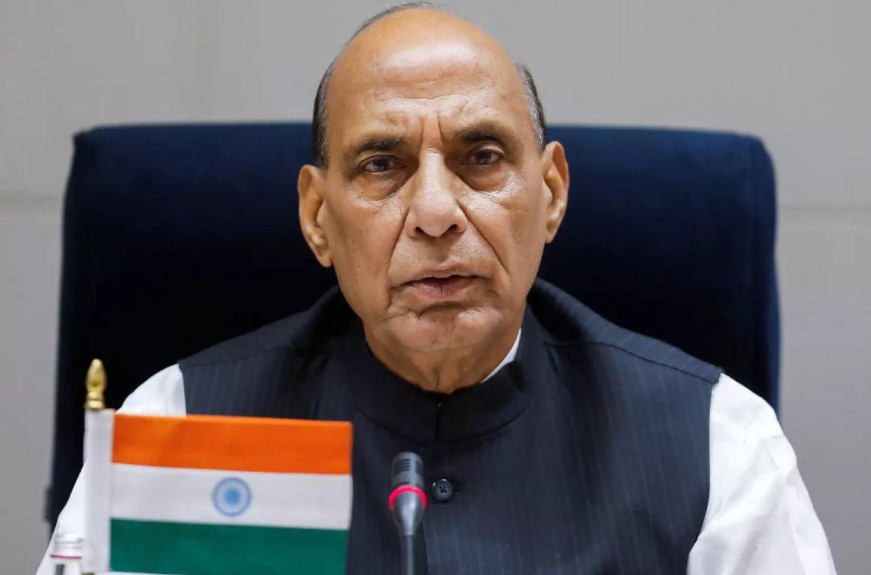
Defence Minister Rajnath Singh on Tuesday chaired a high-level meeting to review India’s security and defence preparedness as the war in West Asia enters its fourth week.
The meeting was attended by Chief of Defence Staff (CDS) General Anil Chauhan, Air Chief Marshal Amar Preet Singh, Army Chief General Upendra Dwivedi, Navy Chief Admiral Dinesh K Tripathi, and DRDO Chairman Samir Kamat, along with other senior officials, according to news agency ANI.
The review comes as the government examines a range of challenges arising from the conflict, including diplomatic, defence, and trade issues. Meanwhile, US Under Secretary of War for Policy Elbridge Colby is visiting India to engage with senior officials.
US President Donald Trump said Washington and Tehran have started “very good and productive conversations” aimed at resolving the Middle East conflict. He has ordered a five-day pause on planned strikes targeting Iranian power plants and energy infrastructure to allow talks to continue, signaling a potential diplomatic opening amid rising tensions.
The defence review comes as India and the US seek to advance trade ties. It follows PM Modi’s remarks in Parliament, highlighting the challenges India faces due to the conflict. India is engaging with global suppliers and using its strategic petroleum reserves to cushion against supply disruptions, while also taking steps to secure shipping routes and ensure the safe return of vessels.
US Under Secretary of War Elbridge Colby is set to discuss the implementation of the US-India Major Defence Partnership framework during his visit.
The conflict in West Asia has entered its fourth week, causing disruptions to trade routes through the Strait of Hormuz. Tensions escalated after the killing of 86-year-old Iran’s Supreme Leader, Ali Khamenei, in joint military strikes by the US and Israel on February 28.
In retaliation, Iran targeted Israeli and US assets across several Gulf countries, further affecting the waterway and impacting international energy markets, with repercussions for global economic stability.
Yesterday, Prime Minister Narendra Modi addressed the Lok Sabha to brief members on the developments in West Asia and their potential impact on India, describing the situation as “worrisome.” He highlighted that the ongoing conflict poses unprecedented challenges that are not only economic and related to national security but also humanitarian.
The Prime Minister emphasized the global challenges arising from the conflict and India’s trade relations with countries in the war-affected region, noting that a large part of the country’s crude oil and gas needs comes from West Asia.
“The situation in West Asia is worrisome. This conflict has been going on for more than three weeks. It has a severe impact on the global economy and the lives of the people, and that is why the world is urging all sides for an early resolution to this conflict,” PM Modi said. He added that the region remains crucial as it provides a route for India’s trade with other countries.