
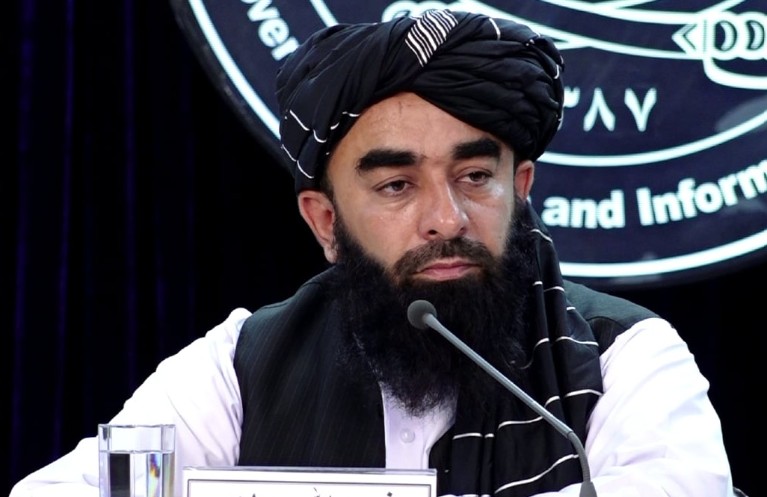
Two days after a Pakistani airstrike hit a drug rehab centre ‘Omid Addiction Treatment Hospital’ in Afghanistan’s Kabul, Taliban spokesperson Zabihullah Mujahid vowed retaliation on Tuesday and said that the attack “will not go unanswered.”
According to media reports, the Taliban spokesperson described the incident as “a matter of deep sorrow” and assserted that a befitting response will follow the heinous strike.
“Right now, we are busy with rescue, identifying the dead and searching for the injured. It is a matter of deep sorrow for us. But this crime and inhumane brutality will not go unanswered,” said Mujahid, according to Time of India.
Videos circulating online showed large flames engulfing the hospital, with thick black smoke rising into the night sky.
Mujahid estimated the death toll at over 400, with about 250 injured transferred to hospitals across Kabul and emphasized that the hospital housed adult male patients undergoing long-term rehabilitation, insisting there was no military presence on site.
“This is an inhuman act. We strongly condemn it. There was no military presence at this location, it was a civilian medical facility treating vulnerable people,” said the spokesperson.
Pakistan Denies Targeting Civilians
As per TOI, he also compared Pakistan’s actions to Israel’s tactics in the region, charging that “they attack, commit oppression to ignite regional fires and achieve evil goals through terrorism.”
UN Confirms Lower Death Toll
In a fresh development on Wednesday, the United Nations Assistance Mission in Afghanistan has put the death toll at 143 in the bombing of a Kabul drug rehab centre by Pakistan, according to Reuters.
The Afghan Taliban government had said more than 400 people were killed and 265 injured in the air strike on Monday night.
Broader Pakistan-Afghanistan Tensions
The strike is part of escalating cross-border tensions between Pakistan and Afghanistan, with weeks of drone attacks, airstrikes, and retaliatory operations along the Durand Line.
Pakistan claims it is targeting Tehreek-e-Taliban Pakistan (TTP) camps and other militant groups operating from Afghan territory, while the Taliban-led government accuses Islamabad of violating Afghan sovereignty and causing civilian casualties.
The attacks have displaced civilians and drawn calls from the UN and international community to avoid harming non-combatants.
The attack has also triggered widespread outrage on social media. Afghan cricketer Rashid Khan described the strike as “sickening,” particularly during Ramadan, urging the international community to investigate civilian casualties. Fast bowler Naveen-ul-Haq drew comparisons to Israel’s operations in Gaza, criticizing the targeting of civilians under the pretext of counter-terrorism.
The Taliban government, through spokespersons such as Hamdullah Fitrat and Zabihullah Mujahid, described the attack as a brutal assault on innocent civilians and vowed that it “will not go unanswered,” emphasising that most of the victims were non‑combatants seeking treatment at the hospital.
Afghan authorities labelled the incident a crime against humanity and demanded accountability, asserting that the facility had no military presence and urging international attention and action over the strike.
Civilian and Humanitarian Impact
Large sections of the Omid rehabilitation hospital, a 2,000-bed facility, were destroyed. Emergency services struggled to cope with the mounting casualties, highlighting the humanitarian crisis caused by the strike.
Notably, the incident underscores the risks of cross-border military operations escalating into civilian tragedies, further destabilizing the region and fueling international condemnation.