
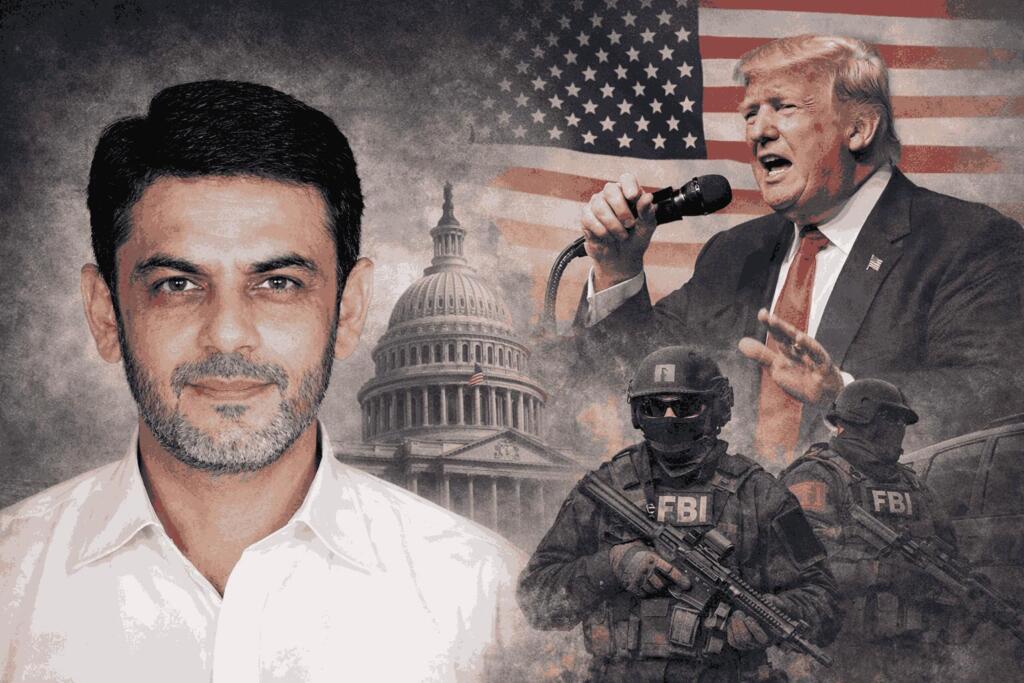
A federal jury in the United States has convicted a Pakistani national over a chilling international assassination plot that targeted former US President Donald Trump and other prominent American political figures. The case, which unfolded in a Brooklyn federal court, has drawn global attention due to its alleged links to Iran’s paramilitary networks and its implications for international security.
The Pakistani national, identified as Asif Merchant, was found guilty of terrorism-related offences and murder-for-hire charges after prosecutors demonstrated that he attempted to orchestrate the assassination of American political leaders. According to US authorities, the plot was connected to operatives associated with Iran’s Islamic Revolutionary Guard Corps (IRGC), a powerful military and intelligence organisation accused of conducting covert operations abroad.
Investigators said the Pakistani national travelled to the United States in 2024 with the intention of recruiting individuals who could carry out contract killings. He reportedly sought assistance from contacts in New York, believing they could help arrange assassinations of high-profile targets. However, the individuals he approached were cooperating with American law enforcement, and the alleged plan was quickly uncovered.
The prosecution argued that the Pakistani national was acting under direction from Iranian handlers who wanted retaliation for the 2020 killing of Iranian military commander Qasem Soleimani in a US drone strike ordered by the Trump administration. The killing of Soleimani had dramatically escalated tensions between Washington and Tehran and triggered fears of retaliatory actions against American officials.
During the trial, prosecutors presented evidence that the Pakistani national attempted to hire hitmen and even paid money as an advance, believing the arrangement would set the assassination plan in motion. In reality, the supposed assassins were undercover FBI agents. Authorities said the accused paid around $5,000 as an initial payment and discussed potential targets and logistics with the agents during recorded meetings.
The Pakistani national also allegedly researched public appearances and movements of key American politicians, including Trump. According to investigators, the suspected plot extended beyond a single target and could have included other senior political figures such as Joe Biden and Nikki Haley, though prosecutors said Trump appeared to be the most likely primary target.
In court, the Pakistani national claimed he had been pressured by Iranian operatives and feared for the safety of his family living in Tehran. He testified that he had agreed to participate in the scheme only because he believed his relatives were under threat. However, prosecutors challenged that explanation, arguing that the evidence showed deliberate and willing participation in the plot rather than coercion.
The investigation revealed that the Pakistani national had previously worked in banking and business and maintained connections across Pakistan and Iran. US authorities believe these links allowed Iranian intelligence operatives to recruit him for clandestine missions abroad. The case has therefore been viewed as a rare example of an alleged state-linked assassination conspiracy unfolding within the United States.
American officials have described the conviction as a significant success in preventing a potentially catastrophic attack. Law enforcement agencies said early intelligence gathering, informants and undercover operations ensured that the plot was dismantled before it could move beyond the planning stage.
The conviction also highlights broader geopolitical tensions involving the United States, Iran and global security networks. While Washington has accused Tehran of orchestrating overseas attacks through proxy actors, Iranian officials have repeatedly denied involvement in plots against American leaders.
With the guilty verdict now delivered, the Pakistani national faces the possibility of life imprisonment under US law. The case serves as a stark reminder of the complex web of geopolitical rivalries, intelligence operations and retaliatory motives that continue to shape global politics—and the persistent threats faced by world leaders in an increasingly volatile international environment.