
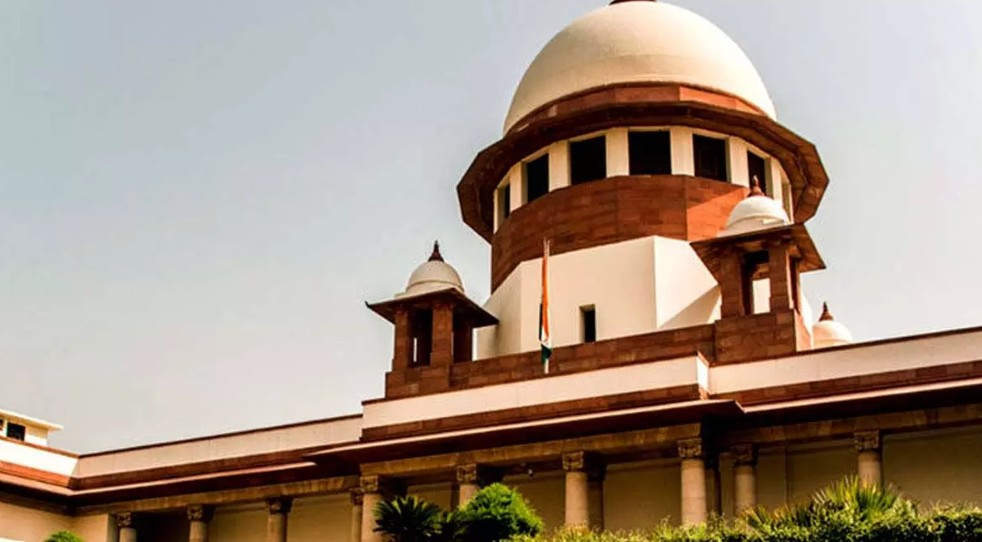
The Supreme Court of India on Tuesday ruled that any individual who converts to a religion other than Hinduism, Sikhism or Buddhism cannot claim Scheduled Caste (SC) status under the Scheduled Castes and Scheduled Tribes (Prevention of Atrocities) Act.
A Bench of Justice P K Mishra and Justice Manmohan held that only those professing Hinduism, Sikhism or Buddhism are entitled to claim SC status.
“No person who professes a religion other than Hindu, Sikh or Buddhist shall be a member of Scheduled Caste. Conversion to any other religion results in loss of Scheduled Caste status,” the bench observed, as reported by LiveLaw.
The Court emphasised that the Constitution (Scheduled Castes) Order, 1950 clearly lays down this position, and that the restriction under it is absolute. It clarified that conversion to any religion not mentioned in Clause 3 of the 1950 Order leads to immediate loss of SC status, irrespective of a person’s birth.
The apex court upheld the ruling of the Andhra Pradesh High Court, which had stated that a person who converts to Christianity and actively follows and practises the faith cannot be regarded as a member of the Scheduled Caste community.
The case was heard in connection with a petition filed by Chinthada Anand, who had converted to Christianity and was working as a pastor. Anand had filed a complaint under the SC/ST Act against Ramireddy and others, alleging assault and seeking protection under the law.
The accused challenged the case, arguing that Anand was no longer eligible for SC protection as he had converted and was actively practising Christianity.
Justice N Harinath of the Andhra Pradesh High Court quashed the FIR, holding that Anand had lost his SC status upon conversion and therefore could not seek protection under the SC/ST Act.
The High Court also noted that merely possessing an SC certificate would not support his claim, as conversion—where caste distinctions are not recognised—effectively nullifies Scheduled Caste status.
What Does it Mean?
The Supreme Court of India ruling primarily reinforces that Scheduled Caste (SC) status is legally tied not only to birth but also to religious identity, as defined under the Constitution (Scheduled Castes) Order, 1950. For SC communities, this means that only individuals who profess Hinduism, Sikhism, or Buddhism are eligible to claim SC status.
If a person converts to another religion, such as Christianity or Islam, they lose their SC recognition in the eyes of the law. This is not a new rule but a reaffirmation of an existing legal framework, now backed strongly by the Court, leaving little room for interpretation or exception.
A major implication for SC individuals is the loss of legal protections and benefits upon conversion. This includes ineligibility for reservation in education and government jobs, as well as the inability to seek protection under the SC/ST (Prevention of Atrocities) Act.
In practical terms, this makes SC status conditional rather than permanent and also introduces a significant social reality, individuals from SC backgrounds may have to weigh religious choices against access to constitutional safeguards, as conversion now carries clear legal consequences.
For the general (unreserved) category, the ruling does not directly change the number of available opportunities or reservation percentages. The structure of competition remains the same, with open category seats continuing to be accessible to all candidates based on merit.
However, the judgment does bring greater clarity to who can and cannot claim SC benefits, ensuring that eligibility remains strictly within the constitutional definition. This may reduce disputes or contested claims in specific cases, though the overall impact on competition is limited.
In effect, while the ruling has a significant and direct impact on SC individuals by clearly defining the boundaries of their legal status, its effect on the general category is largely indirect. It does not ease competition or increase seats but helps reinforce a more clearly defined system.