
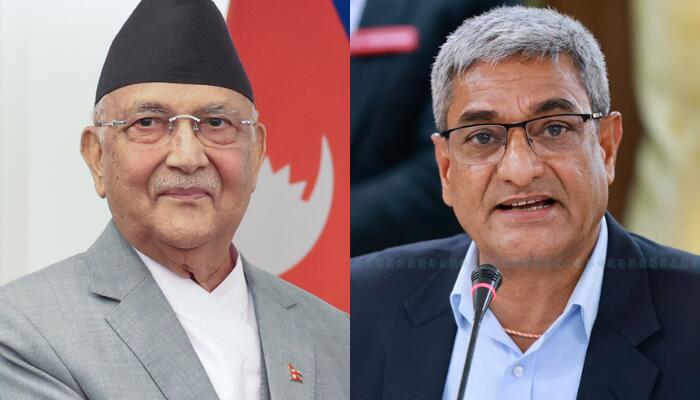
In a dramatic and defining moment for Nepal’s democracy, former Prime Minister K.P. Sharma Oli and former Home Minister Ramesh Lekhak were arrested today over allegations of negligent killings during the Gen Z protests that claimed 76 lives last September.
The arrests were carried out within hours of the new government led by Balendra Shah assuming office, marking a swift and assertive start to its tenure. Police said the action was taken to enforce the recommendations of a probe commission that investigated the violent crackdown, including the deaths of 19 people in police firing on September 8.
Oli was detained at his residence in Gundu, while Lekhak was arrested in Suryabinayak in Bhaktapur district near Kathmandu. The arrests followed formal complaints filed by the Home Ministry, which led to investigations and the issuance of arrest warrants.
Probe findings fix responsibility at the highest level
The commission, tasked with examining the events of September 8 and 9, concluded that both leaders failed to prevent the use of lethal force by security personnel. It recommended prosecuting them for negligent killings, stating that they did not act to stop police firing on demonstrators.
The protests, largely driven by younger citizens, ultimately led to the fall of the Oli government. At the time, Lekhak, a senior leader of the Nepali Congress, was serving as Home Minister.
The report was submitted to the outgoing administration led by Sushila Karki on March 8. However, it was leaked to the media days before Shah took oath, intensifying public pressure and fuelling expectations of immediate action.
New leadership moves with urgency
At its first Cabinet meeting on Friday evening, the government directed all relevant agencies to act on the commission’s findings. The decision signalled a clear intent to prioritise accountability in one of the most contentious episodes in recent years.
Newly appointed Home Minister Sudhan Gurung, who had emerged as a key figure during the protests, played a central role in initiating the process. Gurung had filed a complaint against Oli and Lekhak in October, which later formed the basis of the legal proceedings.
Government spokesperson Sasmit Pokharel confirmed that authorities had been instructed to move forward without delay. Gurung also held late-night consultations with the chiefs of Nepal Police and the Armed Police Force ahead of the arrests.
Legal risks and rising political tensions
The commission has also recommended prosecuting Chandra Kuber Khapung, who headed the Nepal Police during the protests. If found guilty, all three could face prison sentences of up to 10 years.
The sudden public release of the report has raised concerns among legal experts, who have urged caution given the political sensitivity of the case. At the same time, the arrests have already begun to stir tensions.
On Friday night, sister organisations of Oli’s party, the Communist Party of Nepal (Unified Marxist–Leninist), warned of “consequences” if their leader was detained, signalling the possibility of unrest.
As Nepal grapples with the aftermath of one of its deadliest protest crackdowns, the arrests mark a pivotal moment in the country’s pursuit of accountability at the highest levels, even as they threaten to deepen political divisions in an already fragile landscape.