
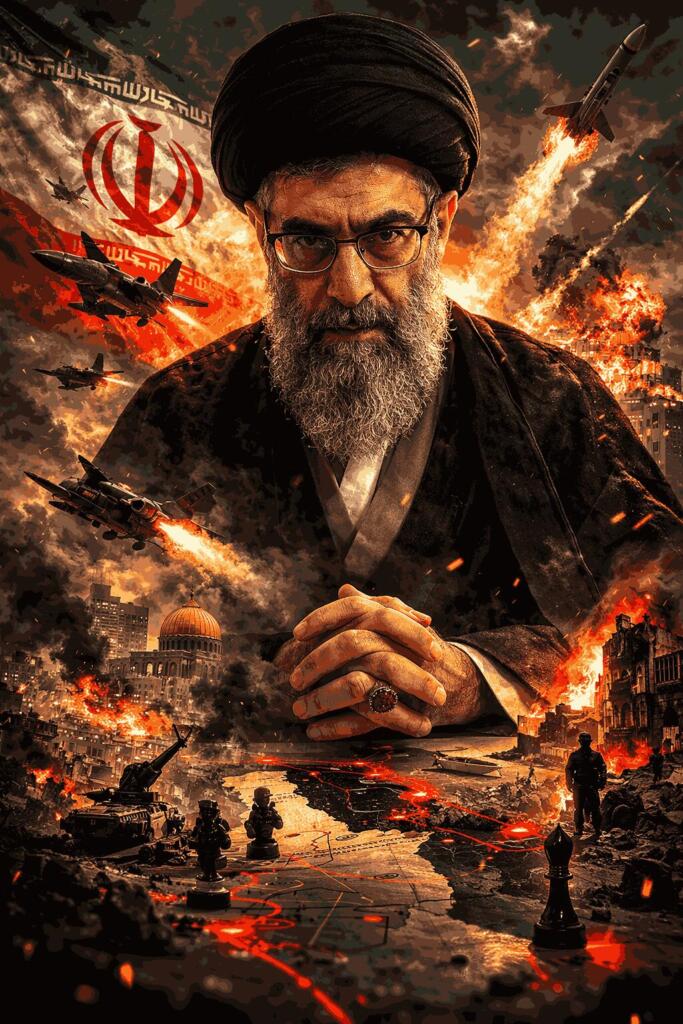
The rise of Mojtaba Khamenei as Iran’s new Supreme Leader marks one of the most dramatic leadership transitions in the Islamic Republic since the 1979 revolution. The 56-year-old cleric, long considered a powerful figure behind the scenes, has now stepped into the country’s highest political and religious office at a moment of intense regional conflict and internal uncertainty.
For decades, Mojtaba Khamenei remained a relatively low-profile personality in Iranian public life, rarely appearing in the media or holding formal government positions. Yet analysts say his influence within Iran’s power structure was substantial. Working closely within the Office of the Supreme Leader, he built networks among senior clerics, political elites, and the powerful Islamic Revolutionary Guard Corps (IRGC), giving him significant influence despite his quiet public presence.
The path to leadership opened suddenly after the death of his father, Ayatollah Ali Khamenei, who was killed during escalating military confrontations involving Iran, Israel, and the United States. Following the crisis, Iran’s Assembly of Experts—the clerical body responsible for choosing the country’s supreme authority—moved quickly to select a successor. In a controversial decision that shocked many observers, the council chose Mojtaba Khamenei to lead the nation.
The appointment has drawn global attention not only because of the ongoing conflict in the Middle East but also because it represents the first time the leadership of the Islamic Republic has effectively passed from father to son. Critics argue that such a transition resembles hereditary succession, something Iran’s revolutionary system originally claimed to oppose. Supporters within Iran, however, say the choice reflects continuity during a period of national crisis.
Observers note that Mojtaba Khamenei has long been viewed as a “gatekeeper” in Iranian politics. During his father’s rule, he reportedly played a key role in managing political access to the Supreme Leader’s office and shaping decisions behind the scenes. This influence extended to alliances with conservative factions and strong ties to the IRGC, one of the most powerful institutions in the country’s political and military structure.
Those connections may prove crucial as Iran faces escalating tensions in the region. The country has been involved in an expanding conflict that has seen missile strikes, drone attacks, and rising hostilities with Israel and Western allies. Analysts say the new leadership will need to balance domestic political stability with the pressures of international confrontation.
At home, the reaction has been mixed. Some conservative supporters view Mojtaba Khamenei as a natural continuation of the ideological direction established by his father. They believe his close ties with Iran’s security establishment will allow him to maintain order and protect the Islamic Republic from foreign threats.
However, reformists and critics within Iran have expressed concern about the concentration of power within a single family. For years, opponents warned that elevating Mojtaba Khamenei to the top leadership position could undermine the legitimacy of the system by appearing dynastic rather than revolutionary. Some public protests and critical chants reportedly emerged shortly after the announcement, reflecting unease among segments of the population.
Beyond domestic politics, the international community is watching closely. Western governments have long viewed Mojtaba Khamenei as a hardline figure with strong ideological commitments and little inclination toward compromise with the United States or its allies. Analysts suggest that his leadership could mean a continuation—or even intensification—of Iran’s confrontational foreign policy stance.
Despite these concerns, supporters argue that Mojtaba Khamenei brings years of institutional experience to the role, even if much of it occurred behind closed doors. His familiarity with Iran’s clerical networks, security apparatus, and political factions could allow him to consolidate authority quickly during a turbulent moment in the country’s history.
As Iran navigates war, economic pressure, and internal political divisions, the leadership of Mojtaba Khamenei will likely shape the country’s direction for years to come. Whether his tenure brings stability or deeper confrontation remains uncertain, but one fact is clear: a man who once operated largely in the shadows has now become one of the most powerful figures in the Middle East.