













Rising tensions in the Middle East, especially the confrontation between the US, Israel, and Iran, are now being felt globally. This conflict has led to a sharp increase in petrol and diesel prices worldwide. Countries like Australia, the US, Singapore, and Spain have witnessed price hikes ranging from 20% to 30%. What is surprising, however, is that in India, despite being heavily dependent on imports for crude oil and gas, there has been no increase. Not only have prices remained stable, but supply has also stayed uninterrupted, even as Brent crude has crossed $100 per barrel.
A Sharp Global Surge in Prices
Between February 23 and March 16, petroleum product prices surged significantly worldwide. Australia and Vietnam saw the highest increase of around 32%, while the US recorded a 24% rise and Singapore 21%. This is even though the US possesses vast domestic oil and gas reserves and has influence over Venezuela’s oil industry as well.
Spain saw a 19% increase, Egypt 14%, and China around 10%. Malaysia and Hong Kong recorded 5% increases each, while Qatar saw a 3% rise—clearly indicating that the impact of the war has been felt across nearly every major global market.
Even Pakistan, a neighbouring country of Iran, witnessed a 25% surge. Cambodia (19.37%), Canada (17.33%), and Germany (12.64%) also saw sharp increases. In contrast, India stands out as an exception, with fuel prices remaining completely stable.
How Is India Controlling Prices Amid War?
In India, petrol and diesel prices remain almost unchanged compared to pre-war levels. The biggest reason behind this is the government’s proactive intervention policy.
India has effectively utilized its Strategic Petroleum Reserves (SPR) to maintain a balance between demand and supply, helping stabilize prices.
Another major factor is the import of discounted crude oil from Russia. Despite Western sanctions, India has significantly increased purchases of cheaper Russian oil, thereby controlling costs to a large extent.
Additionally, government-owned oil companies have absorbed part of the burden by reducing margins, ensuring that the immediate impact does not fall on consumers. The government’s clear intent is to shield citizens from inflationary pressures caused by the war. In fact, efforts are being made to avoid major price hikes unless crude oil reaches the $120–130 per barrel range.
‘Modi Diplomacy’ and India’s Balance in a Divided World
India’s ability to keep fuel prices under control is even more remarkable when seen in the context of its high import dependency. The country imports nearly 85% of its energy needs, and around 60–65% of its oil comes from Middle Eastern countries.
A significant portion of this supply passes through the Strait of Hormuz, one of the world’s most sensitive and strategically critical maritime routes. The ongoing conflict has directly impacted this route, effectively disrupting normal movement.
Despite this, India, through its diplomatic efforts, has managed to ensure the safe passage of Indian-flagged oil and gas tankers through Hormuz. This is no small achievement given the current geopolitical volatility.
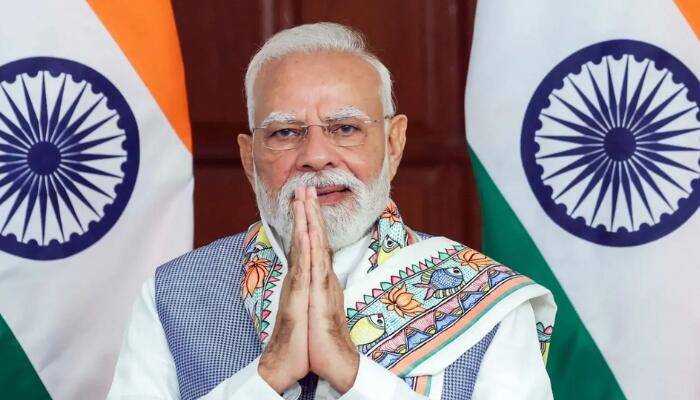
India’s ability to maintain a fine balance between opposing camps in the region, while safeguarding its national interests, reflects a carefully calibrated diplomatic strategy. Prime Minister Modi has engaged with leaders of Gulf nations, even expressing concern over attacks on civilian areas in Iran, while also communicating directly with Iran’s leadership to present India’s position. Soon after, Iran facilitated the safe exit of Indian vessels through Hormuz.
This is not merely economic management; it is the result of strategic geopolitical balancing. Of course, if the war prolongs, the situation may become more complex, and ‘Modi diplomacy’ will face an even tougher test. But for now, it appears to be holding firm.