
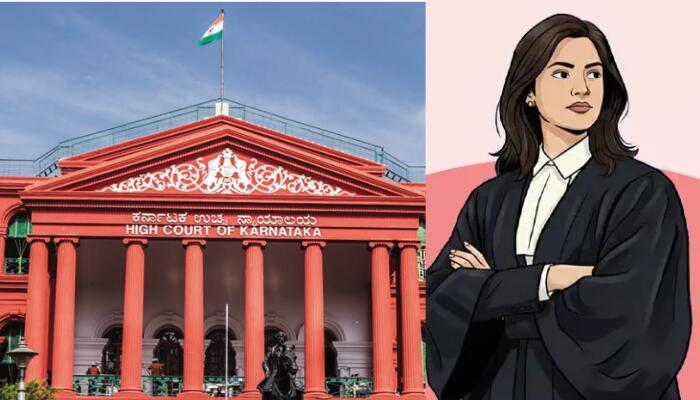
The Karnataka High Court is grappling with a complex legal battle over the State’s menstrual leave policy, as employers, women professionals and advocacy groups present sharply opposing views on whether the measure advances gender justice or entrenches discrimination.
The controversy stems from a government order dated November 20, 2025, mandating one day of paid menstrual leave per month for women aged 18 to 52 across establishments governed by laws such as the Factories Act, 1948, the Karnataka Shops and Commercial Establishments Act, 1961, the Plantation Labour Act, 1951, the Beedi and Cigar Workers Act, 1966 and the Motor Transport Workers Act, 1961.
State cites science and social justice
Appearing before Justice Anant Ramanath Hegde in Karnataka Employers Association v Government of Karnataka, Advocate General Shashi Kiran Shetty defended the policy as grounded in scientific and objective considerations. He argued that women workers are often discouraged from availing menstrual leave and typically suffer wage loss when they do, making State intervention necessary.
The State’s position has found support from multiple organisations, including the Bengaluru Women Lawyers Association. Senior Advocate Prof Ravivarma Kumar told the court that menstruation involves recurring physical and psychological symptoms such as cramps, nausea and hormonal imbalance. He argued that women in the reproductive age group constitute a valid class for differential treatment and that denying paid leave would effectively deprive them of livelihood, contrary to the Constitution’s promise of social justice.
Backing the policy, the All India Progressive Women’s Association drew parallels with childcare leave, arguing that such provisions are essential to retain women in the workforce. Its counsel stressed that menstrual health is central to reproductive autonomy and warned that reliance on painkillers could harm long-term health and contribute to antibiotic resistance. The association maintained that the policy would ultimately improve workplace efficiency.
Employers and women petitioners raise red flags
However, the policy has been challenged by industry bodies including the Karnataka Employers Association and the Bangalore Hotels Association, along with companies such as SASMOS HET Technologies, Avirata Defence Systems Limited, Avirata AFL Connectivity Systems Limited and Fesil Aerospace Technologies Limited. They argue that mandatory paid leave imposes a financial burden and question the legality of introducing such a measure through an executive notification.
In a parallel challenge, 15 women professionals, including managers and in-house counsel, have moved the High Court, calling the policy an instance of “benevolent sexism”. They argue that it reinforces stereotypes portraying women as weaker and less reliable, thereby undermining workplace equality.
Their petition contends that mandating menstrual leave could lead employers to view women as less productive or prone to absenteeism, discouraging hiring and promotions. It also raises concerns under Articles 14 and 21, arguing that requiring disclosure of menstrual cycles infringes privacy, dignity and could expose women to stigma and hostile work environments.
Equality in theory and practice
Advocate Maitreyi Krishnan, appearing for the All India Central Council of Trade Unions, urged the court to interpret equality in light of lived realities. She pointed out that women’s workforce participation in India stands at 35.3 per cent, compared to a global average of 47 per cent, and that women constitute only 15 per cent of advocates based on Bar Council surveys.
When Justice Hegde observed that his courtroom reflected near parity, Krishnan responded that such representation was not reflective of the broader legal profession. She further highlighted that conditions like dysmenorrhea are often underdiagnosed, while an estimated 42 million Indian women suffer from endometriosis. She also noted that women’s health has historically been under-researched due to biological variability, reinforcing systemic neglect.
Krishnan argued that structural measures such as menstrual leave are essential to address these entrenched inequalities and realise substantive equality.
Wider implications and next steps
The High Court heard arguments between March 24 and March 26 and will continue proceedings on April 1. The outcome could have far-reaching implications for workplace policy and gender rights across India.
In a related development, the Supreme Court recently declined to entertain a plea seeking nationwide menstrual leave, observing that the issue falls within the legislative domain and cautioning that compulsory policies could adversely impact women’s careers.
As the case unfolds, the court is tasked with resolving a fundamental question: whether menstrual leave is a necessary corrective to structural inequality or a well-intentioned policy that risks deepening the very biases it seeks to eliminate.