
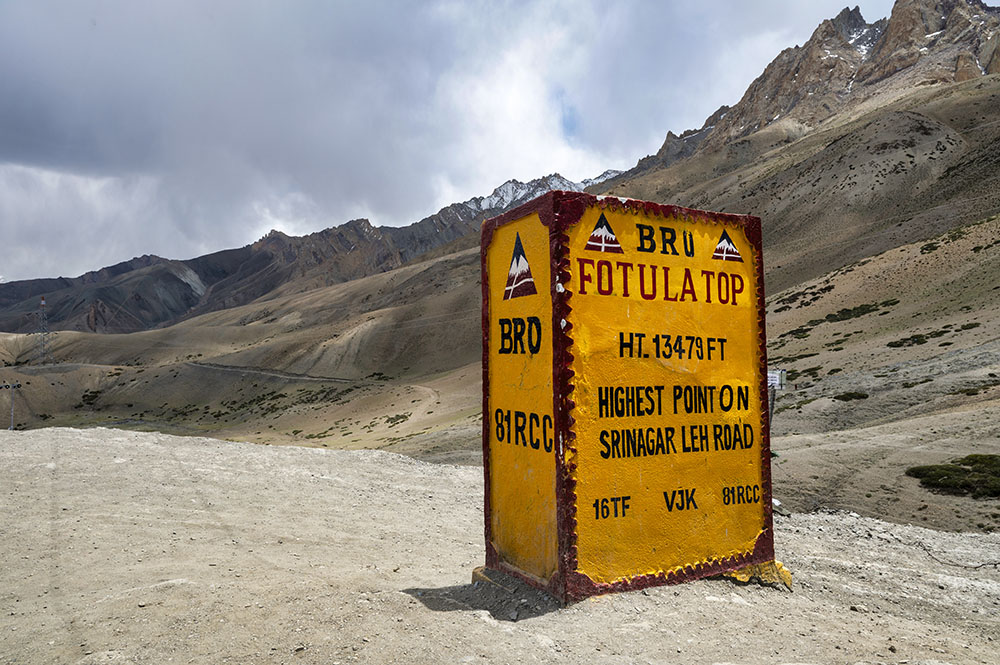
India’s push toward strategic infrastructure in the Himalayas has taken a decisive leap with the approval of a major tunnel project at Ladakh’s Fotu La. The ₹1,196 crore sanction for a twin-tube tunnel along National Highway-1 marks a significant milestone in ensuring year-round connectivity to one of the country’s most critical frontier regions. Positioned at the highest point of the Srinagar–Leh highway, Ladakh’s Fotu La has long been both a lifeline and a bottleneck—now poised for transformation through modern engineering and policy resolve.
According to recent reports, the Union government, under the leadership of Nitin Gadkari, has approved the construction of a unidirectional twin-tube tunnel across Ladakh’s Fotu La. The project, estimated at ₹1,196.22 crore, will include a 1.96 km tunnel along with 0.69 km of approach roads, forming a total length of approximately 2.65 km.
This development is not merely an infrastructural upgrade—it is a strategic recalibration. Ladakh’s Fotu La, situated at an altitude of over 4,100 metres, represents the highest point on NH-1, a corridor that serves as the primary supply route to Ladakh. However, the terrain is notoriously treacherous, with steep gradients, sharp hairpin bends, and frequent closures during winter due to heavy snowfall and icy conditions.
For decades, these seasonal disruptions have hampered both civilian mobility and military logistics. With Ladakh’s Fotu La remaining inaccessible for extended periods, essential supplies often faced delays, and troop movements were constrained by weather windows. The proposed tunnel seeks to eliminate this vulnerability by providing all-weather connectivity—ensuring uninterrupted access regardless of climatic conditions.
The economic implications are equally profound. The tunnel is expected to reduce travel distance by approximately 8.5 kilometres, cutting down transit time and improving fuel efficiency. (Kashmir Life) More importantly, it will enhance the reliability of transport, which is critical for tourism, local trade, and emergency services. In a region where geography dictates opportunity, infrastructure such as Ladakh’s Fotu La tunnel can redefine developmental trajectories.
This project also fits into a broader national strategy aimed at strengthening border infrastructure. Over the past decade, India has accelerated the construction of tunnels and highways in high-altitude regions to ensure seamless connectivity to border areas. These initiatives are not only about economic integration but also about national security, as improved road networks allow for faster mobilisation of defence forces and equipment.
In this context, Ladakh’s Fotu La assumes even greater significance. As a key segment of the Srinagar–Leh highway, it connects the Kashmir Valley to Ladakh’s interior, including strategically sensitive zones. Ensuring that this route remains operational throughout the year enhances India’s ability to maintain logistical readiness in a region marked by geopolitical sensitivities.
The tunnel project also complements other ongoing infrastructure efforts in the region. Projects such as the Zoji La Tunnel and the Sonamarg Tunnel are part of a larger network designed to create all-weather corridors across the Himalayas. Together, these initiatives aim to transform what has historically been a seasonally isolated region into one that is consistently connected to the rest of the country.
Yet, beyond strategy and economics, there is a human dimension to the story of Ladakh’s Fotu La. For residents of Ladakh, winter isolation has long meant limited access to healthcare, education, and essential goods. The tunnel promises to bridge not just physical distances but also socio-economic gaps, enabling communities to remain connected even during the harshest months.
Critically, the project reflects a shift in how infrastructure is conceptualised in India’s frontier regions. Instead of merely maintaining existing routes, the focus is now on reimagining them—using tunnels and advanced engineering to bypass natural constraints. Ladakh’s Fotu La is emblematic of this approach, turning a historically challenging pass into a reliable transit corridor.
However, the success of such projects will depend on timely execution and sustained investment. High-altitude construction presents unique challenges, including extreme weather, geological instability, and logistical constraints. Ensuring that the Ladakh’s Fotu La tunnel is completed within projected timelines will require coordinated efforts between multiple agencies and adherence to stringent engineering standards.
As India continues to invest in its border infrastructure, projects like Ladakh’s Fotu La tunnel serve as both symbols and instruments of progress. They represent a commitment to integrating remote regions, strengthening national security, and improving the quality of life for citizens living in some of the most challenging terrains on earth.
In the years ahead, the impact of Ladakh’s Fotu La will likely extend far beyond its immediate geography. By ensuring all-weather connectivity on a critical highway, the tunnel will reshape mobility, enhance resilience, and reinforce India’s strategic posture in the Himalayas. What was once a seasonal barrier may soon become a permanent gateway—marking a new chapter in the story of Ladakh’s development.