
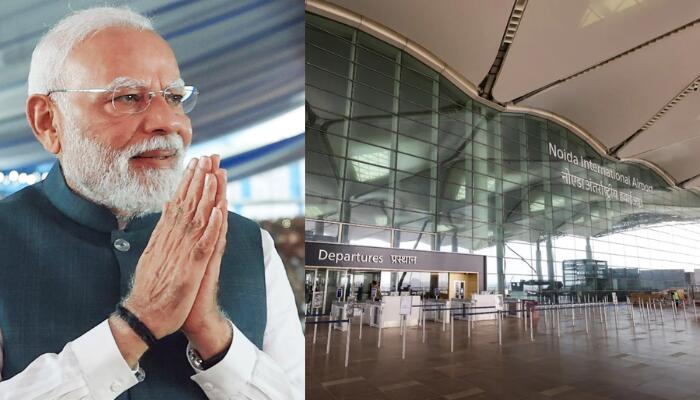
The first phase of the Noida International Airport at Jewar was inaugurated by Prime Minister Narendra Modi, marking a pivotal expansion of India’s aviation network and a strategic boost to the Delhi-NCR region. Envisioned as a major international gateway, the airport is expected to ease congestion at Delhi’s Indira Gandhi International Airport while driving economic activity across western Uttar Pradesh.
After inspecting the terminal and cargo facilities, the Prime Minister addressed a gathering of over one lakh people, describing the project as a key milestone in the ‘Viksit UP, Viksit Bharat’ campaign. He said the airport would benefit districts including Agra, Mathura, Aligarh, Ghaziabad, Meerut, Etawah, Bulandshahr and Faridabad, opening new opportunities for farmers, small businesses and the youth. He also underscored India’s resilience amid global uncertainties, including fuel-related pressures, asserting that the government is working to shield citizens from their impact.
The Prime Minister also criticised previous governments, stating that although the project was cleared in 2003 during Atal Bihari Vajpayee’s tenure, it remained stalled for years before gaining momentum under the current dispensation.
Infrastructure Milestone with Delayed Operations
While the inauguration marks a major achievement, commercial flight operations are unlikely to begin before May due to pending regulatory approvals. The Aerodrome Security Programme certification from the Bureau of Civil Aviation Security remains crucial, as it defines the airport’s entire security framework from entry to boarding, along with contingency protocols.
Several airlines, including IndiGo, Akasa Air, and Air India Express, are expected to begin domestic operations once approvals are secured, connecting cities such as Mumbai, Bengaluru, Hyderabad, Chennai, Lucknow, and Dehradun.
Built at a cost of around Rs 11,200 crore under a public-private partnership model, Phase I has the capacity to handle 12 million passengers annually, with plans to scale up to 70 million. The 3.9-kilometre runway and advanced systems will support all-weather, round-the-clock operations. The Prime Minister also laid the foundation stone for a 40-acre Maintenance, Repair, and Overhaul facility, signalling long-term aviation ecosystem development.
Growth Engine with Uneven Ground Realities
Political and industry leaders projected the airport as a transformative force. Uttar Pradesh Chief Minister Yogi Adityanath termed it a “runway for development”, while Union Civil Aviation Minister Kinjarapu Rammohan Naidu said, “Jewar would now be known for investment rather than crime”.
Industry stakeholders highlighted its potential to boost exports across sectors such as textiles, leather, handicrafts and pharmaceuticals. Experts also noted that the airport could help position Delhi-NCR as a global aviation hub bridging eastern and western markets.
However, local sentiment remains mixed. While many residents hailed the project as historic, some youth from land-acquiring families expressed disappointment over unfulfilled job assurances despite compensation, reflecting a gap between promise and delivery.
Security, Logistics and Connectivity Challenges
The inauguration witnessed an unprecedented security deployment, with a five-tier system involving around 5,000 personnel, anti-drone surveillance, bomb detection units and full area sanitisation. The venue was declared a high-security zone.
Traffic movement on major expressways was restricted, and parking arrangements were made for nearly 20,000 vehicles, supported by shuttle services and designated routes for attendees from multiple cities.
Medical preparedness included over 60 ambulances, equipped with both basic and advanced life support systems, and 16 hospitals on standby.
Despite the scale of planning, connectivity remains a concern. With no metro or direct bus links currently available, passengers will initially depend on cabs, bike taxis, and private vehicles. Partnerships with mobility providers aim to bridge this gap, but long-term solutions are still in development.
A ceremonial presentation of a sacred Buddha artefact ahead of the inauguration added a symbolic note to the event, even as the airport’s operational future now hinges on regulatory clearances.
As Noida International Airport prepares to open its doors to travellers, it stands as both a symbol of India’s infrastructure ambitions and a reminder that execution, connectivity, and public trust will define its true success.