
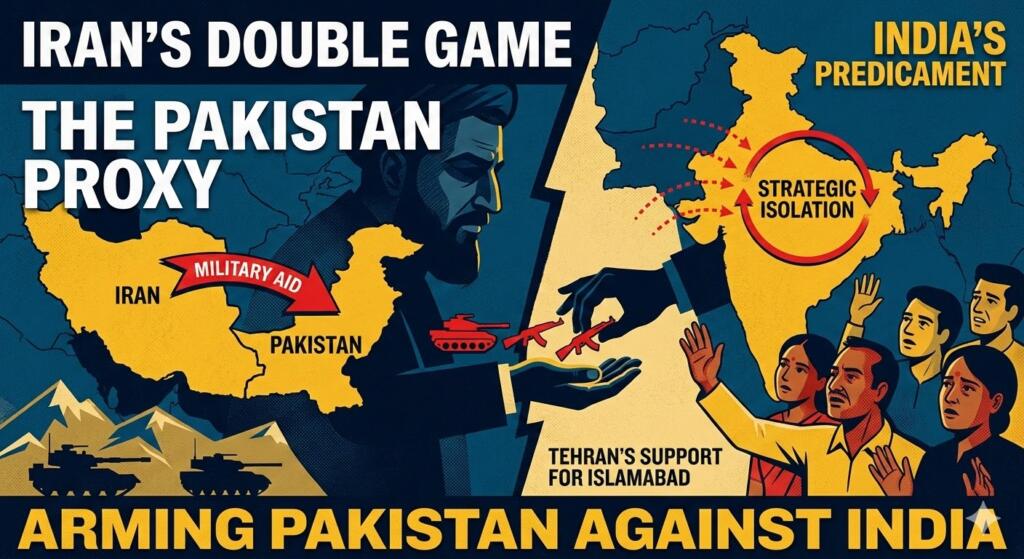
India’s restrained diplomatic posture during recent tensions involving Iran has revived debate among analysts about a long and complex chapter of regional history. Archival records and declassified documents indicate that during several decisive moments in South Asian geopolitics, Iran sided with Pakistan, providing diplomatic, logistical, and military support during its conflicts with India.
One of the earliest signs of this alignment came immediately after the partition of the subcontinent. Iran was among the first countries to recognise Pakistan in 1947, establishing diplomatic relations soon after the new state emerged. This early recognition laid the foundation for close political and strategic ties between Tehran and Islamabad.
Early Strategic Alignment
Relations between Iran and Pakistan developed rapidly during the early years of Pakistan’s existence. In 1950, the two countries signed a Treaty of Friendship, formalising their intention to build long-term diplomatic and strategic cooperation.
Iran’s monarch, Mohammad Reza Pahlavi, later became the first foreign head of state to visit Pakistan, symbolising Tehran’s commitment to the bilateral relationship. During the Cold War, both countries joined Western security arrangements. They became members of the Central Treaty Organization (CENTO), a military alliance designed to contain Soviet influence across the Middle East and South Asia.
Iran, Pakistan, and Turkey also created the Regional Cooperation for Development in 1964, further strengthening economic and strategic cooperation between the three countries.
At the same time, India pursued a policy of non-alignment while developing closer ties with the Soviet Union. This divergence reinforced Iran’s strategic alignment with Pakistan within the Western Cold War bloc. The Shah of Iran famously described the relationship by saying Iran and Pakistan were “like one soul in two bodies,” reflecting the depth of political and strategic trust between the two countries.
Support During the 1965 Indo-Pak War
Iran’s support for Pakistan became particularly visible during the Indo-Pakistani War of 1965.
Tehran publicly backed Pakistan and criticised India’s actions, expressing concern over what it called aggression against Pakistan. Iranian officials voiced diplomatic support for Islamabad, signalling Iran’s clear alignment with Pakistan.
Beyond statements, Iran provided essential logistical support. Tehran supplied Pakistan with oil and fuel that sustained its military operations, at a time when international sanctions and arms restrictions limited Islamabad’s access to global markets.
Iran also helped Pakistan overcome international arms restrictions. Declassified United States diplomatic documents show that Iran acted as an intermediary in military procurement, purchasing approximately ninety Canadair Sabre Mk. 6 fighter aircraft, along with missiles, artillery, ammunition, and spare parts from West Germany before transferring them to Pakistan. These aircraft later became a critical component of the Pakistan Air Force.
The Shah also issued statements warning that Iran would not allow Pakistan to be weakened or destroyed, making Tehran’s political support unmistakably clear.
Military Assistance During the 1971 War
Iran’s support continued during the Indo-Pakistani War of 1971, which ultimately led to the creation of Bangladesh.
During the conflict, Tehran again supplied Pakistan with fuel, artillery, ammunition, spare parts, and approximately twelve helicopters to replace equipment deployed in East Pakistan. Iran allowed Pakistani fighter aircraft access to Iranian airbases, helping them remain operational while reducing exposure to Indian air strikes.
Although Iran did not directly deploy combat aircraft into the war, it provided logistical and material support that was crucial to sustaining Pakistan’s military operations. Tehran’s diplomatic statements continued to condemn India’s actions, signalling alignment with Pakistan during a critical regional conflict.
Cold War Strategy and Western Involvement
Iran’s support for Pakistan was deeply intertwined with Cold War geopolitics. The Nixon administration and its national security adviser, Henry Kissinger, viewed Iran as a reliable ally capable of supplying Pakistan with the resources needed to withstand Indian attacks.
This support reflected the broader Cold War alignment: Iran and Pakistan were part of the Western bloc, while India leaned toward Moscow. CENTO’s strategic significance was clear; it linked Iran, Pakistan, Turkey, and the United Kingdom in a coordinated effort to contain Soviet influence in South and Central Asia.
Security Cooperation Beyond Wars
The Iran–Pakistan partnership extended beyond support during India‑Pakistan conflicts. During the Baloch insurgency in the early 1970s, Iran provided Pakistan with helicopters, weapons, pilots, and financial assistance to suppress separatist movements in Balochistan.
Iran’s intervention was motivated by fear that Baloch separatism could spread across the border into Iran’s own Sistan-Baluchestan province. Iranian aircraft reportedly participated in operations inside Pakistan, demonstrating the depth of Tehran’s commitment to Pakistan’s internal security.
Diplomatic Friction With India
Despite long-standing cultural and civilisational ties with India, Iran periodically created political friction. Iranian leaders, including Ali Khamenei, have expressed concern over developments in Kashmir. These statements were widely interpreted in India as support for Pakistan, reinforcing perceptions of Iran’s duplicity toward New Delhi.
Changing Dynamics After the Iranian Revolution
The 1979 Iranian Revolution transformed Tehran from a pro-Western monarchy into an Islamic republic with a new foreign policy orientation. Pakistan was among the first to recognise the new regime and to maintain close ties.
Over time, Iran also developed pragmatic relations with India, particularly in trade, energy, and regional connectivity. India’s development of the Chabahar Port exemplifies this cooperation, providing New Delhi with a strategic gateway to Afghanistan and Central Asia.
A Legacy That Still Shapes Perceptions
Despite evolving diplomatic engagement between India and Iran today, historical records show that during South Asia’s most decisive conflicts, Tehran and Islamabad stood firmly together. From providing oil and weapons to offering diplomatic and logistical support, Iran played a critical role in sustaining Pakistan during its wars with India.
While modern India-Iran relations involve economic cooperation and strategic engagement, the legacy of Tehran’s earlier alignments with Pakistan remains a defining and often overlooked chapter in the region’s geopolitical history.