
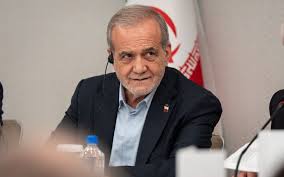
Iran’s President Masoud Pezeshkian has apologised to neighbouring countries for recent missile and drone attacks, signalling a possible effort to contain the widening regional conflict even as fighting between Iran, Israel, and the United States continues to escalate.
In a televised address on March 7, Pezeshkian said Tehran had adopted a new policy of refraining from missile strikes against neighbouring states unless attacks against Iran originate from their territory. The Iranian leader said the country’s interim leadership council approved the decision in an attempt to prevent the war from spreading further across the Middle East.
“I apologise to the neighbouring countries that were attacked by Iran,” Pezeshkian said during remarks broadcast on Iranian state television. He emphasised that Iran does not intend to target governments in the region unless they become a launch point for attacks against the country.
“Iran will not carry out attacks or missile strikes against neighbouring countries unless an attack against Iran originates from those countries,” he said, adding that Tehran holds “no hostility toward neighbouring states”.
Iran announces halt to strikes on neighbours
Pezeshkian said the temporary leadership council had approved a measure to suspend missile launches and other strikes on neighbouring countries unless Iran itself came under attack from those territories. He also stressed that Iran had no intention of invading other nations and that the policy shift was aimed at preventing a broader regional escalation.
The apology came after a series of retaliatory Iranian strikes across the Gulf region, where several countries host United States military bases. Bahrain, Saudi Arabia and the United Arab Emirates were among the states that reported intercepting ballistic missiles and drones during the latest wave of attacks early on Saturday.
Iran’s leadership attributed some of the earlier strikes on neighbouring countries to miscommunication within military ranks, suggesting the attacks were not part of a deliberate strategy to widen the conflict.
Trump demands ‘unconditional surrender.’
The diplomatic signal from Tehran comes as the conflict entered its second week with no immediate sign of a ceasefire. United States President Donald Trump has intensified pressure on Iran, demanding what he described as the country’s “unconditional surrender”.
Trump said there would be no agreement with Tehran unless it accepted those terms, adding that once new leadership emerged in Iran, Washington and its allies would work to rebuild the country’s economy.
Pezeshkian rejected the demand outright, describing it as unrealistic. He said expectations that Iran would surrender unconditionally were a “dream they should take to their grave”.
War spreads across the region
Despite Iran’s pledge to avoid striking neighbouring countries, hostilities across the region have continued to intensify. Iran and Israel have exchanged multiple rounds of attacks, with missiles seen flying towards Israeli territory early on Saturday before being intercepted by air defence systems.
Israel has also launched a new wave of strikes targeting infrastructure in Tehran and has expanded operations into neighbouring Lebanon, saying it was targeting Iranian and Hezbollah-linked positions. Israeli bombardment of Beirut’s southern suburbs has triggered widespread displacement.
According to Iran’s ambassador to the United Nations, Amir Saeid Iravani, US and Israeli strikes have killed at least 1,332 Iranian civilians and injured thousands more. Iranian attacks have killed 11 people in Israel, while at least six United States service members have also been reported dead.
The conflict has already produced significant humanitarian and economic consequences. Around 300,000 people have been displaced in Lebanon in recent days, while the Lebanese health ministry has reported 123 deaths and 683 injuries from Israeli attacks.
Global markets have also reacted sharply to the crisis. European and American stocks have fallen, and oil prices have surged to multi-year highs as shipping through the Strait of Hormuz, a route that carries nearly one-fifth of the world’s oil supply, faces growing disruption.