


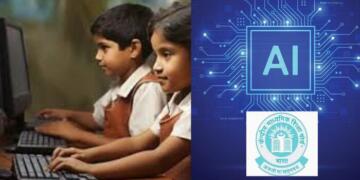
















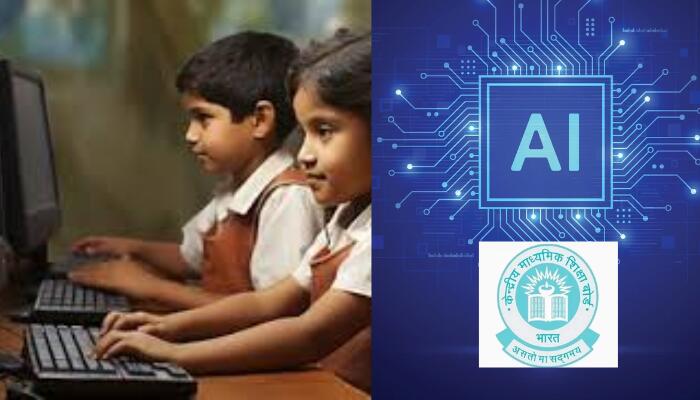
Indian schools are entering a new era of education as Artificial Intelligence and Computational Thinking (AI & CT) are set to become part of the core curriculum from Class 3, while the Central Board of Secondary Education (CBSE) prepares to roll out the nationwide Foundational Learning Study (FLS) 2026, a digital assessment of literacy and numeracy skills. Both initiatives aim to equip students with essential skills, foster critical thinking, and provide policymakers with actionable insights.
AI as a Universal Skill for Young Learners
The Department of School Education and Literacy (DoSE&L) is working with CBSE, NCERT, KVS, NVS, and state authorities to design an inclusive AI curriculum under the National Curriculum Framework for School Education (NCF SE) 2023. Aligned with NEP 2020, the programme emphasises ethical use of technology and practical problem-solving, linking AI learning to “The World Around Us.”
At a stakeholder consultation on 29 October 2025, Secretary Shri Sanjay Kumar stressed that AI education must be treated as a basic universal skill. “Every child’s distinct potential is our priority. Policymakers must define the minimum threshold and continuously adapt to changing needs,” he said. Teacher training, through NISHTHA modules and video-based resources, will form the backbone of the initiative, with Prof. Karthik Raman of IIT Madras leading CBSE’s expert committee on curriculum design.
Foundational Literacy and Numeracy Goes Digital
In parallel, CBSE has directed all affiliated schools to cooperate with FLS 2026, a large-scale national assessment for students completing Grade 3. Conducted by PARAKH under NCERT, the study will evaluate reading, writing, and arithmetic competencies across over 100,000 students from more than 10,000 schools in 776 districts across 36 States and Union Territories.
This year, the assessment will be fully digital, conducted on tablets instead of pen-and-paper, enhancing speed, accuracy, and reliability of data collection. Results, reported at State and Union Territory levels, will help authorities identify learning gaps and target interventions effectively. Implementation will be coordinated through a network of Samagra Shiksha, SCERTs, SIEs, DIETs, and district education offices, ensuring smooth and representative data collection.
Preparing Students for a Tech-Enabled Future
These dual initiatives mark a decisive step in making Indian education future-ready. By embedding AI skills from an early age and strengthening foundational literacy and numeracy through digital evaluation, the government aims to create students who are technologically competent, critically aware, and socially responsible.
With teacher training, digital tools, and a structured curriculum, India is positioning its young learners to confidently navigate a world defined by technology, ethics, and innovation, setting a benchmark for early education globally.





