
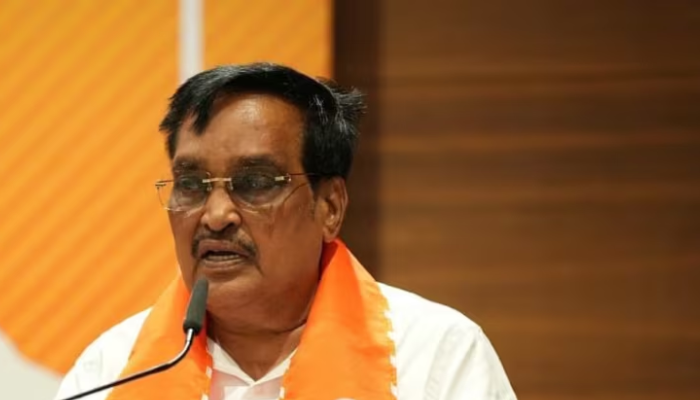
India has unveiled a decisive and wide-ranging strategy to tackle its growing water challenges, placing industry accountability, citizen participation, and data-led governance at the core of its approach. At the World Water Day Conclave 2026 held in New Delhi, Union Jal Shakti Minister C R Paatil made it clear that water security is no longer a sectoral concern but a national priority tied directly to the country’s future development.
Organised by the Jal Shakti Ministry at the Dr. Ambedkar International Centre, the conclave brought together more than 700 delegates, including policymakers, researchers, and industry leaders. In his opening address, Paatil stressed that conservation cannot succeed without collective effort, asserting that “Jan Bhagidari se Jal Sanchay Sambhav hai.” He warned that inaction today would place future generations under severe strain, framing water conservation as both a duty and an urgent necessity.
Industry takes centre stage in water accountability
With the theme Industry for Water, the conclave marked a clear shift towards integrating industrial responsibility into national water policy. Industries were positioned as key drivers of efficiency, with a strong push towards recycling, reuse, and adoption of circular water practices.
Major industry bodies, including FICCI, ASSOCHAM, and the Confederation of Indian Industry, are committed to a defined set of goals. These include conducting regular water audits by 2027, implementing real-time monitoring systems, achieving water neutrality, and reducing water footprints by 50 per cent by 2030. The move reflects an effort to align industrial growth with environmental sustainability and climate resilience.
Data emerges as the backbone of policy
A central feature of the conclave was the release of multiple national datasets and policy frameworks aimed at strengthening governance through evidence-based planning. Among them were the 7th Minor Irrigation Census, the 2nd Census of Water Bodies, the 1st Census of Springs and the Census of Major and Medium Irrigation Projects, along with the National Water Data Policy 2026.
Technical publications by the National Mission for Clean Ganga, the Central Ground Water Board and the National River Conservation Directorate were also unveiled. Paatil emphasised that lack of reliable data has historically led to mismanagement and delays, adding that the new policy will ensure better coordination, transparency and timely execution of projects.
States such as Bihar, Andhra Pradesh and Assam were acknowledged for completing major water census exercises, highlighting improved administrative efficiency at the state level.
Citizen responsibility and flagship progress
Underscoring the role of individuals, the minister urged citizens to adopt rainwater harvesting and local conservation practices. He noted that even 100 mm of rainfall can store up to one lakh litres of water per household when properly conserved, reinforcing the scale of impact possible through simple interventions.
Highlighting progress under the Jal Jeevan Mission, he said that around 15.80 crore households have already been provided with piped drinking water. The scheme, originally scheduled to conclude in March 2024, has now been extended to December 2028 with an allocation of Rs 1.51 lakh crore to cover the remaining households.
Innovation, technology and long-term preparedness
The conclave also celebrated innovation by felicitating 19 winners of the Jal Shakti Hackathon, alongside officials from the ministry and associated departments for their contributions. Discussions across thematic sessions focused on sludge management, with an emphasis on treating it as a resource, improving industrial water efficiency, monitoring glaciers, and using water census data for better planning in irrigation and rural development.
Experts highlighted the growing role of emerging technologies such as artificial intelligence and IoT, particularly in understanding Himalayan water systems and strengthening long-term resilience.
Drawing attention to future preparedness, Paatil cited Surat’s integrated water management model, supported by a Rs 600 crore contribution from the Centre and Rs 400 crore from the state, designed to meet the city’s water needs for the next 50 years. Referring to former prime minister Atal Bihari Vajpayee’s warning that future conflicts could be driven by water scarcity, he asserted that India is taking proactive steps to prevent such a scenario.
The conclave concluded with a clear consensus that ensuring water security will require a whole-of-government and whole-of-society approach, driven by collaboration, technological adoption, and robust data systems.