
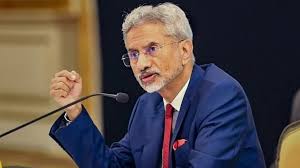
India has reiterated its support for a Myanmar-led and Myanmar-owned peace process aimed at ensuring lasting peace and development in the Southeast Asian nation. External Affairs Minister S. Jaishankar made the remarks on March 4 while virtually addressing the inauguration of the Sarsobeikman Literary Centre building in Yangon, a facility constructed with assistance from New Delhi.
His comments come just weeks after a military-backed party secured victory in the country’s general election held in January. The political developments follow years of instability in Myanmar after the military seized power in a coup on February 1, 2021, an event that triggered widespread protests and continuing unrest across the country.
Addressing the gathering, Jaishankar said India supports an inclusive peace process led by Myanmar itself. He emphasised that a solution driven internally by the country is essential to delivering durable peace and development for its people.
“As the world’s largest democracy with 1.4 billion people living together in peace and harmony, India has regularly shared its experiences in federalism and constitutionalism with stakeholders in Myanmar,” he said. He added that India supports a process that remains Myanmar-led and Myanmar-owned, capable of bringing stability and prosperity to the nation.
Strategic Significance in India’s Foreign Policy
Jaishankar also highlighted the strategic importance of Myanmar for India’s foreign policy priorities. According to the minister, the country lies at the confluence of three key initiatives pursued by New Delhi: Neighbourhood First, Act East, and MAHASAGAR, which stands for Mutual and Holistic Advancement for Security and Growth Across Regions.
Myanmar’s geographical position makes it a vital partner for India. The two countries share a 1,640 kilometre-long border that connects Myanmar with several northeastern Indian states, including the conflict-affected state of Manipur. Stability in Myanmar has therefore long been closely linked with security and development concerns in India’s northeast.
Jaishankar underlined that engagement between the two countries is broad and multifaceted. India’s cooperation with Myanmar spans political dialogue, trade relations, security collaboration and cultural exchanges.
Cultural Diplomacy Through the Sarsobeikman Centre
The newly inaugurated Sarsobeikman Literary Centre represents an important cultural initiative within India’s partnership with Myanmar. Built in the heart of Yangon with Indian assistance, the centre is expected to play a key role in preserving and promoting the country’s literary heritage.
According to the minister, the centre will support the conservation and study of Myanmar’s classical and folk literature. It will also promote translation efforts, archival work, creative writing and scholarly exchanges, helping foster deeper intellectual and cultural engagement between the two societies.
Jaishankar said India’s development cooperation with Myanmar has consistently been people-centric and guided by local demand. Such initiatives are aimed at strengthening local economies and improving the lives of ordinary citizens.
Shared Historical and Cultural Roots
The minister also pointed to the centuries-old historical and cultural connections that bind the two countries. India and Myanmar, he said, have long been linked through geography, kinship, and shared spiritual traditions, as well as through language and literature.
He noted that the spread of Buddhism and the Pali language across South Asia carried ideas, texts, and intellectual traditions that created a shared heritage between the two societies.
These civilisational ties, Jaishankar said, continue to shape contemporary relations, reinforcing the enduring partnership between India and Myanmar even as both countries navigate a complex regional landscape.