
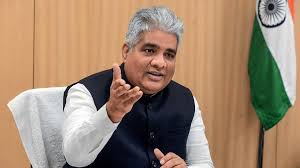
Environment Minister Bhupender Yadav told the Rajya Sabha that India has made significant progress in environmental protection and climate action, citing a sharp increase in protected areas, improvements in wildlife conservation and a steady expansion of forest cover across the country.
Replying to a debate on the functioning of the Ministry of Environment, Forest and Climate Change, Yadav said the government has pursued development through an environmentally balanced approach. He stated that policy decisions over the past decade have focused on strengthening conservation while ensuring sustainable economic growth.
Rise in Protected Areas and Wildlife Conservation
Highlighting conservation achievements, the minister said the number of protected areas in the country has increased from 757 in 2014 to 1,134 in 2026. The total area under protection has also expanded significantly, reflecting what he described as a stronger institutional commitment to biodiversity conservation.
Yadav pointed to improvements in wildlife protection as another indicator of progress. According to him, the number of tiger reserves has increased from 47 in 2014 to 58 at present, while elephant reserves have risen from 26 to 33.
The population of Asiatic lions has also seen substantial growth, increasing from 523 in 2014 to 891 in recent estimates. He added that India now hosts nearly 70 per cent of the world’s wild tiger population. The country’s tiger numbers have risen from 2,226 in 2014 to 3,682 in the latest estimates, reinforcing India’s position as a global centre for tiger conservation.
The minister also noted expansion in other categories of protected ecosystems. India currently has 106 national parks, compared to 103 a decade ago, and the number of wildlife sanctuaries has increased from 539 to 574. Community reserves have witnessed a particularly sharp rise, expanding from 48 to 309 across the country.
Increase in Forest Cover
Addressing forest conservation, Yadav said forest cover in India has grown steadily. According to official assessments cited during the debate, forest cover increased from 7,01,673 square kilometres in 2013–14 to around 7,15,342 square kilometres in 2021–22.
He said the government’s environmental policies are guided by the principle of balancing development with sustainability, ensuring that conservation remains central to national planning.
Aravalli Protection and Political Exchanges
The discussion also saw sharp political exchanges in the House over the protection of the Aravalli mountain range. Responding to concerns raised by opposition members, the minister said the government is fully committed to safeguarding the fragile ecosystem of the Aravalli hills.
He referred to the Green Aravalli Project and said efforts are underway to restore and protect the range. Yadav also criticised earlier administrations, alleging that illegal mining activities had been allowed in the region in the past.
Union Carbide Waste Disposal
During his reply, the minister also addressed the issue of hazardous waste linked to the Union Carbide plant in Bhopal. He informed the House that the waste has been completely disposed of in accordance with directions issued by the Supreme Court.
Yadav said the disposal process was carried out over the past two years following the court’s orders.
Concluding his response, the minister reiterated that the government remains committed to strengthening environmental protection while pursuing sustainable development across the country.