
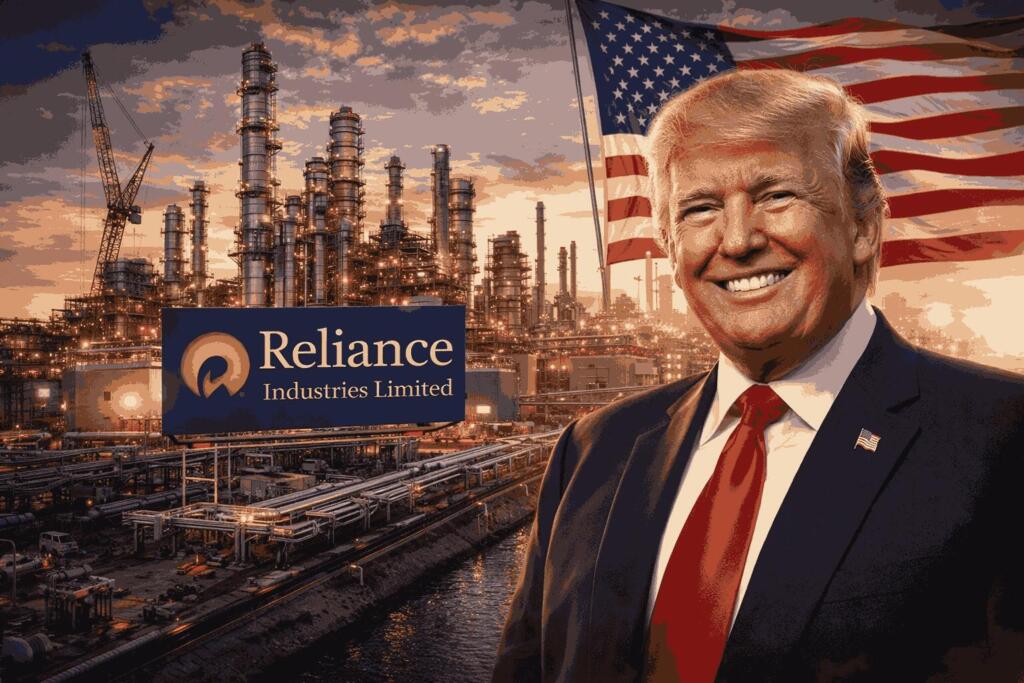
A dramatic new announcement shared on social media by former U.S. President Donald J. Trump has ignited fresh debate about energy policy, global investment, and industrial expansion. In the post, Trump declared that a massive oil refinery project in Texas represents a turning point for America, describing it as a historic development that could reshape the country’s energy landscape. According to the statement, the proposed refinery in Brownsville would be the first new major oil refinery built in the United States in half a century, signaling what supporters say is a renewed focus on domestic energy production and economic growth.
The refinery project, reportedly valued at around $300 billion, is expected to be located near the Port of Brownsville in South Texas. Trump’s message emphasized that the development would be carried out by America First Refining in partnership with major investors from India, including the energy giant Reliance Industries. The post framed the project as one of the largest industrial investments in modern U.S. history, highlighting the scale of infrastructure, technology, and employment opportunities involved. If realized, the refinery would process vast quantities of crude oil and support large export volumes to international markets.
Supporters of the proposal argue that projects of this magnitude could strengthen America’s strategic position in the global energy market. Oil refineries are essential links in the energy supply chain, converting crude oil into fuels such as gasoline, diesel, jet fuel, and petrochemical products. Advocates say building a new refinery after decades of stagnation would help expand refining capacity, reduce supply vulnerabilities, and support domestic energy independence at a time when global energy competition remains intense.
The announcement also highlights the economic potential for South Texas. Large-scale industrial projects often bring thousands of construction jobs followed by long-term employment in operations, logistics, engineering, and maintenance. According to the message, the refinery could deliver billions of dollars in economic activity while stimulating development across surrounding communities. Local ports, rail systems, and shipping infrastructure could all benefit from increased demand, reinforcing America’s Gulf Coast as one of the world’s most important energy hubs.
Another point emphasized in the announcement is environmental technology. Trump described the planned facility as potentially becoming “the cleanest refinery in the world,” suggesting that modern engineering methods could significantly reduce emissions compared with older refineries. While environmental groups often raise concerns about fossil fuel infrastructure, proponents argue that advanced filtration, energy-efficiency systems, and improved waste management could allow refineries to operate with lower environmental impact. In that context, supporters claim such projects could help America balance energy security with evolving environmental standards.
The global dimension of the project is also notable. Trump specifically acknowledged investment partners from India, pointing to Reliance Industries as a key participant. Reliance is one of the world’s largest private energy companies and already operates one of the biggest refining complexes globally. Their involvement would represent a significant international partnership and demonstrate the continued ability of America to attract large foreign investments in energy infrastructure. For multinational companies, the United States remains attractive due to its stable regulatory environment, extensive energy reserves, and established transportation networks.
Still, the announcement has sparked debate among analysts and policymakers. Large refinery projects face complex permitting processes, environmental reviews, and financing challenges that can take years to resolve. Critics question whether such a massive project could realistically move from proposal to completion within a short time frame. Others argue that the long-term transition toward renewable energy may reduce demand for new fossil fuel infrastructure. Nevertheless, supporters insist that oil and refined fuels will remain essential to transportation, manufacturing, and defense for decades to come.
Regardless of the debate, the statement underscores how energy policy remains closely tied to economic strategy and national security. Large infrastructure investments can influence job creation, global trade patterns, and geopolitical relationships. For supporters of the project, the proposed refinery symbolizes industrial revival and renewed ambition. In their view, projects like this represent the kind of large-scale development that could reinforce America’s role as one of the world’s dominant energy producers while fueling growth across multiple sectors of the economy.