
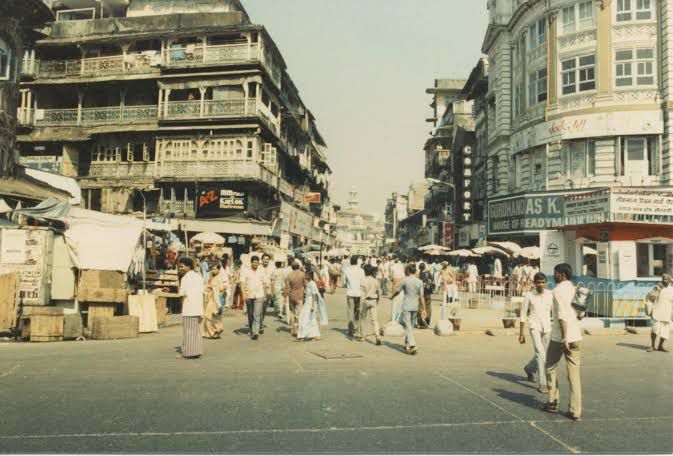
The city of Mumbai, today India’s bustling financial capital, was once a quiet cluster of seven small islands known as Bombay. Over centuries, it transformed from a relatively unremarkable port into one of the largest and busiest cities in the world, a journey that began with a royal marriage, a modest lease, and strategic imperial decisions.
On March 27, 1668, King Charles II of England leased the islands of Bombay to the East India Company for a nominal annual rent of £10. This transaction, seemingly minor at the time, marked the start of a transformation that would shape India’s commercial, political, and cultural landscape for centuries.
How King Charles II Received Bombay in Dowry
The story of Bombay’s rise begins in 1661, when King Charles II married Catherine of Braganza, daughter of the Portuguese king. As part of her dowry, Charles II received the seven islands of Bombay, along with the port of Tangier and other privileges.
At the time, Bombay was still a sparsely populated archipelago on India’s western coast. The islands had been acquired by the Portuguese in the 16th century through the Treaty of Bassein (1534) from the Sultan of Gujarat. The Portuguese built forts and churches, but despite the natural harbour, the islands remained relatively underdeveloped.
The marriage alliance between England and Portugal served both countries’ strategic interests. For Portugal, it strengthened ties with a rising naval power.
For Charles II, it was not just a prestigious union but also a gain in territory and trade potential. However, the king soon realized that directly managing Bombay would be expensive and complicated. The islands were difficult to defend, sparsely populated, and offered limited immediate revenue.
The Royal Charter and the East India Company
To address this challenge, Charles II leased Bombay to the East India Company on March 27, 1668, for a nominal rent of £10 per year. The company, already a powerful trading enterprise in India, gained not only administrative control but also the strategic deep-sea port, ideally located for trade with Arabia, Africa, and Persia.
Bombay offered advantages that the company’s earlier base in Surat could not: it was easier to defend, had a superior harbour, and provided a gateway for expanding British trade along India’s western coast.
Under this lease, the East India Company could manage the territory, control trade, and maintain security, making Bombay the first British-controlled urban center in India destined for rapid growth.
Sir George Oxenden became the first governor of Bombay under the company, and over the following decades, the East India Company gradually consolidated control, acquiring nearby islands and territory from both the Portuguese and local rulers.
How the Bombay Presidency Emerged
Under East India Company administration, Bombay slowly began to grow. Early efforts focused on infrastructure, security, and attracting settlers. The real expansion, however, came with the arrival of Gerald Aungier in 1669, who introduced policies encouraging trade, migration, and civic development.
Bombay’s population grew as merchants, artisans, and workers arrived from across India. Communities such as Parsis, Gujaratis, Jews, and Dawoodi Bohras settled here, contributing to the city’s cosmopolitan culture. By fostering trade and settlement, the East India Company transformed Bombay from a small, scattered settlement into a thriving port city.
In 1687, the company formally moved its Western Presidency headquarters from Surat to Bombay, cementing its role as a major center of British trade and administration. Over time, the Bombay Presidency expanded to include large parts of present-day Gujarat, Maharashtra, Sindh (Pakistan), and even regions like Aden in present-day Yemen. This administrative division remained crucial until India’s independence in 1947.
From Colonial Capital to Modern Metropolis
The lease of Bombay for £10 a year may seem symbolic today, but it set the stage for one of history’s most dramatic urban transformations. Over nearly three centuries, Bombay became the hub of finance, commerce, and industry in western India.
After independence, the Bombay Presidency was reorganized into Bombay State, which later split into Maharashtra and Gujarat. The city, renamed Mumbai, evolved into India’s financial capital and a major cultural hub, home to thriving markets, industries, and the Bollywood film industry.
Today, Mumbai stands as a testament to centuries of trade, migration, and urban planning, all initiated by a royal dowry and a seemingly modest lease. What began as a small cluster of islands became a metropolis pulsating with life, commerce, and culture, attracting millions from across India and the world.
A Date Worth Remembering
March 27, 1668, is more than just a historical date; it symbolizes the turning point in Mumbai’s destiny. From a quiet, sparsely populated coastal settlement, it became the center of British administration, trade, and later, India’s commercial nerve center.
The transformation that began with a royal marriage and a lease of £10 per year eventually gave rise to one of the largest and most dynamic cities in the world. In retrospect, this unassuming lease may well be considered one of history’s most influential and valuable bargains, a small transaction that changed the course of Indian history forever. you want me to do that next?