
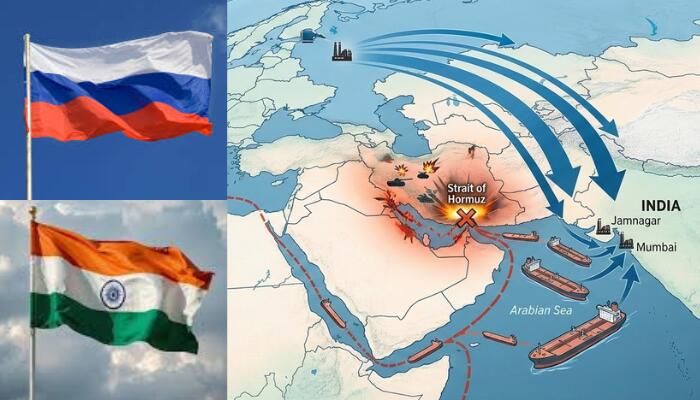
Russia has indicated that it is prepared to divert around 9.5 million barrels of crude oil to India as the escalating conflict in the Middle East threatens global energy supply routes and exposes vulnerabilities in India’s oil reserves.
Industry sources with direct knowledge of the matter say the crude is already on vessels positioned near Indian waters and could reach Indian refiners within weeks, offering rapid relief as disruptions intensify in one of the world’s most critical energy corridors.
India, the world’s third-largest oil consumer, currently holds crude stocks covering only about 25 days of demand. Inventories of refined products such as gasoil, petrol and liquefied petroleum gas are also limited, leaving the country vulnerable to supply shocks if the conflict in West Asia persists.
Strait of Hormuz Disruption Raises Alarm
The supply crisis has been triggered by escalating hostilities in the Middle East that have disrupted shipping through the Strait of Hormuz, the world’s most vital oil transit route. Around 40 per cent of India’s crude imports pass through this narrow waterway.
The route became effectively inaccessible after vessels were struck during Iranian attacks that followed United States and Israeli strikes on targets inside Iran. The military actions began on Saturday and have since heightened fears of prolonged disruption in global oil shipments.
Indian refiners process roughly 5.6 million barrels of crude oil per day. With a significant portion of supplies dependent on shipments through the Strait of Hormuz, the near closure of the route has forced New Delhi to actively seek alternative suppliers.
A government source said India has begun scouting for alternative crude sources to prepare for the possibility that the Middle East conflict could continue for another 10 to 15 days or longer.
Russia Signals Capacity to Expand Supply
Industry sources say Russia could step in to meet as much as 40 per cent of India’s crude requirements if required. Moscow’s offer comes at a time when India’s imports of Russian oil had recently declined.
India imported about 1.1 million barrels per day of Russian crude in January, the lowest level since November 2022, as New Delhi attempted to ease pressure from United States tariffs linked to purchases of Russian energy. This reduced Russia’s share of India’s total oil imports to 21.2 per cent. The share rebounded to around 30 per cent in February.
Indian refiners are already in regular contact with traders dealing in Russian crude. However, any increase in purchases will depend on guidance from the government, particularly as trade negotiations with the United States continue.
Last month, Donald Trump agreed to drop punitive tariffs imposed on Indian imports over New Delhi’s purchases of Russian oil, stating that India had committed to stopping such purchases. India has not taken that step, maintaining that its energy strategy focuses on diversifying supply in response to market conditions and evolving international dynamics.
A Tightening Global Energy Market
Analysts say the shifting geopolitical landscape could strengthen Russia’s role in India’s energy mix. Russian crude has been sold at discounted prices since the Ukraine conflict in 2022, but industry insiders now warn that the discount may narrow as global supply tightens and oil markets turn into a seller’s market.
Russia has also signalled readiness to supply liquefied natural gas to India after Qatar halted production amid the widening conflict. Indian companies have already reduced gas supplies to some industrial consumers in response to the shortfall.
Both India and China rely on the Middle East for roughly half of their crude imports. However, India maintains significantly smaller reserves than China, leaving it more exposed to sudden disruptions in regional energy flows.
As tensions continue to reshape global oil routes, Russia’s offer of immediate crude shipments could provide India with a critical buffer against a rapidly tightening energy market.