
Across the globe, the festival of Eid is being celebrated with joy and enthusiasm, especially in Islamic nations and in countries with significant Muslim populations.
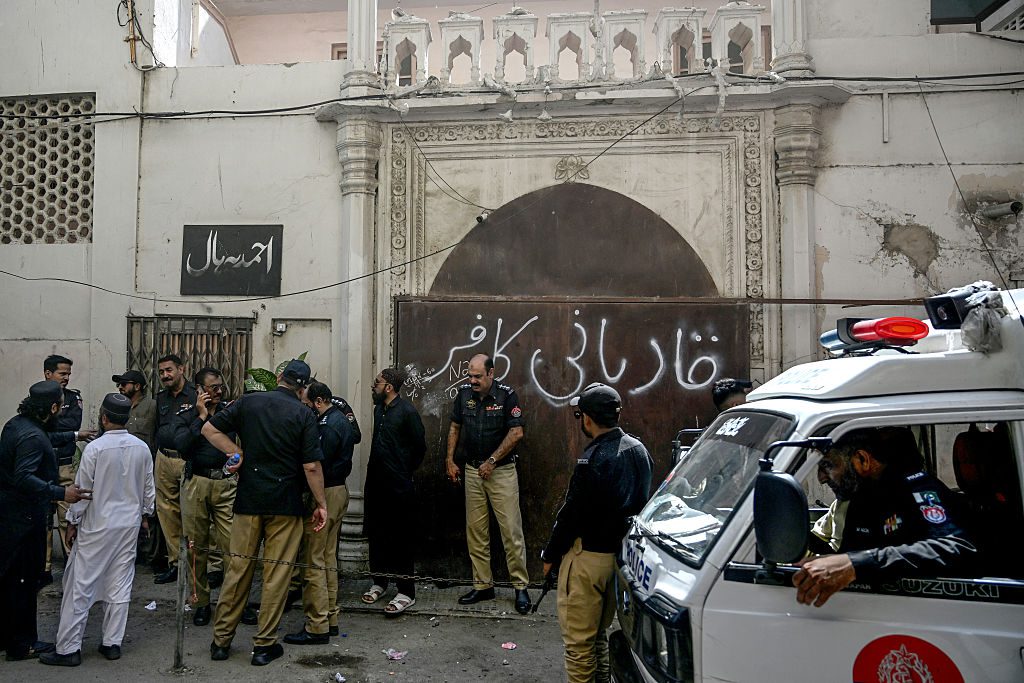
However, in Pakistan, a nation that identifies itself as being founded on Islamic principles, a section of people who consider themselves Muslim are forced to remain indoors instead of celebrating.
These are the Ahmadi Muslims and despite identifying as Muslims, they are prohibited in Pakistan from celebrating Eid, offering prayers, or even entering mosques. Law enforcement authorities reportedly operate under strict instructions and if an Ahmadi is seen observing Eid rituals or offering نماز (namaz), they can be arrested.
Last year, the Lahore High Court Bar Association even wrote to Punjab Police, urging them to prevent the Ahmadi community from observing Islamic practices such as Eid-ul-Adha prayers and animal sacrifice. It further stated that legal action should be taken against anyone violating these directives.
Heavy Penalties for Following Islamic Practices
In a particularly restrictive move last year, Ahmadi Muslims in Pakistan were reportedly required to submit affidavits pledging that they would not celebrate religious festivals such as Eid or Bakrid. These undertakings were presented before local authorities, effectively binding individuals to abstain from practices they personally identify with, under threat of legal consequences.
This step was reinforced through a special government notification directing strict implementation of Sections 298-B and 298-C of the Pakistan Penal Code. These provisions specifically target the Ahmadi community by prohibiting them from identifying as Muslims, referring to their places of worship as mosques, or engaging in Islamic forms of worship and expression.
This means that even basic acts associated with Eid, such as offering namaz (prayers), publicly greeting others with Islamic phrases, or participating in traditional rituals can be treated as criminal offenses if performed by an Ahmadi. Authorities are empowered to intervene, and in some cases, police action has reportedly been taken to prevent such observances.
If an Ahmadi is found performing religious practices such as animal sacrifice during Eid-ul-Adha or any other Islamic ritual, legal proceedings can be initiated. Violations may lead not only to arrest and prosecution but also to financial penalties, with fines reaching up to 500,000 Pakistani rupees.
A Long History of Persecution
Pakistan’s population currently stands at approximately 240 million, with around 10 million non-Muslims. According to the Pakistan Bureau of Statistics (2021 data), 96.47% of the population is Muslim, followed by 2.14% Hindus, 1.27% Christians, 0.09% Ahmadis, and 0.02% belonging to other minorities.
Despite their very small population, Ahmadis have faced persistent discrimination and persecution over decades. The core issue lies in the fact that the Pakistani state does not recognize them as Muslims.
Who Are the Ahmadis?
The Ahmadiyya community is a sect within Islam, founded in 1889 by Mirza Ghulam Ahmad in British India, in the Punjab region. Born on February 13, 1835, he positioned himself as a religious reformer at a time when the Muslim world was grappling with internal divisions, colonial pressures, and social challenges. His movement emphasized moral reform, revival of faith, peaceful propagation of Islam, and the importance of education.
Mirza Ghulam Ahmad claimed to be the promised Messiah and Mahdi awaited by many Muslims, a belief that set his teachings apart from mainstream Islamic interpretations. He advocated a non-violent, intellectual approach to defending Islam, rejecting the idea of armed jihad in favor of dialogue and spiritual renewal.
He held beliefs that differ from mainstream Islamic doctrine, including the view that Prophet Muhammad was not the final prophet in an absolute sense, and that divine guidance could continue in a subordinate, non-law-bearing form. This theological difference is the central reason why many orthodox Muslim groups do not consider Ahmadis to be part of mainstream Islam.
The Ahmadiyya community has since developed into a global movement, known for its organized structure and emphasis on community service. It runs thousands of mosques, schools, and hospitals worldwide and actively engages in humanitarian work across different countries.
Global Presence of the Ahmadi Community
Ahmadis believe in Prophet Muhammad but also revere Mirza Ghulam Ahmad as a spiritual leader, whom they consider the promised Messiah and Mahdi. This belief is the central point of contention, as mainstream Islamic doctrine holds that Prophet Muhammad is the final prophet and because of this theological difference, many orthodox Islamic scholars and religious bodies do not regard Ahmadis as part of mainstream Islam.
In Pakistan, this religious disagreement took a formal legal shape in 1974, when the country’s parliament passed a constitutional amendment declaring Ahmadis as non-Muslims. This decision institutionalized their exclusion and laid the groundwork for further legal restrictions.
While Eid is a time of unity and celebration for Muslims around the world, the Ahmadi community in Pakistan continues to face legal and social barriers that prevent them from participating openly in the very rituals they identify with. Many are compelled to observe such occasions quietly within their homes, avoiding public visibility to reduce the risk of harassment or arrest.
Their situation highlights broader and ongoing debates around religious identity, minority rights, and freedom of belief in modern states. It raises important questions about how nations balance religious definitions with individual rights, and how minority communities navigate identity and faith under legal and societal constraints.