
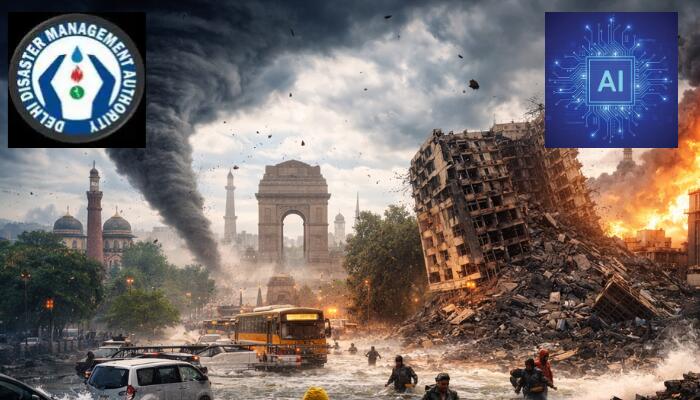
New Delhi is set to undergo a major transformation in its disaster management framework, with the Delhi State Disaster Management Authority approving the establishment of a state-of-the-art Emergency Operations Centre and an Integrated Command and Control Centre. The decision was taken at a high-level meeting chaired by Lieutenant Governor Taranjit Singh Sandhu alongside Chief Minister Rekha Gupta, signalling a decisive push towards a faster, technology-driven response system in the national capital.
The proposed Emergency Operations Centre and Integrated Command and Control Centre will function as the central hub for managing crises, enabling real-time coordination across departments and agencies. Equipped with advanced systems, the centres will deploy predictive analytics using artificial intelligence and satellite data to anticipate and respond to emergencies with greater precision. Officials said the system will be capable of handling a wide range of disaster scenarios, including floods, earthquakes, fires and chemical incidents, significantly strengthening the city’s response capacity.
Centralised control to cut response time
The move is aimed at eliminating delays and fragmentation in disaster response by creating a unified platform for communication and decision-making. Real-time data integration is expected to allow authorities to track developments as they unfold and respond swiftly on the ground. The Lieutenant Governor has directed all departments concerned to expedite the implementation of the project, underscoring the urgency of operational readiness.
₹21,000 crore plan targets chronic flooding
In a parallel decision, the authority granted in-principle approval to the Delhi Urban Flood Mitigation Plan, with a proposed outlay of ₹21,000 crore. The plan seeks to address the capital’s recurring monsoon flooding through a comprehensive upgrade of its infrastructure.
It focuses on strengthening drainage systems, desilting major drains, and constructing additional stormwater channels to improve water flow across the city. A key feature of the plan is the introduction of real-time flood monitoring systems, which are expected to provide continuous data and enable quicker, more effective intervention during periods of heavy rainfall.
The scale and scope of the proposal indicate a long-term strategy to reduce the risks and disruptions caused by urban flooding, which has remained a persistent challenge for Delhi.
Energy review amid Gulf tensions
The meeting also reviewed the city’s energy demand and supply situation in the context of the emerging geopolitical tensions arising from the conflict in the Gulf. While no specific measures were announced, the discussion reflects a growing focus on safeguarding essential services against external uncertainties.
Taken together, the decisions mark a significant shift towards a more integrated and forward-looking disaster management approach in Delhi. With advanced technology at its core and a substantial financial commitment towards flood control, the administration appears to be positioning the capital to better withstand both natural and external shocks.