
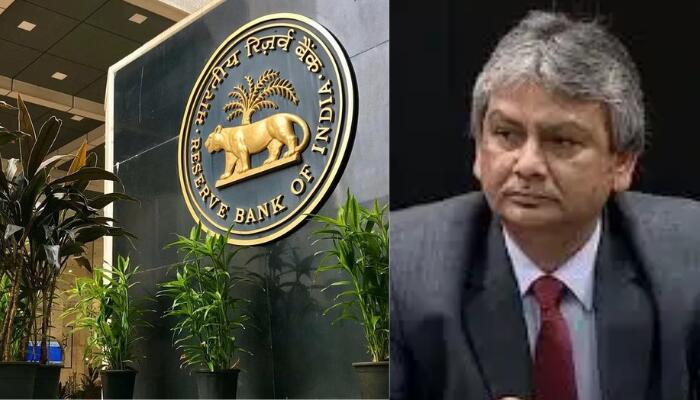
“India must raise its foreign exchange reserves to at least $1 trillion to ensure credible defence of the rupee and resilience against external shocks”, former Reserve Bank of India Deputy Governor Michael Patra has argued, warning that current pressures expose the limits of existing buffers.
Writing on BasisPoint Insight, Patra stressed that the sheer size of reserves shapes market behaviour. A war chest of this scale, he noted, would make betting against the rupee prohibitively difficult, effectively placing such “punting” beyond the reach of opportunistic or faint-hearted players. His remarks come as the central bank has been compelled to intervene repeatedly to steady the currency.
Sharp drawdown underscores pressure points
India’s foreign exchange reserves fell to $716.81 billion in the week ending March 6, down from $728.49 billion a week earlier, according to central bank data. The $11.68 billion decline marks the steepest weekly fall in over a year.
The drop reflects aggressive dollar sales by the Reserve Bank of India to support the rupee, which has come under strain from geopolitical tensions, including the Iran war, and a surge in oil prices. With the currency hovering near record lows, the episode has underlined the growing vulnerability of external balances in an increasingly volatile global environment.
A two-pillar framework for reserve adequacy
Patra’s $1 trillion benchmark rests on two distinct but complementary buffers. First, reserves must be sufficient to meet all external debt obligations falling due within a year, estimated at $300 billion to $350 billion.
Second, they must provide insurance against sudden and sustained foreign portfolio investment outflows. He argued that reserves should cover at least 60 to 65 per cent of the total stock of such investments at current market value. Given the scale and persistence of outflows seen since 2022–23, this translates into an additional requirement of roughly $600 billion to $650 billion.
Combined, these components push the required reserve level to around $1 trillion. He added that the precise figure would depend on the share of reserves held in liquid form, which determines how effectively they can be deployed during market stress.
Building firepower while managing liquidity
Patra suggested that the reserve build-up could be achieved over a three-year horizon, broadly in line with the long-term expansion of reserve money, which has averaged $60 billion to $65 billion annually over the past two decades.
However, accumulating reserves at this pace would require careful liquidity management to remain consistent with monetary policy objectives. He proposed sterilising about $35 billion each year through the uncollateralised standing deposit facility, a tool that gives the central bank virtually unlimited capacity to absorb excess liquidity and maintain price stability.
Patra’s perspective is informed by his own tenure at the RBI. Before stepping down in early 2025, he oversaw a phase of strong reserve accumulation as global capital flowed into India. In the later period, those reserves were deployed to contain currency volatility, helping keep the rupee among the least volatile currencies globally despite intensifying external shocks.
His latest assessment signals a shift towards building a far more formidable buffer as India navigates an era defined by geopolitical uncertainty, volatile capital flows, and recurring stress on emerging-market currencies.