
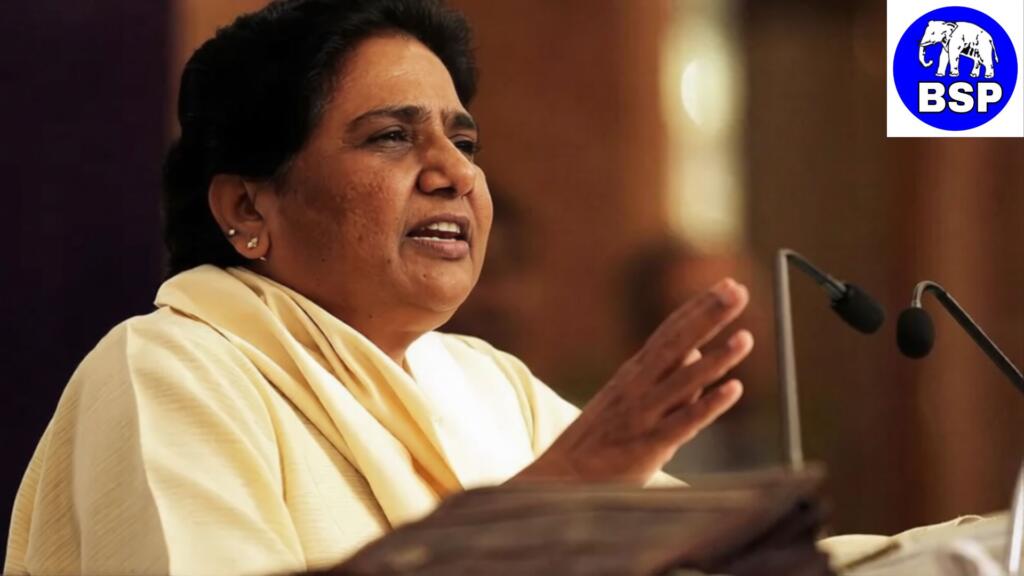
As the birth anniversary of Kanshi Ram approaches on March 15, political discussions around the legacy of Dalit leaders and the role of different political parties in honoring them have once again intensified. Supporters and members of the Bahujan Samaj Party, now Mayawati or the National President of the Bahujan Samaj Party (BSP) also, have emphasized the need to remember the struggles that led to the creation of the party and to remain vigilant about political attempts to appropriate the legacy of Dalit icons.
According to voices within the BSP, there has long been dissatisfaction with the way mainstream political parties treated great leaders of the Dalit movement. They point out that the B. R. Ambedkar, widely regarded as the chief architect of the Indian Constitution and a champion of social justice, did not receive the level of respect and recognition he deserved during the many years when the Indian National Congress held power at the Centre. Critics frequently cite this historical record to argue that the recognition given to Ambedkar came much later, after decades of sustained social and political pressure from marginalized communities.
Supporters of the BSP also question whether parties that allegedly neglected the contributions of Ambedkar for many years can genuinely honor the legacy of Kanshi Ram today. Kanshi Ram, the founder of the Bahujan Samaj Party, is widely credited with mobilizing Dalit, backward, and marginalized communities into a powerful political force. His political vision focused on ensuring representation and empowerment for those who had historically remained outside the mainstream structures of power.
Another issue frequently raised by BSP supporters, concerns the response of governments following Kanshi Ram’s passing in 2006. They note that when the veteran leader died, the central government did not declare a national day of mourning. At the same time, critics argue that the government in Uttar Pradesh, then led by the Samajwadi Party, also did not announce a state-level mourning period. For many followers of Kanshi Ram, these decisions symbolized what they believe to be a lack of recognition for a leader who dedicated his life to the upliftment of marginalized communities.
In addition to criticism of mainstream political parties, some voices within the movement have also expressed concern about smaller organizations and political groups attempting to use Kanshi Ram’s legacy for their own benefit. According to these supporters, several groups and parties claiming to represent Dalit interests often invoke Kanshi Ram’s name while pursuing their own political agendas. This, they argue, can dilute the original mission and ideological clarity that guided the formation of the Bahujan Samaj Party.
Against this backdrop, leaders and supporters are urging followers of Kanshi Ram to remain politically aware and united. They emphasize that the BSP was founded with a specific purpose: to provide a political platform for those who had historically been marginalized and to ensure that their voices were heard in democratic institutions. The party’s supporters believe that safeguarding this legacy requires constant vigilance against political strategies that may seek to weaken or divide the movement.
At the same time, the upcoming birth anniversary of Kanshi Ram is expected to be marked by a series of programs and commemorative events across India. Party workers have appealed to supporters to organize and participate in events that celebrate his life, ideas, and contribution to social transformation. These events are expected to take place not only in Uttar Pradesh but also in various states where the Bahujan movement has a presence.
The anniversary celebrations are seen by many within the BSP as an opportunity to reaffirm the principles that guided Kanshi Ram’s political journey. His efforts to unite marginalized communities under a common political banner remain a central part of the party’s identity. By remembering his work and continuing the struggle for equality and representation, supporters hope to strengthen the mission that he began decades ago.
As the nation prepares to observe Kanshi Ram’s birth anniversary, the discussions surrounding his legacy highlight the continuing relevance of the issues he championed. For the BSP and its followers, the day is not only about paying tribute to a leader but also about renewing their commitment to the ideals of social justice, political empowerment, and equality that he worked tirelessly to advance.