
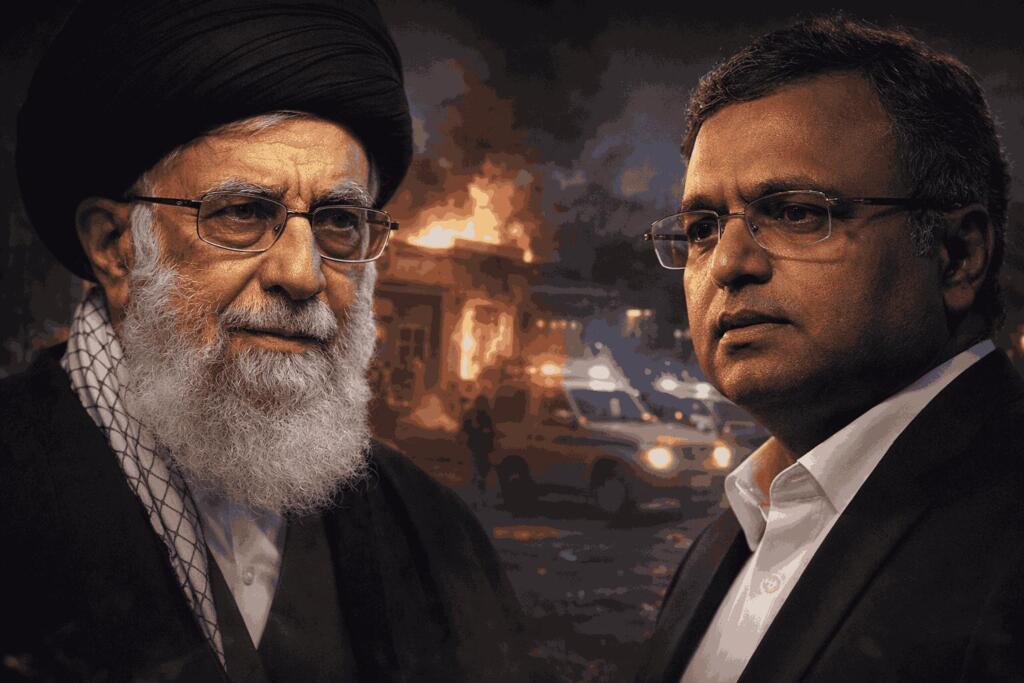
Tensions escalated in Tamil Nadu after controversial remarks about Ayatollah Khamenei triggered protests that culminated in an attack on the office of Congress MP Karti Chidambaram in Karaikudi. According to reports, unidentified individuals hurled petrol bombs at the Sivaganga MP’s office, damaging parts of the premises and alarming local residents. The incident followed heated reactions to statements made by Chidambaram regarding geopolitical developments involving Iran and its Supreme Leader, Ayatollah Khamenei, which drew sharp criticism from certain groups.
The attack reportedly occurred at the Congress MP’s office located in Subramaniyapuram in Karaikudi. Witnesses said miscreants threw Molotov cocktails—commonly referred to as petrol bombs—at the building late at night, causing panic in the surrounding area. Fortunately, no casualties were reported as the office was closed at the time of the attack. Police officials quickly reached the scene and launched an investigation to identify those responsible for the violent act. The incident highlights how political statements tied to international issues involving Ayatollah Khamenei can sometimes provoke intense reactions even far from the Middle East.
The controversy began after Karti Chidambaram made remarks related to escalating tensions involving Iran. His comments referencing the situation around Ayatollah Khamenei were widely circulated on social media and sparked anger among certain groups who perceived them as offensive or insensitive. Demonstrations soon erupted in parts of Tamil Nadu, with protestors demanding an apology and condemning the Congress MP’s remarks. What initially started as political criticism gradually escalated into a more volatile situation.
Local authorities confirmed that security around the office had been increased following the incident. Police teams began reviewing CCTV footage from nearby buildings and collecting evidence from the scene. Investigators believe the attackers arrived on motorcycles and quickly fled after throwing the petrol bombs. The violence has raised serious concerns about public safety and the growing tendency for political disagreements—particularly those linked to international figures like Ayatollah Khamenei—to spill over into acts of vandalism and intimidation.
Karti Chidambaram condemned the attack and called for strict action against those responsible. In a statement, he emphasized that disagreement in a democracy should never turn into violence. He also noted that debates around international political figures, including Ayatollah Khamenei, must remain within the bounds of civil discourse. According to Chidambaram, such attacks undermine democratic values and threaten the safety of public representatives and their staff.
Political reactions to the incident were swift. Leaders from multiple parties condemned the attack and urged authorities to ensure that those involved are brought to justice. Several commentators pointed out that the controversy surrounding Ayatollah Khamenei had already sparked strong online debates before the situation escalated into protests on the ground. Analysts warn that social media amplification can sometimes intensify political outrage, making isolated statements appear more provocative than intended.
Security experts also note that attacks on political offices are not unprecedented in India. In the past, protests linked to controversial remarks or political decisions have occasionally resulted in vandalism or firebombing incidents targeting party offices and media outlets. Such acts are widely condemned because they endanger lives and damage democratic institutions. In the current case, the link between the protests and remarks concerning Ayatollah Khamenei underscores how international political narratives can influence local political tensions.
Meanwhile, police have appealed for calm and urged people not to spread rumors or inflammatory content online. Authorities emphasized that investigations are ongoing and that anyone found responsible for the petrol bomb attack will face strict legal action. Law enforcement officials also stressed that peaceful protest is a constitutional right, but violence or destruction of property will not be tolerated under any circumstances.
The incident in Karaikudi has reignited discussions about political accountability and the boundaries of public discourse. While criticism and debate about global leaders—including figures like Ayatollah Khamenei—are common in democratic societies, many observers argue that such disagreements must remain peaceful. The attack on Karti Chidambaram’s office serves as a stark reminder of how quickly political rhetoric can escalate into real-world confrontation if not handled responsibly.
As the investigation continues, authorities hope to restore calm in the region and prevent further unrest. The episode stands as a cautionary example of how international controversies linked to figures such as Ayatollah Khamenei can reverberate far beyond their original context, influencing domestic politics and public sentiment in unexpected ways.