
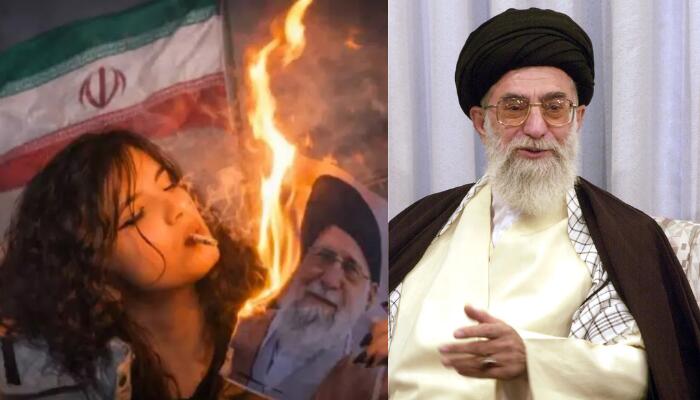
Iran’s Supreme Leader Ayatollah Ali Khamenei, who dominated the country’s political and religious landscape for 36 years, was killed on Saturday in coordinated US-Israeli airstrikes, Iranian state media confirmed early Sunday. The operation targeted Iran’s leadership and military infrastructure, with satellite imagery showing extensive damage to its secure compound in Tehran.
US President Donald Trump described the strike as a turning point, urging Iranians to reclaim their country from decades of authoritarian rule. Writing on social media, he said: “This is the single greatest chance for the Iranian people to take back their country. We are hearing that many of their IRGC, military, and other security forces no longer want to fight. Now they can have immunity, later they only get death.”
Israeli Prime Minister Benjamin Netanyahu called the moment a “once-in-a-generation opportunity”, stating that the destruction of Khamenei’s compound showed that the “era of tyranny is over”.
Temporary Leadership and Official Response
Following Khamenei’s death, a council comprising the Iranian President, the Head of the Judiciary, and a Guardian Council jurist was appointed to temporarily assume leadership, according to the IRNA news agency. The cabinet announced forty days of mourning and seven official holidays.
Reports also claimed that several of Khamenei’s family members, including his daughter, grandchild, daughter-in-law, and son-in-law, were killed in the strikes, though these remain unverified.
The Good: Strategic Influence and Political Savvy
Khamenei rose to prominence during the 1979 Islamic Revolution and succeeded Ruhollah Khomeini in 1989. Despite surviving an assassination attempt in 1981 that left him partially disabled, he gradually consolidated power by strengthening the Islamic Revolutionary Guard Corps and placing loyalists across political and security institutions.
He cultivated an image of intellectual depth, translating works by Sayyid Qutb and drawing inspiration from Western writers such as Tolstoy and Steinbeck. Over decades, he expanded Iran’s regional influence by backing Hezbollah, Hamas, and the Houthis, positioning Tehran as a central player in Middle Eastern conflicts.
Domestically, he occasionally displayed tactical flexibility, most notably in 2013, when he permitted limited negotiations that contributed to the 2015 nuclear agreement with world powers.
The Bad: Repression, Economic Strain, and Social Control
Khamenei’s rule was marked by relentless suppression of dissent. Protests in 2009, 2022, and 2026 were met with mass arrests, internet shutdowns, and lethal force.
Women became the most visible symbol of resistance, publicly burning or waving veils and smoking cigarettes in defiance of morality laws. Many were detained, intimidated, or imprisoned for these acts.
Under his leadership, economic mismanagement and expanding international sanctions deepened unemployment, inflation, and poverty, fuelling widespread anger among youth and urban middle classes.
The Ugly: Brutal Enforcement and Regional Aggression
Khamenei remained uncompromising in his hostility towards the United States and Israel, overseeing missile and nuclear programmes while backing armed groups across the region. In his final months, he refused to engage in negotiations on limiting Iran’s ballistic missile programme, reinforcing his defiant posture and further isolating Tehran diplomatically.
Previous strikes, including those targeting allied figures such as Hezbollah leader Hassan Nasrallah, exposed vulnerabilities in Iran’s defences. Internally, his government pursued systematic repression of journalists, minorities, academics, and political opponents, leaving a long record of human rights violations.
Global Impact and Uncertain Succession
The airstrikes triggered retaliatory ballistic missile launches towards Israel and US bases in the Gulf, causing casualties in Tel Aviv and Abu Dhabi. Airspace closures disrupted hundreds of international flights, stranding passengers, including Olympic medallist P. V. Sindhu, in Dubai.
Russia condemned the attack as “pre-planned and unprovoked”, while European leaders warned of regional destabilisation. Analysts believe hardline figures within the IRGC are likely to dominate the succession process, extending Khamenei’s ideological and military legacy.
A Divisive Legacy
Khamenei’s death leaves Iran politically fragile and socially divided. To supporters, he was a strategist who preserved state power under pressure. To critics, he was a tyrant who crushed dissent, restricted women’s freedoms, and prioritised ideological confrontation over public welfare.
His legacy is deeply conflicted: a ruler who built regional influence, enforced obedience through fear, and reshaped the Middle East at immense human cost, while leaving behind a population still searching for political freedom and economic stability.