
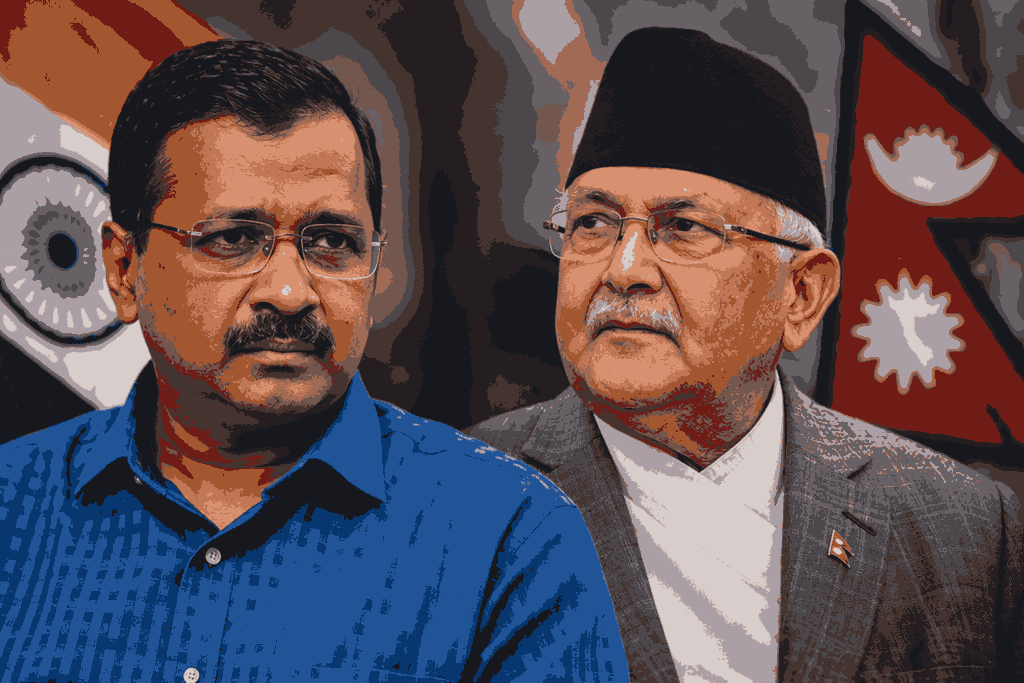
Former Delhi Chief Minister Arvind Kejriwal has stirred fresh political debate with his remarks on the reported arrest of Nepal’s former Prime Minister K P Sharma Oli and former Home Minister Ramesh Lekhak. Reacting to the development, Kejriwal suggested that the arrests may be connected to what he termed their “past misdeeds,” a statement that has quickly drawn attention across political circles in both India and Nepal.
The comments from Arvind Kejriwal come at a time when political developments in Nepal are being closely watched in the region. Without providing specific details or evidence, Kejriwal’s assertion has added a layer of interpretation to the unfolding situation. His remarks imply that the arrests may not be isolated legal actions, but rather part of a broader accountability process linked to earlier decisions or controversies during their time in power.
Political observers note that statements from leaders like Arvind Kejriwal often carry weight beyond domestic politics, especially when they touch upon developments in neighbouring countries. His framing of the arrests as consequences of “past misdeeds” suggests a moral and political dimension, rather than a purely legal one. This interpretation has sparked discussions about governance, transparency, and the long-term consequences of political actions.
In Nepal, the reported arrests of K P Sharma Oli and Ramesh Lekhak have already triggered strong reactions. Supporters of the leaders have questioned the timing and motives behind the move, while critics argue that no individual, regardless of stature, should be above the law. Against this backdrop, the intervention by Arvind Kejriwal has amplified the narrative that the arrests may be rooted in deeper political and administrative issues.
The statement has also raised questions about the role of external commentary in sensitive political matters. While Arvind Kejriwal did not directly interfere in Nepal’s internal affairs, his remarks reflect a broader trend where political leaders publicly interpret developments beyond their national borders. Such commentary can influence public perception, especially in an age of rapid information dissemination.
Critics of Arvind Kejriwal have argued that attributing arrests to “past misdeeds” without detailed evidence risks oversimplifying complex legal processes. They caution that judicial proceedings should be allowed to unfold independently, without being framed prematurely in political or moral terms. Supporters, however, contend that Kejriwal’s statement underscores the importance of accountability in public life, a principle that resonates across democratic systems.
The broader implications of the controversy extend beyond individual personalities. The remarks by Arvind Kejriwal have reignited conversations about governance standards, both in India and in neighbouring countries like Nepal. They highlight how actions taken during tenure in public office can continue to shape political legacies long after leaders leave power.
As the situation develops, it remains to be seen whether further details will emerge to substantiate the claims or clarify the circumstances surrounding the arrests. For now, the comments by Arvind Kejriwal have ensured that the issue remains firmly in public discourse, drawing attention not only to the individuals involved but also to the broader principles of accountability and justice.
Ultimately, the episode illustrates the complex interplay between politics, law, and public perception in South Asia. Whether or not the arrests are indeed linked to “past misdeeds,” as suggested by Arvind Kejriwal, the unfolding developments will likely continue to provoke debate in the days ahead, shaping narratives on governance and responsibility across the region.