







A major surge in conflict rocked Balochistan in late January and early February 2026 as the banned Baloch Liberation Army (BLA) launched what it called Operation Herof Phase II, a large-scale offensive against Pakistani security forces. This offensive has drawn widespread attention not only for its scale and intensity but also for the prominent role played by women fedayeen fighters in the campaign, marking a significant moment in the long-running insurgency in the resource-rich southwestern province.
The BLA, which seeks greater autonomy or independence for Balochistan, claims that its fighters carried out coordinated attacks across multiple districts — including Kharan, Mastung, Tump, Pasni, Quetta, Noshki, and Gwadar — over roughly 40 hours. According to the group’s statements, these operations resulted in heavy casualties among Pakistani security personnel and involved sustained engagements with army and paramilitary units. While independent verification of the full scope and casualty figures is limited, both sides acknowledge significant fighting.
What has particularly captured international attention is how women fedayeen figured prominently in the BLA’s narrative of this operation. Historically, militant and separatist movements in the region have been male-dominated, but in recent years, the phenomenon of women taking up frontline roles — including suicide and high-risk combat missions — has grown. In Operation Herof Phase II, the BLA highlighted several female combatants, signaling a shift in how the group views participation and sacrifice in its struggle.
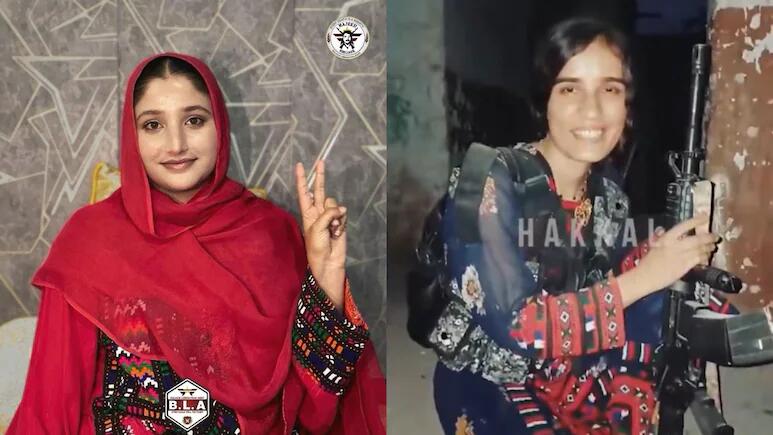
Among those the BLA publicised was Hawa Baloch, known by her alias “Droshum,” whose video in combat was released by the group’s media wing, Hakkal, and described as her “final message” recorded shortly before she was killed. The footage showed her engaged in fighting alongside male fighters on the Gwadar front, and the group emphasized her commitment to the cause. In another account, Asifa Mengal, born in 2002 in Noshki district, joined the movement in her early twenties and reportedly carried out a vehicle-borne improvised explosive device (VBIED) attack on what the BLA described as an ISI headquarters.
These high-profile cases of women fedayeen have sparked debate and analysis beyond South Asia. Experts on insurgencies note that the use of female fighters can be motivated by a variety of factors, including tactical surprise, symbolic defiance of social norms, and the desire to project unity and resolve within a movement. In Balochistan’s case, some analysts suggest that women’s participation underscores deep-seated grievances — whether tied to perceptions of political marginalisation, economic exclusion, or state responses to dissent.
Yet, the deployment of women fedayeen has also raised alarm among human rights observers and foreign policy analysts, who worry that romanticising or instrumentalizing women in violent conflict can obscure the broader humanitarian costs of such struggles. Balochistan has long been afflicted by cycles of insurgency and counterinsurgency, with civilians often caught in the crossfire. Government figures indicate that dozens of security personnel and civilians have died in the clashes, though figures vary depending on the source. Pakistan’s army and political leadership have decried the attacks as terrorism, while the BLA frames them as resistance against oppression.
Inside Pakistan, the conflict has provoked political and strategic debates. Officials, including the Defence Minister, have described the security challenges in Balochistan as among the most severe in years, citing the terrain and the intensity of militant operations. Islamabad has denied foreign involvement in the insurgency — allegations made by the BLA and others — and insists its forces are acting to protect citizens and maintain constitutional order.
Local impacts have been severe. In areas where fighting has taken place, normal life has been disrupted. Transportation services were suspended in some districts for safety reasons, and families displaced by the violence have sought shelter in neighbouring towns. International human rights organisations have called for independent investigations and stronger protections for civilians.
The psychological and symbolic weight of women fedayeen in this conflict cannot be understated. For supporters of the BLA, these fighters represent courage and self-sacrifice; for critics, they embody the tragic human toll of prolonged insecurity and desperation. In either view, their participation has underscored how deeply the conflict has evolved beyond conventional combat roles and into a broader social phenomenon that intersects with gender, identity, and resistance.
International reactions have been mixed. Some governments have urged restraint and dialogue, while others have condemned the violence outright. Analysts argue that any durable peace in Balochistan will require addressing core grievances such as political inclusion, economic opportunity, and respect for human rights — factors that militants like the BLA claim fuel their struggle and which, in part, explain why women fedayeen have emerged as visible figures in recent operations.
As Operation Herof Phase II continues to reverberate, media attention on women fedayeen and their role in the BLA’s campaign has sparked broader questions about the nature of insurgency, the role of gender in armed conflict, and the paths toward a sustainable resolution in Balochistan. Both policymakers and civil society voices around the world are watching closely as the situation develops, mindful that how this chapter unfolds could influence not just regional stability, but also global conversations about conflict, identity, and the often tragic cost of insurgent warfare.





