
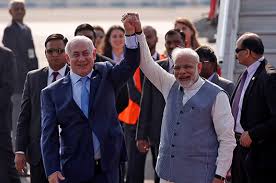
Prime Minister Narendra Modi reaffirmed India’s unwavering support for Israel in its fight against terrorism during a landmark address to the Knesset, becoming the first Indian Prime Minister to speak before the House.
On a two-day State visit, Modi declared that “terror anywhere is a threat to peace everywhere” and said no cause could justify the killing of civilians. Referring to the October 7, 2023, Hamas attack, he conveyed condolences to the victims’ families and said India stood with Israel “firmly, with full conviction, in this moment and beyond.” His speech drew repeated applause, chants of his name, and a standing ovation from lawmakers.
Zero Tolerance, Peace Efforts, and Global Responsibility
Positioning India as a consistent opponent of extremism, Modi underlined New Delhi’s policy of zero tolerance for terrorism, without double standards. He called for sustained and coordinated international action, warning that fragmented responses only strengthened extremist networks.
He also backed the Gaza Peace Initiative, describing it as a pathway to just and durable peace, including the resolution of the Palestine issue. He noted that the plan had received international recognition and said India supported every credible effort towards regional stability. Referring to initiatives backed by former US President Donald Trump, he stressed the need for diplomacy alongside security measures.
Shared History and Personal Diplomacy
Describing his address as one ancient civilisation speaking to another, Modi traced over two thousand years of ties between Indians and Jews. He said Jewish communities had lived in India without persecution, calling it a testament to India’s pluralistic tradition.
Recalling his 2017 visit, he spoke of a strong personal connection with Israel and referred to the Abraham Accords as an example of courageous diplomacy. He also praised Indian caregivers and skilled workers in Israel for their courage during times of crisis, including after October 7.
Israeli Prime Minister Benjamin Netanyahu welcomed Modi warmly, calling him “more than a friend, a brother.” He spoke of an “iron alliance” against extremist forces and highlighted cooperation on the India–Middle East–Europe Economic Corridor, or IMEC.
Diplomacy, Trade, and Political Context
Modi and Netanyahu held private talks in Tel Aviv covering water management, agriculture, defence, technology, and innovation. He is also meeting President Isaac Herzog and participating in delegation-level discussions on trade, security, and investment.
He is scheduled to visit Yad Vashem to pay tribute to Holocaust victims.
The Knesset session was briefly affected by domestic political tensions, as opposition members walked out to protest procedural issues before returning for Mr Modi’s speech. Opposition leader Yair Lapid later assured him that the protest was not directed at India.
Bilateral trade between the two countries has reached about $5 billion annually, with cooperation expanding in defence, agriculture, science, and telecommunications. However, negotiations for a free trade agreement remain complicated, particularly over the issue of foreign workers.
Honour, Innovation, and Future Direction
Modi was awarded the Speaker of the Knesset Medal, becoming its first foreign recipient. He highlighted cooperation in artificial intelligence, semiconductors, quantum technologies, and agriculture, citing 43 Centres of Excellence in India with expansion plans. He also pointed to growing cultural exchanges, including yoga and Ayurveda.
Concluding with “Am Yisrael Chai” and “Jai Hind,” Modi received a standing ovation, marking a visit that blended emotional solidarity, strategic ambition, and a clear signal of India’s deepening engagement with Israel.