
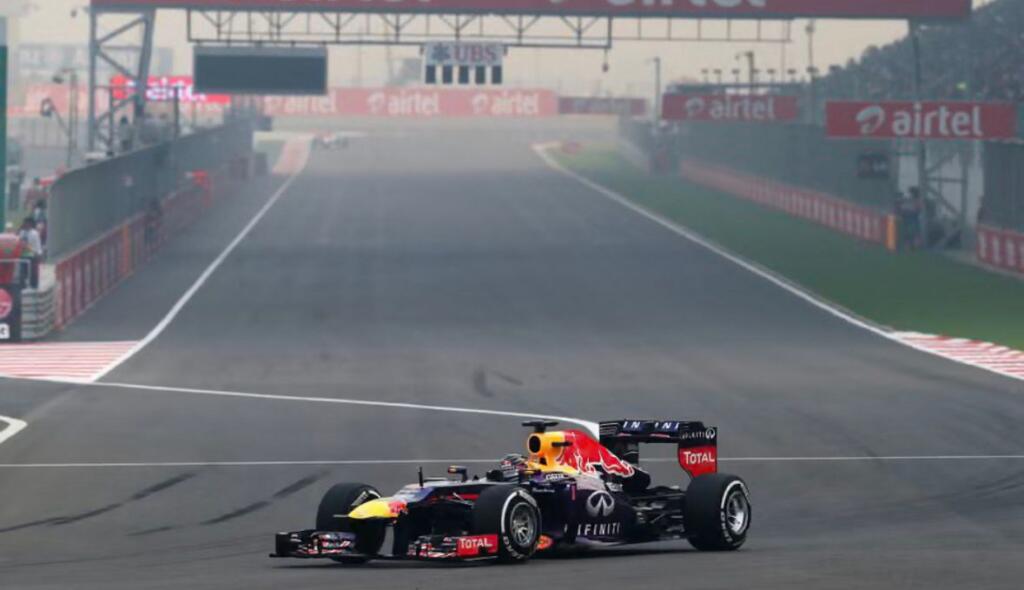
More than a decade after its disappearance from the Formula 1 calendar, the Indian Grand Prix could be on the road to a comeback.
The Indian government is intensifying efforts to bring Formula 1 back to the Buddh International Circuit in Greater Noida, with a renewed focus on resolving the tax and regulatory issues that led to the race’s cancellation.
According to sources cited by India Today, the Ministry of Youth Affairs and Sports is working to ease tax burdens and dismantle bureaucratic hurdles that previously made hosting the event financially unviable.
These renewed efforts signal a serious push to restore India’s place on the global motorsport stage.
The Indian Grand Prix debuted in 2011 at the 5.125-kilometre Buddh International Circuit along the Yamuna Expressway in Uttar Pradesh. Instantly becoming a marquee event on the Formula 1 calendar, the race attracted massive crowds and worldwide attention.
Held annually from 2011 to 2013, it featured prominently in the latter part of the championship season, with Sebastian Vettel winning all three editions for Red Bull Racing.
Despite strong fan interest and a state-of-the-art facility, the event’s lifespan was short. The Indian Grand Prix was dropped from the FIA Formula 1 World Championship after the 2013 season due not to sporting concerns, but to financial and policy disputes between organisers and government authorities.
Why the Indian Grand Prix was cancelled
The primary issue stemmed from taxation and regulatory classification. Authorities at both the state and central levels categorised Formula 1 as entertainment rather than a sporting event, making it subject to high entertainment and luxury taxes.
This classification prevented organisers from accessing tax exemptions and incentives typically granted to major sporting events, significantly inflating hosting costs.
Additional challenges included customs duties and bureaucratic delays related to importing racing equipment, adding millions of dollars in expenses for teams and promoters.
These factors compounded mounting losses for Jaypee Sports International, the event promoter, which had invested heavily in developing the circuit—a project reportedly costing more than USD 400 million.
Although there were initial plans for a temporary hiatus in 2014 and a return in 2015, the contractual and financial disputes proved insurmountable. The Indian Grand Prix was eventually shelved, leaving a notable gap in the country’s motorsport landscape.
In the years since, India has hosted occasional international events, such as Formula E races on the Hyderabad Street Circuit and a MotoGP round at Buddh. While these brought brief global attention, neither matched the prestige or impact of a Formula 1 World Championship race.
Now, the government appears ready to confront the very issues that forced Formula 1’s exit in 2013. While no date has been confirmed, discussions are reportedly underway with Formula 1 Management and other stakeholders regarding a potential return.
India’s vast and increasingly aspirational middle class, along with its growing automotive culture, continues to make it an attractive market for motorsport expansion. However, obstacles remain.
With a packed Formula 1 calendar that featured 24 races in the 2025 season, securing a slot will not be easy. Competition from newer venues in Qatar, Las Vegas, and China means India must demonstrate not only its commercial appeal, but also a sustained, long-term commitment to hosting a world-class Formula 1 event.