
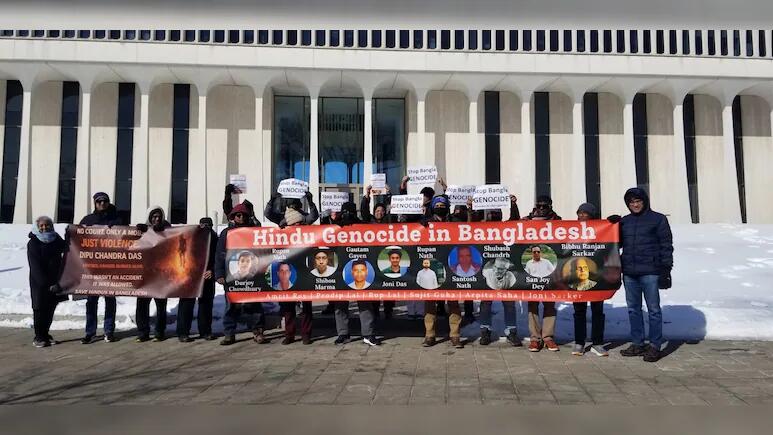
Peaceful demonstrations unfolded across several major cities in the United States this week as community groups, students, faith leaders, and human rights advocates gathered to express concern about the persecution of minorities in Bangladesh. From public squares to university campuses, the protests were marked by candles, placards, and speeches that called for dignity, safety, and equal rights. Organizers said the events were designed not to inflame tensions but to draw global attention to what they describe as a pattern of fear and insecurity faced by vulnerable communities.
In New York, Chicago, Houston, and San Francisco, members of the Bangladeshi diaspora stood alongside interfaith coalitions and civil liberties organizations. Many participants said their motivation stemmed from personal ties, family histories, or a shared belief that the persecution of minorities anywhere is a matter of moral concern everywhere. Speakers emphasized that their message was rooted in constitutional values, peaceful engagement, and solidarity with those who feel unheard. American flags and handmade signs calling for justice were visible throughout the gatherings.
Human rights advocates at the rallies highlighted reports from international organizations, independent journalists, and local activists. They spoke about allegations of intimidation, property disputes, and social exclusion that they say have contributed to a climate of anxiety. Several speakers framed the issue as part of a broader conversation about the protection of civil liberties and the rule of law. They argued that sustained attention can help discourage the persecution of minorities by encouraging transparency and accountability at multiple levels of governance.
On university campuses, student groups played a prominent role in organizing teach ins and panel discussions. Professors from departments of political science, South Asian studies, and law joined the events, offering historical context and discussing the responsibilities of democratic societies. Students said they wanted to move beyond slogans and learn about the legal frameworks, social dynamics, and economic pressures that can influence communal relations. Many described the gatherings as spaces for dialogue rather than confrontation.
Personal testimonies formed an emotional core of several events. Some speakers shared stories passed down through families about displacement, discrimination, or fear during periods of unrest. Others spoke about friends and relatives who continue to worry about safety, education, or access to opportunities. These accounts, while varied, were linked by a common plea to recognize the human cost of the persecution of minorities. Attendees observed moments of silence to honor those who have suffered and to reaffirm a commitment to nonviolence.
Policy focused conversations also emerged. Advocacy groups called on US lawmakers to engage diplomatically, raise concerns in bilateral discussions, and support programs that strengthen inclusive institutions. They stressed that long term stability is tied to trust between communities and the state. Speakers noted that addressing the persecution of minorities requires more than statements, pointing to the need for legal safeguards, fair law enforcement, and community level initiatives that promote mutual respect. Some urged the use of existing human rights mechanisms to monitor developments.
At the same time, several organizers cautioned against oversimplification. They acknowledged that Bangladesh is a diverse society with many citizens working toward harmony and reform. Participants said criticism of specific problems should not translate into hostility toward an entire nation or its people. This nuance, they argued, is essential for building constructive international engagement and avoiding narratives that deepen divides. The overall tone of the protests remained calm, with volunteers helping coordinate routes and ensure compliance with local regulations.
Observers noted that the demonstrations fit into a longer tradition of diaspora communities in the United States advocating for issues in their countries of origin. The gatherings connected local civic participation with global awareness, reflecting how migration and technology have reshaped activism. Speakers repeatedly returned to the idea that safeguarding pluralism is a universal challenge. They said that resisting the persecution of minorities is inseparable from defending democratic principles, freedom of belief, and equal protection under the law.
As the events concluded, organizers pledged to continue educational outreach, dialogue with policymakers, and collaboration across faith and cultural lines. Many participants said the protests left them feeling both concerned and hopeful, concerned about ongoing tensions yet hopeful that peaceful civic action can make a difference. Their message, carried through chants, prayers, and conversations, was that empathy and engagement remain powerful tools in confronting injustice while upholding the values of peaceful democratic expression.