














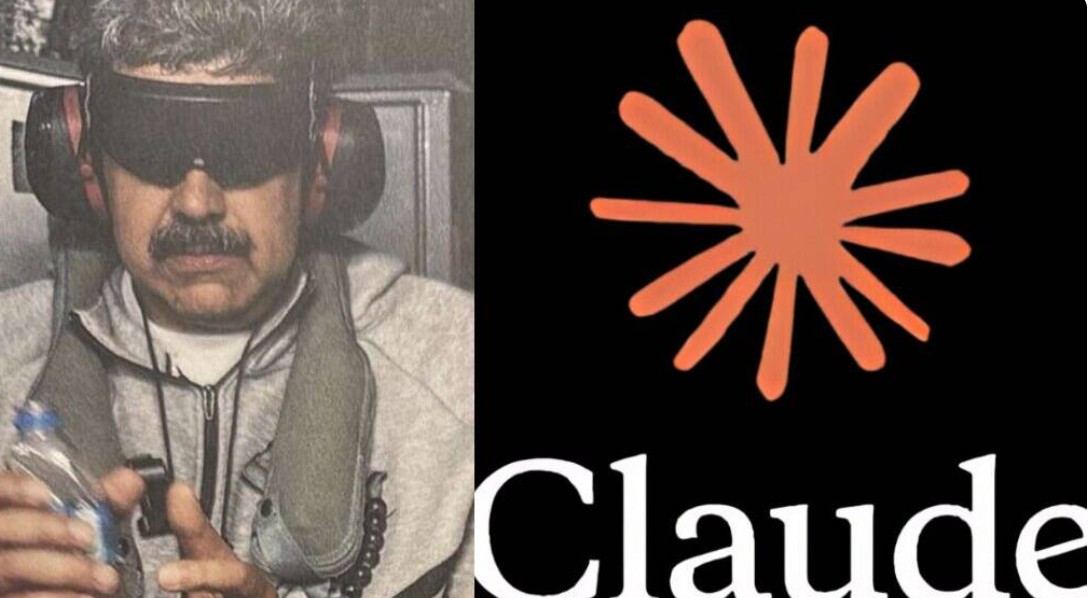
Anthropic’s artificial intelligence model, Claude, widely known for drafting emails, analysing documents and answering questions was reportedly used in a US military operation last month aimed at capturing former Venezuelan President Nicolás Maduro and his wife.
The mission, carried out last month, involved bombing several sites in Caracas and targeted Maduro and his wife. The details of exactly how Claude was used in the mission has not been publicly disclosed and neither the operational specifics nor the exact role played by the AI system have been revealed. However, the fact that a commercial AI model was employed in a live military operation marks an unprecedented milestone.
“We cannot comment on whether Claude, or any other AI model, was used for any specific operation, classified or otherwise. Any use of Claude, whether in the private sector or across government, is required to comply with our Usage Policies, which govern how Claude can be deployed. We work closely with our partners to ensure compliance,” an Anthropic spokesperson told The Wall Street Journal.
Claude’s reported deployment in the mission came through Anthropic’s partnership with Palantir Technologies, whose software platforms are widely used by the US Defence Department and federal law enforcement agencies. Through this channel, Claude became part of a system already embedded within the national security framework.
Anthropic was the first AI model developer whose system was reportedly used in classified operations by the US Department of Defence. It remains possible that other AI tools were involved in the Venezuela mission for non-classified support tasks. In military contexts, such systems can assist by analysing vast volumes of documents, generating reports or supporting autonomous drones.
Anthropic’s Chief Executive, Dario Amodei, has publicly warned about the dangers of advanced AI systems and has called for stringent safeguards and regulation, particularly against autonomous lethal operations and domestic surveillance. The revelation has sparked debate over how AI should be governed in national‑security contexts.
How This Could Shape Future Conflict Scenarios
The use of AI models such as Claude in live military operations signals a major shift in how technology may shape the battlefield. In future confrontations, AI could process vast amounts of intelligence data in real time, helping military commanders identify threats, plan strikes, and coordinate complex operations much faster than traditional human teams. This could improve decision-making speed and operational efficiency, giving forces using AI a significant tactical advantage.
AI systems could also be integrated with autonomous or semi-autonomous platforms, such as drones, surveillance systems, or logistical networks, allowing rapid deployment and adaptive responses to evolving situations. For example, AI could help predict enemy movements, optimize resource allocation, or conduct precision targeting, reducing human workload and potentially minimizing collateral damage.
However, the technology also brings risks. Over-reliance on AI may lead to errors if the data or algorithms are flawed. Ethical and legal questions arise, particularly when AI is involved in decisions that could result in loss of human life. There is also the potential for adversaries to hack, spoof, or manipulate AI systems, creating new vulnerabilities.
On a broader scale, AI’s integration into military operations could change global strategic dynamics, accelerating the arms race in autonomous and AI-assisted warfare. Nations with advanced AI capabilities may gain an edge in both offensive and defensive operations, while countries without access to such systems could face increased vulnerability.
The use of commercial AI in military contexts, as seen with Claude, demonstrates that future conflicts could increasingly involve not just traditional weapons, but sophisticated algorithms shaping decisions in real time.
Pentagon’s Push for Unrestricted AI Access
The Maduro raid story lands at a particularly sensitive moment for US military AI strategy. Just days earlier, Reuters exclusively reported that the Pentagon has been pressuring leading AI companies, including OpenAI, Anthropic, and others to make their most capable models available on classified networks with significantly reduced safety guardrails and content restrictions.
While many major AI firms have developed custom military tools, most remain confined to unclassified networks used primarily for administrative or logistics purposes. Anthropic stands out as reportedly the only major lab whose technology is accessible in classified environments through third-party intermediaries though still subject to the company’s standard usage policies.
The clash between corporate safety commitments and the Pentagon’s demand for fewer limitations has now become a public flashpoint.