
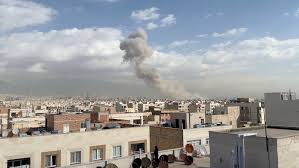
The United States and Israel launched a major offensive on Iran on February 28, 2026, targeting key political and military leaders, including Supreme Leader Ayatollah Ali Khamenei and President Masoud Pezeshkian, in what the Pentagon has named Operation EPIC FURY. The strikes mark a dramatic escalation in the long-standing confrontation between Iran and its adversaries, reigniting fears of a broader regional conflict. Iranian sources reported that several senior commanders in the Revolutionary Guards and political officials were killed, though the fate of Khamenei remains uncertain as he was reportedly relocated to a secure location prior to the attacks.
Strategic Aims and Diplomatic Fallout
President Donald Trump described the operation as a decisive measure to eliminate imminent threats to the United States, invoking decades of hostilities since the 1979 embassy seizure in Tehran. In a video message, he urged Iranians to shelter themselves while also encouraging them to “take over your government,” framing the strike as an opportunity for regime change. The offensive comes despite ongoing diplomatic efforts, including the third round of indirect talks between Washington and Tehran, which failed to prevent the outbreak of hostilities.
Israel has called the attack a pre-emptive measure to neutralise threats posed by Iran’s nuclear and ballistic missile programmes. Prime Minister Benjamin Netanyahu stated that the strikes aim to create conditions for the Iranian people to “remove the yoke of tyranny” and establish a free and peaceful nation. Defence Minister Israel Katz emphasised that the operation, timed during Ramadan, was planned months in coordination with the United States.
Iran’s Retaliation and Regional Shockwaves
In a swift response, Iran launched multi-front missile and drone attacks across the Gulf, striking Israel, US bases, and allied nations. Bahrain confirmed a missile attack on the US Fifth Fleet headquarters in Manama, while multiple loud explosions were reported in Abu Dhabi near the Al Dhafra Air Base, a shared UAE-US military facility. Qatar intercepted Iranian missiles targeting Al Udeid Air Base, the forward headquarters of US Central Command. Kuwait and Saudi Arabia also experienced missile alerts and explosions, raising fears of uncontrolled escalation.
Global aviation and energy sectors were immediately affected, with airlines suspending flights across Iran, Israel, Iraq, and Gulf states, while oil markets reacted sharply due to potential disruptions in crude exports through Iran’s Kharg Island and the Strait of Hormuz.
Civilian Impact and International Response
In Tehran, civilians rushed to withdraw cash and fill fuel stations, anticipating prolonged instability. Citizens in Israel faced missile alerts and school closures, while authorities urged all residents to observe precautionary measures. India issued an advisory urging its nationals in Israel and Iran to register with embassies and stay vigilant. The Ministry of External Affairs called for restraint from all parties, emphasising the safety of civilians and the importance of diplomacy.
This strike represents the latest escalation in a protracted confrontation, following a 12-day aerial campaign between Israel and Iran in June and repeated warnings that further military action would follow if Iran advanced its nuclear ambitions. Both Washington and Tehran had resumed negotiations in February, yet the attacks illustrate the fragile balance between diplomacy and military force in the region.
As Operation EPIC FURY unfolds, the international community watches closely, with the Gulf now at the epicentre of a volatile military and geopolitical crisis that could reshape security, energy markets, and diplomatic dynamics across West Asia.