
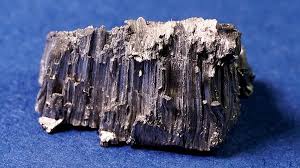
In a significant strategic announcement in the Union Budget on Sunday, Finance Minister Nirmala Sitharaman unveiled a Dedicated Rare Earth Mineral Corridor covering mineral-rich states such as Odisha, Kerala, Andhra Pradesh and Tamil Nadu.
The initiative is aimed at reducing India’s dependence on imports by strengthening domestic production, processing and value addition of critical minerals required for defence, electric vehicles, electronics and clean energy technologies.
Why Rare Earth Minerals Are Strategic, Not Optional
Rare earth minerals are a group of 17 elements that form the backbone of modern high-technology systems. Fighter aircraft radars, missile guidance systems, electric vehicle motors, wind turbines and smartphones all rely on these materials.
Even more crucial are rare earth magnets, particularly neodymium-iron-boron (NdFeB) magnets, which are essential for EVs, renewable energy systems and advanced defence platforms.
Control over these materials has increasingly become a strategic and national security issue rather than just an industrial concern.
India’s Resource Strength, Processing Weakness
India possesses the world’s fifth-largest rare earth reserves, primarily located in monazite-rich beach sands along its eastern and southern coastline. Despite this natural advantage, the country remains heavily dependent on imports for processed rare earths and high-performance magnets.
While mining exists, India lacks large-scale separation, refining and magnet manufacturing capabilities, creating a critical gap between resource availability and industrial utilisation.
Until now, rare earth extraction has largely been handled by the government-owned Indian Rare Earths Limited, but limited capacity, regulatory hurdles and environmental clearances have slowed expansion.
The Rare Earth Mineral Corridor is designed to integrate mining, processing, research and manufacturing within a single ecosystem.
By clustering infrastructure and streamlining approvals, the corridor aims to accelerate capacity expansion, attract private investment and enable technology transfer in advanced processing and magnet production.
Global Supply Chains and the China Dominance
At the global level, China dominates rare earth mining and controls nearly the entire processing and magnet manufacturing ecosystem. This concentration has triggered supply chain concerns worldwide.
Economies such as the United States, Japan and the European Union are actively seeking alternative and reliable sources. India’s corridor initiative aligns with this global push to de-risk critical mineral supply chains and build trusted partnerships.
Demand Surge from EVs, Defence and Clean Energy
India’s demand for rare earths and rare earth magnets is expected to rise sharply over the coming decade. The rapid adoption of electric vehicles, expansion of renewable energy capacity, defence modernisation and the push for semiconductor and electronics manufacturing will drive sustained demand.
Without domestic processing and magnet manufacturing, import dependence would deepen, increasing strategic and economic vulnerabilities.
if implemented effectively, the Rare Earth Mineral Corridor could transform India from a resource-rich but import-dependent nation into a full value-chain player in critical minerals.
Beyond strengthening strategic autonomy, the initiative has the potential to position India as a reliable global supplier of rare earth minerals and magnets at a time when the world is actively searching for alternatives to concentrated and geopolitically sensitive supply chains.