















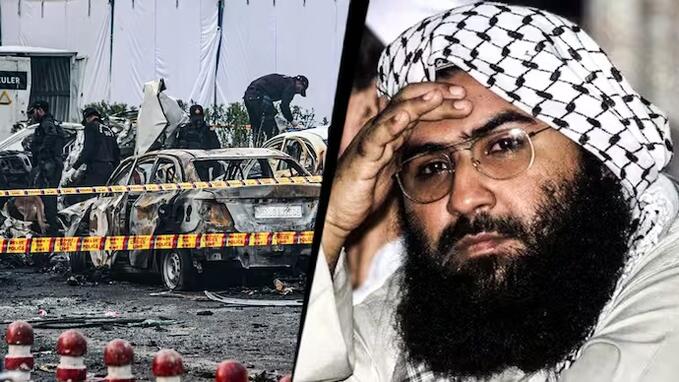
A recent United Nations counter-terrorism report has directly linked Pakistan-based terror group Jaish-e-Mohammed (JeM) to the suicide car bombing near Delhi’s Red Fort on November 9, 2025, which killed 15 people. The report also reveals that JeM has created a women-only wing, showing a shift in how the group operates.
JeM’s Involvement Confirmed
The thirty-seventh report by the UN Analytical Support and Sanctions Monitoring Team, submitted under Resolution 2734 (2024) to the Security Council’s 1267 Sanctions Committee, confirms that Jaish-e-Mohammed claimed responsibility for several attacks, including the Red Fort bombing. This contradicts claims that the group had been dismantled. The Red Fort is a UNESCO World Heritage Site and a symbol of India’s sovereignty, making the attack especially significant for regional security.
Women-Only Wing: Jamaat ul-Muminat
On October 8, 2025, Jaish-e-Mohammed leader Masood Azhar, a UN-designated terrorist, announced the creation of a women-only wing called Jamaat ul-Muminat. While not yet listed by the UN, the group is intended to support terrorist operations. Experts say this reflects a wider trend among extremist groups to expand their support networks, involve women in both supporting and operational roles, and avoid detection while strengthening recruitment and logistics.
Different Views from Member States
The UN report highlights that member states have different assessments of Jaish-e-Mohammed . Some countries view it as active and dangerous, while others consider it defunct. The latter assessment seems to align with Pakistan’s claim that groups like JeM and Lashkar-e-Taiba are no longer active under its domestic anti-terror laws.
Regional Threats and Technology Use
JeM’s actions are part of a broader security challenge in South and Central Asia, where extremist groups exploit instability and cross-border networks. The report notes that groups are increasingly using satellite communications, artificial intelligence, and visual tools to spread propaganda, recruit members, and coordinate attacks. While these advances are not a major leap in capability, they present new challenges for international counter-terrorism efforts.
The April 2025 attack in Pahalgam, carried out by The Resistance Front, a proxy of LeT, killed 26 civilians. Three suspects were later killed by security forces. Attacks launched from Afghanistan by Tehrik-e-Taliban Pakistan and support provided to Al-Qaeda by the Taliban continue to create security concerns in the region.
Investigations and Arrests
The Red Fort attack came after a three-week investigation by the Jammu and Kashmir Police, which uncovered a “white-collar terror module” linked to JeM and Ansar Ghazwat-ul-Hind. The case was later taken over by the National Investigation Agency. Nine people have been arrested so far, including three doctors suspected of aiding the network. Investigators also found a 1 minute and 20 second video on the attacker’s phone showing him discussing plans for the attack, confirming it was an organized operation rather than a lone-wolf act.
JeM’s History and Ongoing Threat
Founded in 2000, Jaish-e-Mohammed has a long record of attacks in India, particularly in Jammu and Kashmir. It has targeted civilians and security forces alike. Masood Azhar has been under UN sanctions for years, including travel bans and asset freezes. The report emphasizes that despite ongoing counter-terrorism efforts, JeM continues to adapt, recruit, reorganize, and target high-profile sites, now including women in operational roles.
UN’s Takeaway
The UN report highlights a clear reality: even groups that appear weakened can reorganize and carry out high-impact attacks. The formation of a women-only wing at the behest of Jaish-e-Mohammed, the use of advanced technology, and cross-border networks show that the terrorist threat is evolving. The report calls for sustained vigilance and international cooperation to tackle these dangers.