
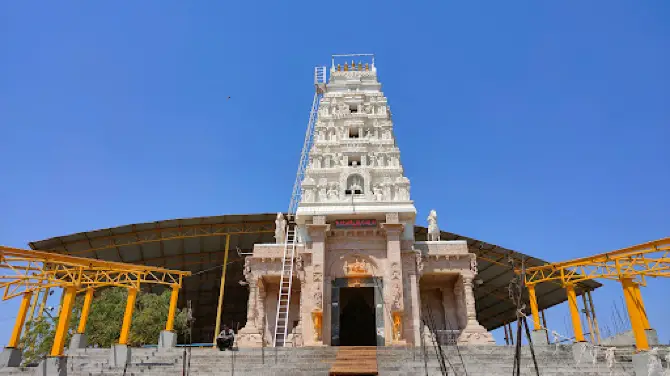
In a significant ruling that brings closure to a dispute that has spanned more than a century, the Supreme Court of India has upheld the hereditary wahiwatdar pujari rights at the Amogasidda temple in Karnataka. The judgment, delivered by a Constitution Bench led by Justices Prashant Kumar Mishra and K. Vinod Chandran, affirming the findings of the Karnataka High Court, dismisses the long-standing appeals challenging ancestral priestly rights in the temple situated in the Mamatti Gudda area of Jalgeri, Arkeri. This sweeping legal decision settles more than a hundred years of litigation and reinforces how continuity of possession and documented evidence outweigh reliance on purely historical decrees.
The roots of the conflict over the Amogasidda temple stretch back to early 20th-century litigation. At the center of the dispute was whether a particular family held the hereditary rights to perform daily rituals, conduct the annual Jatra festival, and receive offerings from devotees in honour of Amogasidda, a saint whose samadhi has been revered for centuries. Rival families—the appellants and the respondents—made competing claims to these rights, each asserting ancestral entitlement to perform puja and manage temple affairs.
The appellants sought to establish their claim based on a civil decree from 1901, contending that this century-old judgment granted their ancestor the right to be the hereditary pujari of the Amogasidda temple. However, the Supreme Court observed that this historical decree alone could not settle the matter without clear proof of continued possession and ritual performance over decades. More importantly, the appellants’ predecessor had, in 1944, filed a suit for possession of the temple. This move—the court noted—implied that they were not in continuous possession at that time, thereby undermining their claim of uninterrupted hereditary rights.
The Supreme Court’s analysis highlights a core legal principle: “A party in settled possession does not sue for possession.” In other words, if a claimant truly held ongoing control and exclusive rights, there would have been no need to initiate a suit for recovery or assurance of those rights. This reasoning formed a key basis for the apex court’s judgment, confirming that a historical decree alone cannot substitute for demonstrable possession backed by consistent evidence.
In considering the competing claims over the Amogasidda temple, the apex court paid close attention to the quality of evidence presented by both sides. The respondents offered revenue records, documentary proof, and admissions—such as those from witnesses and devotees—that established their family’s longstanding role as hereditary wahiwatdar pujaries. Independent testimony confirmed that they were performing daily worship and managing temple functions without interruption for decades. These factors weighed heavily in the court’s evaluation, reinforcing the legitimacy of their claim.
Conversely, the appellants were unable to provide adequate documentation showing that their ancestors continued to exercise the rights granted under the 1901 decree. For a significant period, they did not assert their claim effectively, and their later reliance on the old decree was held by the courts to be insufficient. Their written statements lacked specific details on when and how they assumed possession or began performing puja, leaving critical gaps in their case and strengthening the respondents’ position.
The dispute over the Amogasidda temple was more than a simple contest between two families. It represented a larger question of how hereditary rights, deeply rooted in tradition and local custom, should be adjudicated within the framework of modern legal norms. For decades, numerous judicial forums—including trial and appellate courts, and ultimately the Karnataka High Court—examined aspects of evidence and conduct before the Supreme Court’s comprehensive review. With its final decision, the Supreme Court provided clarity on how hereditary religious rights should be legally assessed in cases involving long intervals and complex historical claims.
This judgment is also noteworthy for its meticulous application of legal principles. The bench underscored that concurrent findings by lower courts merit considerable respect unless they are demonstrably perverse. Given that the High Court and appellate decisions were based on consistent factual determinations favoring the respondents, the Supreme Court found no legal error in their reasoning. The court’s insistence on rigorous evidence over mere historical assertions ensures that future disputes over hereditary rights to religious offices or properties will be judged on a similar footing.
In practical terms, the ruling affirms that the family recognized as wahiwatdar pujari will continue to perform regular worship of the deity at the Amogasidda temple, hold ceremonial duties, and preside over the temple’s annual festival. Devotees and devotees’ groups who have supported the respondents’ claim can now look forward to stability in temple administration and ritual continuity. The decision also sends a clear message regarding the evaluation of historical deeds in the modern judicial context, emphasizing evidence over tradition where appropriate in law.
Ultimately, the Supreme Court’s verdict in this case marks a significant moment in legal history, reconciling traditional religious roles with contemporary standards of proof and judicial assessment. By upholding the hereditary pujari rights at the Amogasidda temple and dismissing outdated claims lacking substantiation, the apex court has not only resolved a historic dispute but also contributed to the broader jurisprudence involving custodial rights and religious heritage.