
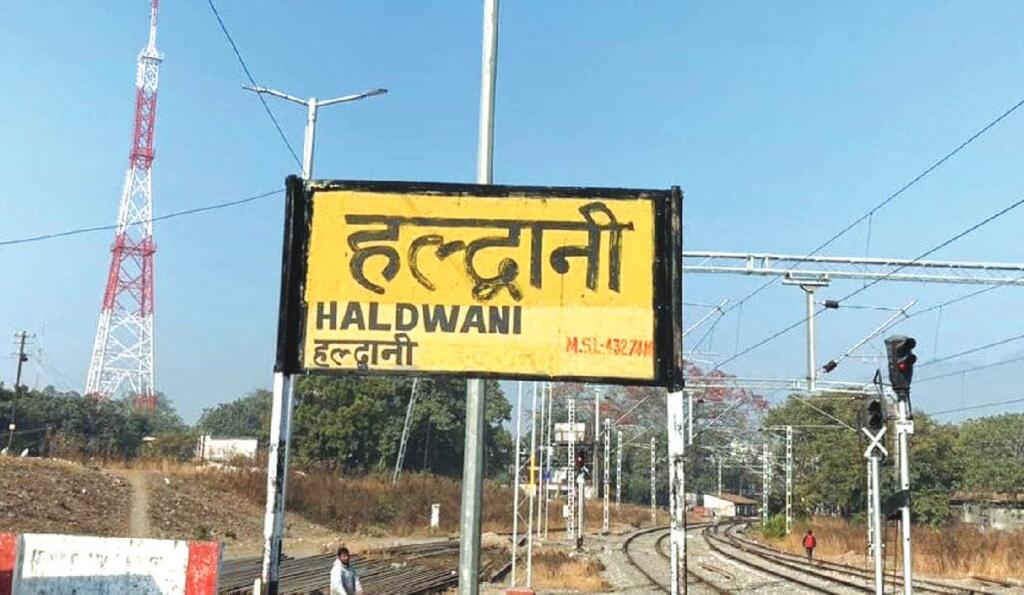
The Supreme Court of India has delivered a firm ruling in the Haldwani railway eviction case, declaring that residents occupying public land cannot dictate the terms of infrastructure development. The court held that those living on railway property cannot insist on being rehabilitated at the same site and directed authorities to assist affected families in securing alternative housing under the Pradhan Mantri Awas Yojana.
The judgment relates to a railway expansion project in Haldwani, Uttarakhand, which requires the clearance of land currently occupied by thousands of families. The court ordered officials to ensure that a practical and humane rehabilitation process is completed before March 31, signalling that prolonged uncertainty will not be tolerated.
A Bench comprising Chief Justice Surya Kant, Justice Joymalya Bagchi and Justice Vipin Pancholi made it clear that public projects cannot be held hostage to illegal occupation.
Court Asserts Public Ownership and Authority
During the hearing, the Bench stressed that major infrastructure projects require vacant land on both sides and questioned why residents were insisting on remaining at the same location. The Chief Justice observed that alternative sites with better amenities could offer more dignified living conditions.
The court emphasised that ownership of the land was undisputed and rested with the State. It ruled that the only matter requiring consideration was rehabilitation, not entitlement. Justice Bagchi clarified that any relief being extended was “more of a help and less of a right”, underlining that unlawful occupation cannot generate permanent claims.
Background and Residents’ Arguments
The case concerns more than 5,000 families living in the Banbhoolpura area of Haldwani. In December 2022, the Uttarakhand High Court ordered the removal of encroachments from railway land, triggering fears of mass displacement.
After being denied relief, residents approached the Supreme Court, arguing that they belonged to marginalised and economically weaker sections and would be rendered homeless. They also claimed that the State had failed to defend their case effectively and that disputes over land titles required detailed trials, not summary proceedings under Article 226.
In January 2023, the Supreme Court stayed the eviction and asked authorities to explore rehabilitation options. In July 2024, another Bench expressed concern over the Railways relying on public interest litigation orders instead of following proper legal procedures.
Rehabilitation Plan and Firm Timeline
While rejecting demands for on-site resettlement, the court acknowledged the need to protect livelihoods and shelter. It noted that most affected families were likely to fall under the Economically Weaker Section category and could benefit from government housing schemes.
The Bench directed the Collector of Nainital and local authorities to distribute application forms and instructed the State Legal Services Authority to organise rehabilitation camps at the site. Counsellors, social workers and domain experts have been asked to guide residents and ensure full participation.
The process is to begin after March 19 and continue until all families have applied. By setting strict deadlines and issuing direct administrative instructions, the Supreme Court has reaffirmed that development will proceed, while rehabilitation will be pursued with accountability and dignity.
The ruling marks a decisive attempt to balance public interest with social responsibility, making it clear that delay, uncertainty and unlawful occupation will no longer obstruct national infrastructure projects.