



















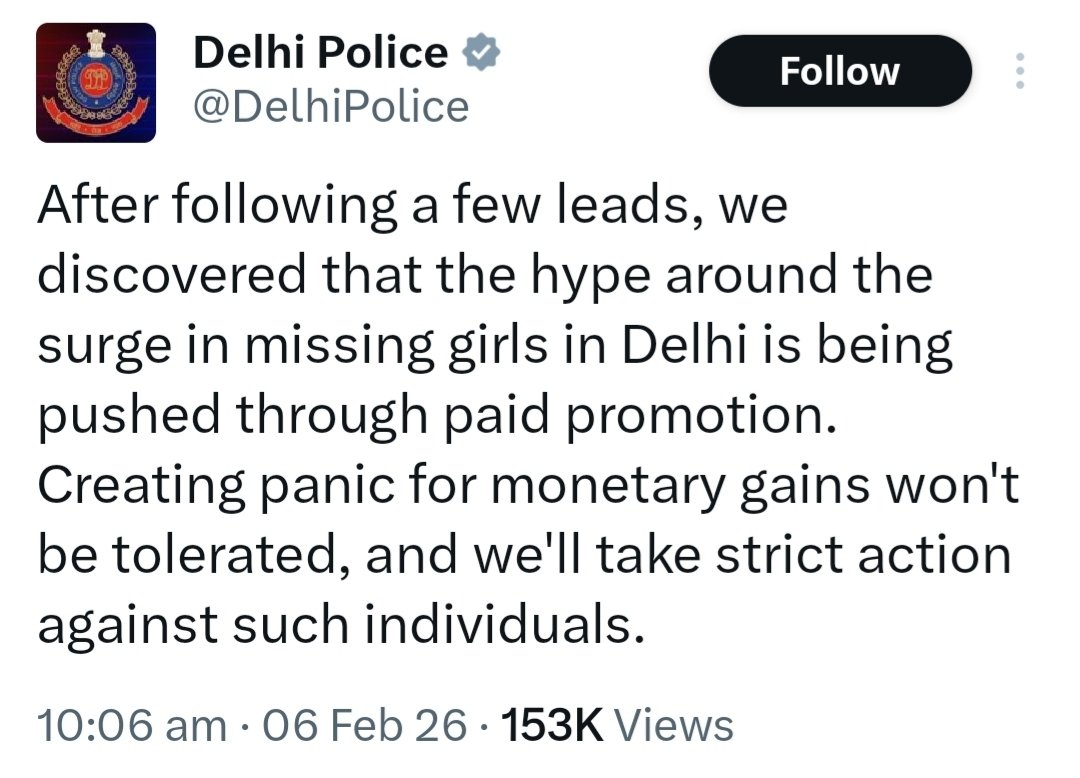
A social media storm has erupted after a tweet attributed to Delhi Police suggested that alarming posts about missing girls were not part of any real crisis but linked instead to a paid promotional campaign. The claim has triggered sharp public reaction, ethical concerns, and serious debate over how sensitive issues are used in publicity strategies. At the heart of the controversy is the suggestion that fear surrounding missing children may have been amplified as part of marketing for an upcoming film reportedly titled Mardaani.
According to the viral discussion, Delhi Police stated online that the circulating panic did not reflect an actual spike in disappearances and was connected to promotional activity. That clarification, instead of calming the public, appears to have intensified suspicion. Many people began asking who authorized such a strategy and whether invoking the theme of missing girls for publicity crosses a moral line. The situation quickly moved beyond routine clarification and turned into a larger conversation about responsibility, truth, and the boundaries of marketing.
Public anxiety around child safety is deeply emotional. Stories about missing girls are not abstract headlines but personal nightmares for families. When Delhi Police addressed the matter, their message was expected to reassure citizens with verified facts. Instead, the idea that the issue might be tied to a promotional effort shocked many observers. Even if the intention was only to prevent misinformation, the association between law enforcement communication and film publicity has left lingering doubts.
The reported connection to a film release has added another layer of unease. Cinema has often drawn inspiration from crime and social issues, and awareness driven storytelling can serve a purpose. Yet critics argue there is a stark difference between highlighting a real problem and potentially leveraging fear to generate attention. The discussion around Delhi Police has therefore become symbolic of a wider concern about how far publicity campaigns can go before they become ethically questionable.
Citizens on social platforms are asking whether such strategies, if true, should be examined more closely. Some voices are demanding accountability not only from marketing teams but also from any institutions whose statements may influence public perception. The name of Delhi Police keeps surfacing in these debates, with users debating whether the clarification was misinterpreted, poorly communicated, or part of a larger promotional misunderstanding. The absence of full context has only fueled speculation.
Another dimension of the controversy involves the nature of negative publicity. In the entertainment industry, controversy often generates visibility. Some commentators suggest that even criticism can serve as indirect promotion. This has led to uncomfortable questions about whether outrage itself has become a marketing tool. References to Delhi Police in this situation have therefore moved beyond a simple law and order update and into the realm of media ethics and public trust.
Observers are also questioning the communication chain. If a law enforcement related account comments on viral content, the public tends to assume the information is factual and carefully verified. That is why the Delhi Police reference has become central to the issue. Trust in official messaging is fragile, and any perception that sensitive topics are tied to promotion risks damaging that trust. Even if the intent was to debunk rumors, the fallout shows how easily messages can be interpreted in unexpected ways.
There is also a legal and moral side to the debate. If public fear is stirred through misleading implications, critics argue that accountability mechanisms should exist. However, others caution against rushing to judgment without full evidence. The mention of Delhi Police has been repeated across posts and discussions, sometimes without the original wording or context, which complicates the search for clarity. In the digital age, narratives often outrun verified information.
Ultimately, this episode highlights the volatile mix of social media, marketing, and public emotion. Issues involving children and safety demand extreme sensitivity. Whether this controversy arose from miscommunication, overenthusiastic promotion, or public misinterpretation, the lesson is clear. Institutions, filmmakers, and communicators must recognize the weight their words carry. The Delhi Police angle has made the story more than a publicity debate. It has become a test of how responsibly society handles information linked to fear and vulnerability.
The coming days may bring more clarification, but the questions raised will linger. Can publicity ever justify invoking real world anxieties. Where should ethical lines be drawn. And how should official voices respond when viral narratives spiral. The discussion sparked here shows that audiences are no longer passive consumers. They are alert, questioning, and unwilling to separate marketing tactics from moral responsibility.


