
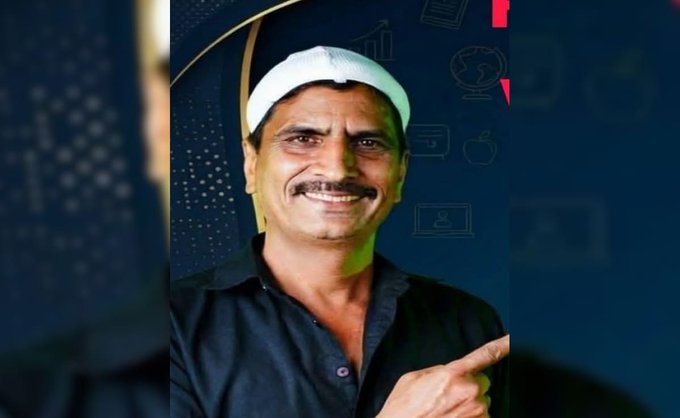
In a shocking incident that has sent ripples through India’s digital and social spheres, Saleem Wastik, the outspoken ex-Muslim YouTuber, was brutally stabbed multiple times in his Ghaziabad home. The attack, which unfolded on a fateful Friday morning in Ashok Vihar Colony, has left Saleem Wastik in critical condition at GTB Hospital in Delhi, fighting for his life.
Saleem Wastik, aged around 50 and a prominent resident of Ghaziabad, had converted his home into a modest office space for his content creation endeavors. Two helmeted assailants arrived on a motorcycle without number plates, stormed the premises, and repeatedly stabbed him in the neck and abdomen. Eyewitness accounts and initial police reports describe a premeditated strike, with the attackers fleeing swiftly after the assault. Saleem Wastik’s son, Usman, has pointed fingers at specific individuals, urging authorities to collect evidence and effect arrests without delay.
The brutality of the attack on Saleem Wastik underscores the perils faced by voices challenging orthodoxies in contemporary India. Known for his public renunciation of Islam, Saleem Wastik built a significant online following through two YouTube channels, amassing over 28,400 subscribers and uploading 179 videos. His content often dissected religious doctrines, Waqf politics, and Quranic interpretations, drawing from his background as a former imam. Saleem Wastik’s unapologetic stance made him a regular on television panels, where he sparred in heated debates on faith, culture, and societal norms.indiatoday.
This incident involving Saleem Wastik is not isolated but echoes a pattern of violence against ex-Muslims who speak out. Unlike many who conceal their apostasy to avoid reprisals, Saleem Wastik embraced visibility, much like global figures such as Ayaan Hirsi Ali or Maryam Namazie. Fellow ex-Muslim activist Sahil, with nearly 600,000 YouTube subscribers, confirmed the gravity of the assault, debunking early rumors of Saleem Wastik’s demise and highlighting his critical state. Saleem Wastik’s critics within certain communities had long targeted him online, amplifying concerns that his stabbing stems from ideological retaliation.
Police in Ghaziabad have launched a full-scale investigation, scouring CCTV footage from the vicinity and deploying teams to apprehend the perpetrators. Preliminary indications suggest the motive is under probe, with Saleem Wastik’s history of provocative commentary on Islam’s “evils,” as noted in regional reports, emerging as a focal point. The absence of identifiable markers on the attackers’ vehicle points to deliberate anonymity, fueling suspicions of a contract hit. As Saleem Wastik battles for survival, his family remains by his side, demanding swift justice.
Saleem Wastik’s ordeal raises profound questions about the safety of digital dissenters in India. In an era where social media amplifies fringe voices, ex-Muslims like him navigate a minefield of threats. His appearances on platforms like Jaipur Dialogues exposed insider critiques of Islamic tenets, earning both acclaim and enmity. Supporters view Saleem Wastik as a courage symbol, while detractors decry his rhetoric as inflammatory. This dichotomy mirrors broader tensions in India’s pluralistic fabric, where religious critique often invites peril.
The attack on Saleem Wastik also spotlights law enforcement’s role in shielding vulnerable creators. Ghaziabad authorities face pressure to trace the helmeted duo, whose modus operandi suggests sophistication. Community leaders and free-speech advocates have rallied online, trending hashtags for Saleem Wastik’s recovery and accountability. Meanwhile, hospitals report Saleem Wastik’s condition as precarious, with multiple stab wounds complicating treatment.
Beyond the immediate tragedy, Saleem Wastik’s story compels reflection on apostasy’s stigma. In conservative circles, leaving Islam invites ostracism or worse, a reality Saleem Wastik defied publicly. His channels, blending personal testimony with scriptural analysis, resonated with thousands seeking alternatives to dogma. As investigations unfold, the hope is that justice for Saleem Wastik deters future vigilantism.
India’s content creators, especially those tackling religion, must now grapple with heightened risks. Saleem Wastik’s resilience in the face of adversity had inspired many; his survival could galvanize calls for better protections. Political figures and media outlets are monitoring developments, aware that Saleem Wastik’s fate might influence discourse on faith-based violence.
In conclusion, the stabbing of Saleem Wastik demands urgent societal introspection. From Ghaziabad’s streets to national screens, his voice challenged norms—now silenced temporarily by steel. As police hunt the culprits, the nation watches, hoping Saleem Wastik emerges to continue his unyielding quest for truth.