
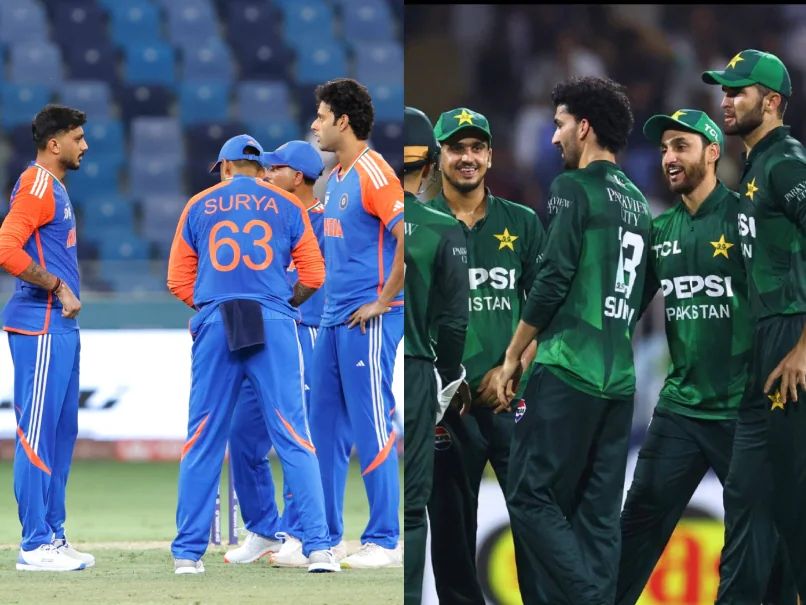
Pakistan will not take the field against India at the 2026 ICC Men’s T20 World Cup, the Government of Pakistan confirmed in an official statement posted on X.
While granting approval for the national team to travel to Sri Lanka for the tournament, the government said Pakistan would boycott the group-stage match against India scheduled for February 15, 2026.
No reason was provided for the decision. The two teams were due to meet in a Group A fixture in Colombo, Sri Lanka.
“The government of The Islamic Republic of Pakistan grants approval to the Pakistan Cricket Team to participate in the World T20 2026, however the Pakistan Cricket Team shall not take field in the match scheduled on 15 February 2026 against India,” the statement said.
The Pakistan Cricket Board (PCB) has not yet formally informed the International Cricket Council (ICC) of its decision to skip the February 15 fixture. The ICC subsequently issued a strong statement in response to Pakistan’s move.
“The ICC notes the statement that the government of Pakistan has made regarding the decision to instruct its national team to selectively participate in the ICC Men’s T20 World Cup 2026,” the ICC said.
“While the ICC awaits official communication from the Pakistan Cricket Board (PCB), this position of selective participation is difficult to reconcile with the fundamental premise of a global sporting event where all qualified teams are expected to compete on equal terms per the event schedule,” it read.
The ICC said its tournaments are built on sporting integrity, competitiveness, consistency and fairness, and that selective participation undermines the spirit and sanctity of competitions.
While the ICC respects the roles of governments in matters of national policy, this decision is not in the interest of the global game or the welfare of fans worldwide, including millions in Pakistan.
The ICC hopes that the PCB will consider the significant and long-term implications for cricket in its own country as this is likely to impact the global cricket ecosystem, which it is itself a member and beneficiary of.
The statement said that the ICC’s priority remains the successful delivery of the ICC Men’s T20 World Cup which should also be the responsibility of all its members including the PCB.
It expects the PCB to explore a mutually acceptable resolution, which protects the interests of all stakeholders.
Pakistan’s participation in the tournament had come under uncertainty after PCB chairman Mohsin Naqvi raised concerns following Bangladesh’s removal from the competition on January 24 due to security concerns in India.
Pakistan was the only country to back Bangladesh’s request for a neutral venue and accused the ICC of applying double standards in India’s favour.
Naqvi had said the final decision would rest with the government. Two days later, following a meeting with Prime Minister Shehbaz Sharif, he said he had been advised to keep all options open, with a decision expected by “Friday or next Monday.”
Pakistan is scheduled to travel to Colombo on Monday. The team will play its only warm-up match against Ireland on February 4 in Colombo.
Led by Salman Ali Agha, Pakistan will open its campaign against the Netherlands on February 7, followed by matches against the United States on February 10 and Namibia on February 18.
Pakistan will forfeit two points from the group-stage match against India if it proceeds with the boycott.
The standoff follows a similar approach taken earlier by Bangladesh, whose participation in the 2026 ICC Men’s T20 World Cup was scrapped on January 24 after the team raised security concerns about travelling to India.
Bangladesh had sought either additional security assurances or a neutral venue for its matches, but the ICC declined the request, citing tournament scheduling and logistical constraints.
Pakistan emerged as the only country to publicly support Bangladesh’s position at the time, with PCB officials accusing the ICC of applying double standards.
The Bangladesh episode intensified scrutiny over government involvement in team participation decisions and set a precedent for selective engagement with the tournament, which has now resurfaced in Pakistan’s decision to boycott its match against India.
Massive Financial Hit to Broadcasters
The most immediate impact of Pakistan’s boycott would be felt by broadcasters and rights holders. According to estimates cited by NDTV, the India-Pakistan T20 fixture is the single most valuable match in world cricket, conservatively valued at around $500 million (Rs 45,000 crore) when broadcast rights, advertising premiums, sponsorship activations, ticketing and downstream commercial activity are factored in. Advertising revenue from the match alone is estimated at Rs 300 crore, with ad rates typically ranging from Rs 25–40 lakh for a 10-second spot.
Each World Cup match is internally valued at roughly Rs 138.7 crore, but no fixture comes close to the commercial weight of an India-Pakistan clash. NDTV reported that rights holder JioStar has already sought a rebate from the ICC due to financial losses, and the removal of the marquee fixture would significantly strengthen that claim, altering the tournament’s financial architecture.
Risk of Severe ICC Sanctions
Beyond financial disruption, Pakistan could face punitive action from the ICC. NDTV sources said the Jay Shah-led governing body is considering severe sanctions, including the possibility of freezing Pakistan’s share of ICC revenues, estimated at about $34.5 million annually.
Another option under discussion is a refusal to grant No Objection Certificates (NOCs) to foreign players seeking to participate in the Pakistan Super League, a move that could severely weaken the country’s premier domestic competition.
Threat of International Isolation
In an extreme scenario, NDTV reported that the ICC could even consider a full suspension from international cricket, drawing parallels with South Africa’s isolation during the 1970s.
With an ICC meeting expected within 48 hours, Pakistan’s stance risks pushing the PCB into unprecedented isolation, with long-term consequences for its finances, competitiveness and standing within the global cricket ecosystem.