
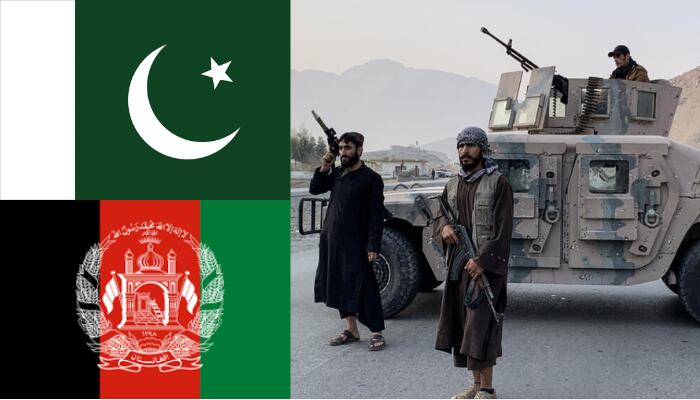
Pakistan and Afghanistan descended into their most severe military confrontation in years on Friday after Islamabad declared an “open war” and launched large-scale airstrikes across Afghan territory, following days of escalating border clashes and retaliatory attacks along the disputed Durand Line.
Pakistan initiated Operation Ghazab lil-Haq after accusing Afghanistan of “unprovoked aggression”. Air and ground strikes targeted military installations in Kabul, Kandahar and Paktia. Information Minister Attaullah Tarar said 133 Taliban operatives were killed and more than 200 were injured. He claimed that two corps headquarters, three brigade headquarters, ammunition depots, logistics bases and more than 80 tanks and armoured vehicles were destroyed.
However, state broadcasters reported PTV news 58 fighters killed, while Radio Pakistan put the toll at 44, highlighting major inconsistencies in official figures. Tarar confirmed that two Pakistani security personnel were killed and three were injured.
Escalation and Competing Narratives
Prime Minister Shehbaz Sharif warned that Pakistan’s forces could “crush” any aggression, while Defence Minister Khawaja Asif said the country had “run out of patience”.
Afghanistan’s defence ministry claimed that its forces killed 55 Pakistani soldiers in four-hour retaliatory operations on February 26, targeting posts in Paktika, Khost, Nangarhar, Kunar and Nuristan. Deputy spokesman Hamdullah Fitrat said, “Some Pakistani troops were captured, a claim rejected by Islamabad.”
Taliban spokesman Zabihullah Mujahid confirmed Pakistani airstrikes but initially denied casualties. Pakistan’s foreign media spokesperson, Mosharraf Zaidi, said 72 Taliban fighters were killed and more than 120 were wounded in earlier phases.
The Associated Press reported strikes on military facilities in Kabul, Kandahar and Paktia, including two brigade bases, without confirming casualties.
Civilians, Refugees and Border Violence
Fighting intensified near the Torkham border crossing, where journalists heard shelling and gunfire. The Omari refugee camp was hit, forcing families to flee. Afghan officials said rockets wounded seven women and two men in Nangarhar.
Sixty-five-year-old returnee Gander Khan described children, women and elderly people running for safety as explosives landed nearby. Pakistani police reported mortars falling in border villages.
Residents in Kabul and Kandahar reported being shaken awake by explosions and jets overhead, with some initially mistaking the blasts for earthquakes.
F-16 Claims, Viral Videos and Political Unity
Afghanistan claimed it had shot down a US-made F-16 fighter jet used by Pakistan, sharing videos online. Pakistani sources denied the claim, while social media users identified some footage as AI-modified or recycled.
Interior Minister Mohsin Naqvi called the strikes a “befitting response”. PTI chairman Barrister Gohar Khan said, “Pakistan sought peace but would not hesitate to counter threats.”
Regional Diplomacy and International Pressure
Iran’s Foreign Minister Abbas Araghchi offered to “facilitate dialogue”. China, through Mao Ning, expressed deep concern and said it was mediating. Russia urged an immediate ceasefire, while UN rights chief Volker Türk appealed for talks.
Pakistan’s Foreign Minister Mohammad Ishaq Dar consulted Saudi counterpart Faisal bin Farhan Al-Saud amid diplomatic efforts.
India, TTP and the Collapsing Ceasefire
India has not issued a fresh statement but previously supported Afghan sovereignty. In October 2025, spokesperson Randhir Jaiswal accused Pakistan of sponsoring terrorism and condemned civilian deaths.
Pakistan has blamed militants linked to the Tehrik-i-Taliban Pakistan, while Afghanistan denies harbouring them. Previous strikes on madrassas and alleged militant hideouts had already strained ties.
The Qatar–Turkey-brokered ceasefire has now collapsed, with both sides continuing to release unverified footage and rival casualty claims.
As airstrikes, border battles and refugee displacement persist, the region faces a prolonged and destabilising conflict, with diplomacy struggling to keep pace with rapidly intensifying hostilities.